William Costello on incels: Separating fear from facts with Ross Kemp
Ross Kemp: Lost Boys, Deadly MenWilliam Costello is a doctoral researcher at the University of Texas at Austin and has published several research articles about the psychology of incels. Alongside colleagues from Swansea University, he carried out the largest study of incels to date on behalf of the UK Government Home Office Commission for Countering Extremism.
In this guest article, William debunks some of the myths surrounding the incel community, explains how these falsehoods have been spread online and through mainstream media, and discusses how one conversation with Ross Kemp changed the whole direction of his new Crime+Investigation docuseries, Ross Kemp: Lost Boys, Deadly Men.
“Women seem wicked when you’re unwanted.”
Jim Morrison
Jim Morrison’s famous song lyric captures how romantic rejection can curdle into resentment. Incels are the classic embodiment of this phenomenon in action.
Incels (involuntary celibates) are an online subculture whose members define themselves by a perceived inability to form romantic or sexual relationships. At the heart of their worldview is what they call the “black pill”: the belief that physical attractiveness is the most important thing to women, that women overwhelmingly pursue only a tiny minority of highly attractive men, and that those left behind are effectively doomed.
For a fringe online subculture whose largest online forum currently has roughly 37,000 active users globally, incels command extraordinary attention.
From Fringe Forums to National Political Debate
In response to their online misogyny and some rare but high-profile instances of ideologically motivated violence, the prominence of incels has grown markedly in recent years, both in political and cultural discourse. For example, within weeks of release, Adolescence became Netflix’s most-watched miniseries of all time. It tells the fictional story of a 13-year-old boy who fatally stabs a female classmate after exposure to online incel content shaped his misogynistic anger.
The show had a big impact on public discussions of online misogynist content, the incel community, and the general condition of boys and young men. It also reached the highest ranks of political life, prompting a roundtable discussion between the show writers and UK Prime Minister Keir Starmer. Prime Minister Starmer has repeatedly referred to the fictional drama as a “documentary” and opposition leader Kemi Badenoch has faced public accusations of a “dereliction of duty” for not having watched it.
It is concerning to see politicians and journalists appealing to emotionally charged fictional drama instead of actual evidence-based reality.
Policy decisions should be based on sober research, not guided by highly emotive dramatisations. This includes the kind of work our team undertook to conduct the largest study of incels in the word, at the behest of the UK government’s Commission for Countering Extremism, and which we published and presented to the Women and Equalities Committee in 2024.
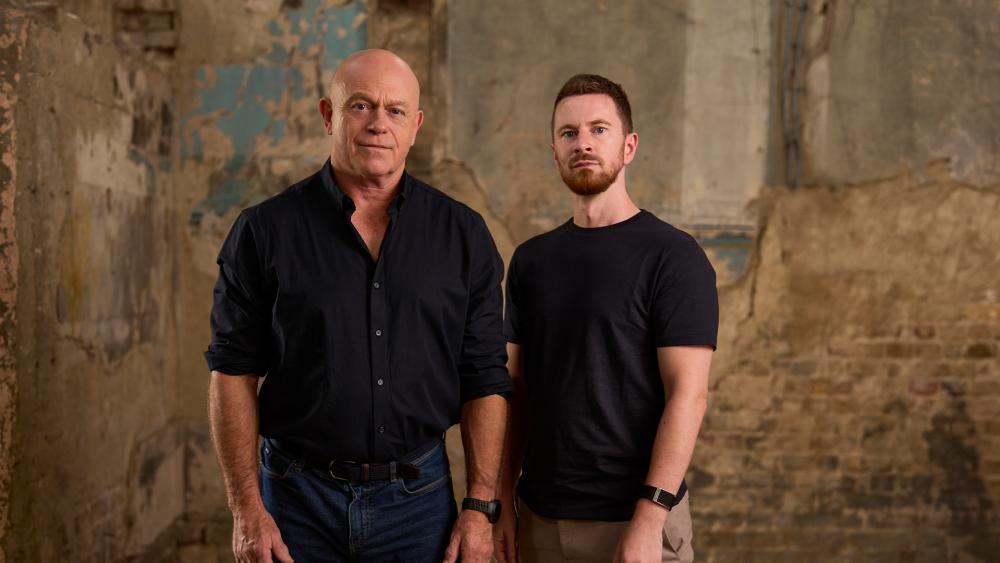
This is precisely why I was pleased to take part in Ross Kemp’s documentary - an attempt to examine the subject through facts rather than dramatisation.
A “Penny Drop” Moment
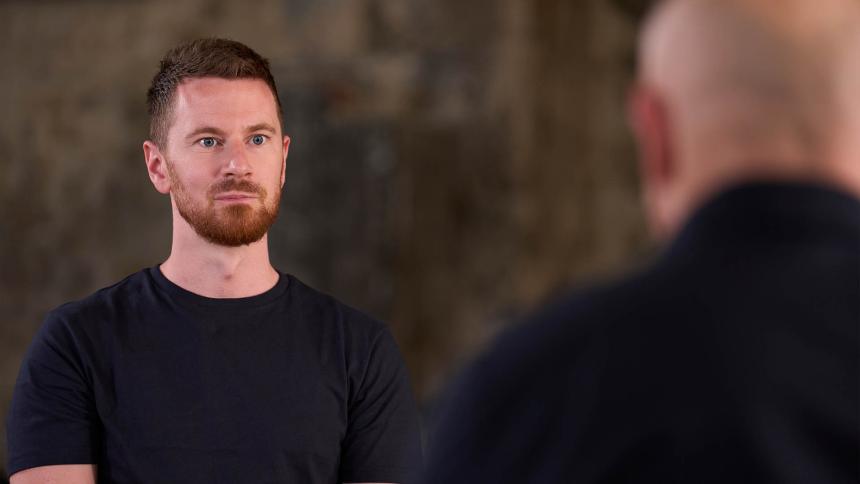
During filming, I asked Ross to describe what he thought incels were, based purely on how they are portrayed in the media.
His description mirrored the common narrative: overwhelmingly white, far-right, and an emerging organised terrorist threat.
Our discussion led me to have the unenviable task of saying “yes” to Ross Kemp’s face when he asked me, “so effectively everything I thought about incels is wrong?”.
Here are three of the biggest myths we unpacked.
Myth 1: Incels Are Overwhelmingly Far-Right
Because incel forums contain anti-feminist rhetoric, many assume the community is politically extreme, particularly far-right.
The data does not support that.
In our research most participants described themselves as politically centre or centre-left. On standard political attitude measures, they scored slightly left of centre on average.
This does not mean there are no right-wing incels. But as a group, they are not predominantly aligned with far-right ideology.

Myth 2: Incels Are Predominantly White
Another common image is that incels are overwhelmingly white. Again, our findings challenge this. In our US and UK sample, 42% of incels identified as ethnic minorities. The community is more diverse than often portrayed.
Myth 3: Incels Are an Organised Terrorist Movement
There have been a small number of devastating attacks where perpetrators referenced incel ideology. These crimes are real and deserve serious attention. But they are also extremely rare.
Approximately 50 people worldwide have been killed by incels. By contrast, the similarly sized (around 15,000 members) Islamist terrorist group Boko Haram has killed approximately 350,000 people since 2002.
In the UK, incels make up a relatively small proportion of Prevent (a government program aimed at identifying individuals at risk of radicalization) referrals: just 77 in total, or 1.2% of all referrals.
Research consistently shows most incels reject violence. One study showed that 80% of incels completely rejected violence, with low rates of approval of extremist acts such as Elliot Rodger’s infamous attack. Even in incel forums, research finds that only around 2% of posts legitimise violence.
When asked if violence is ever justified, our government-commissioned research found that approximately one-quarter of incels selected either “sometimes” or “often”, and just 5% selected “often”. The average response was situated between “never” and “rarely”.
That minority of incels who approve of violence should not be ignored. But it is inaccurate to treat incels as an organised, coordinated terrorist threat. They are overwhelmingly lonely young men on internet forums.
What the Research Actually Shows
If incels are not political extremists, who are they?
The most striking findings in our work were psychological, not ideological.
Severe Mental Health Struggles
Rates of depression, anxiety, loneliness, and suicidal thinking were extraordinarily high.
In our most recent data, one in five incels reported thinking about suicide every day over the previous two weeks. A further third had thought about it at least several days during that period.
These are not men who feel powerful. They are men who feel worthless.
High Levels of Autism
Around 18% of incels say they have a formal autism diagnosis. When we assessed autistic traits using a screening measure (the AQ-10 scale), approximately 30% met the threshold for referral for further clinical evaluation.
I want to be clear; autism does not cause misogyny or violence. But difficulties with social communication, interpreting romantic signals, and navigating rejection may make some young men particularly vulnerable to incel ideology.
Bullying and Rejection
86% of incels report experiences of bullying. Many also show high levels of rejection sensitivity, a victimhood orientation, and a tendency to perceive hostility even where it may not exist.
But they also do experience real hostility. Some online communities are explicitly dedicated to mocking incels; moderators of one such forum have even had to introduce rules against encouraging incel suicide.
None of this justifies misogyny. But it does help explain the emotional terrain from which resentment can grow.
Where Media Narratives Go Wrong
Incel forums undoubtedly contain extreme misogyny. But research suggests a relatively small minority (10%) generate the vast majority of the most extreme material.
There also have undoubtedly been tragic cases of incel violence.
The problem arises when the most extreme cases are treated as representative.
In the documentary, Ross examined the tragic case of Jake Davison. While he had engaged with incel content, police ultimately concluded that his actions were not motivated by incel ideology. Yet the label stuck in headlines and political commentary almost immediately.
Motives for violence are complex. Reducing them to a single online identity risks oversimplification.
There is also a risk that media sensationalism inadvertently glamorises what it intends to condemn. Research shows that many attackers “cruise for a cause”, seeking an ideology that will maximise attention. The louder the panic, the greater the notoriety.
The Larger Social Issue
Ultimately, incels are not a vast shadowy terrorist network.
The more widespread issue is that growing numbers of young men feel socially excluded, romantically incompetent, and psychologically adrift.
Fewer young men report being in relationships. Fewer report close friendships. Educational underachievement among boys has widened in many countries.
Online communities do not create these conditions. But they can magnify them.
When a young man who already feels rejected finds a space that tells him, “It’s not your fault - the system is rigged”, that narrative can be deeply seductive.
We should challenge misogyny wherever it appears. But we should also understand the pain that draws young men into these spaces.

Prevention Without Panic
Parents understandably worry. But panic is not helpful.
Most teenage boys who encounter controversial online content will not become violent. Most will not become extremists.
What works better than demonisation?
Encouraging offline friendships and real-world engagement. Promoting healthy male role models who speak honestly about struggle without endorsing bitterness.
Moving From Fear to Facts
If this documentary achieves anything, I hope it is this: moving the conversation from fear to facts.
Usually as a society we try to refrain from judging an entire group by the actions of an extreme minority in that group. I suggest we should do the same for incels.
We can take rare acts of violence seriously without turning them into moral panic.
And we can address the underlying social and psychological vulnerabilities that, if ignored, will continue to fester.
Incels are not a myth. But neither are they the monster the media often imagines.
When we replace fear with facts, we do not excuse harmful ideas, we put ourselves in a far better position to prevent harm.
Ross Kemp: Lost Boys, Deadly Men is available now on Crime+Investigation.