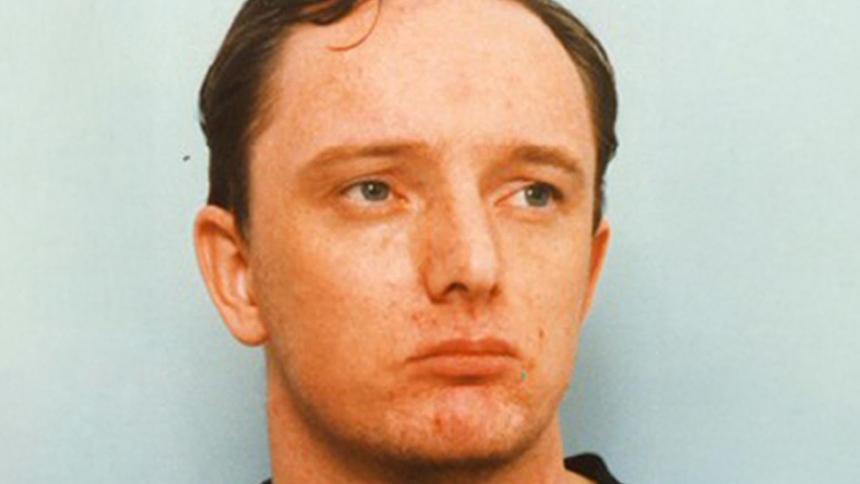
Robert Napper: How Rachel Nickell’s killer evaded capture
For years, the murder of Rachel Nickell haunted Britain. The image of a young mother killed on Wimbledon Common, with her two-year-old son standing nearby, became one of the country’s most disturbing and high-profile unsolved crimes. Investigators became consumed with finding a suspect quickly.
That desperation led detectives down the wrong path. While innocent man Colin Stagg was being targeted through an undercover honey trap operation, the real killer, Robert Napper, was roaming free.
During that time, Napper continued committing violent attacks, including another horrific double murder. Join Crime+Investigation as we explore how, years later, advances in DNA technology would finally expose the truth. The case is also covered in series 3, episode 6 of Crimes That Shook Britain.
Who was Robert Napper?
Robert Napper was already known to police long before he was connected to Rachel Nickell’s murder. Born in 1966, he had a history of disturbing behaviour, stalking and sexual violence. Reports later revealed that officers had encountered him multiple times during investigations into attacks on women across south-east London.
Napper became known as the 'Green Chain Rapist' after carrying out a string of violent sexual assaults near the Green Chain Walk in south-east London during the late 1980s and early 1990s.
Victims described a tall, intimidating attacker who often carried weapons in a sports bag. According to later investigations, he was methodical, predatory and deeply dangerous. At the time of Rachel Nickell’s murder in July 1992, Napper was in his mid-twenties and already escalating in violence.
Yet crucial connections between the rape investigations and the Wimbledon Common killing were missed. Different police departments failed to properly share intelligence, and Napper’s name was never prioritised during the original inquiry.

Escaping suspicion
But how did Napper escape suspicion for so long? So much so that another man went to prison for a crime he didn’t commit?
One of the most troubling aspects of the case is how close police came to identifying Napper much earlier. In August 1993, more than a year after Rachel Nickell’s murder, officers interviewed him after complaints that he had been spying on a woman. Internal notes described him as 'strange' and someone who should be considered a potential sex offender.
Despite those warning signs, attention remained fixed on Colin Stagg. Detectives had become convinced Stagg fit an offender profile created by criminal psychologist Paul Britton, even though there was no forensic evidence linking him to the crime. That tunnel vision consumed the investigation.
Meanwhile, Napper continued to offend. In November 1993, just 16 months after Rachel Nickell’s murder, he killed Samantha Bisset and her four-year-old daughter Jazmine in Plumstead. The murders were shocking in their brutality and finally led to Napper’s arrest. He was later diagnosed with paranoid schizophrenia and detained indefinitely at Broadmoor Hospital.
Even then, however, he was not immediately connected to Rachel Nickell’s killing. The investigations remained separated, and years passed before forensic science caught up with what detectives had missed.

Reopening the Rachel Nickell case
By the late 1990s, criticism of the original investigation had grown intense. Colin Stagg had been acquitted, the police operation against him had collapsed publicly, and Rachel Nickell’s killer was still unidentified. Scotland Yard faced repeated pressure to reopen the case.
The breakthrough finally came through advances in DNA analysis. In 2002, detectives launched a cold-case review using newer forensic techniques that were unavailable during the original inquiry. Specialists re-examined clothing and evidence collected from the crime scene a decade earlier.
Investigators discovered a tiny male DNA sample that had previously been impossible to identify properly. Although the sample was small, advances in forensic technology enabled scientists to compare it with that of other offenders. Gradually, suspicion began turning toward Napper.
Confession and conviction
In 2006, detectives travelled to Broadmoor Hospital to interview Napper directly. By then, he had spent years detained for the Bisset murders and was receiving psychiatric treatment. The renewed investigation steadily built a case that should have been recognised much earlier.
In December 2008, Robert Napper admitted responsibility for Rachel Nickell’s death. He pleaded guilty to manslaughter on the grounds of diminished responsibility due to his severe mental illness. The court ordered that he remain detained indefinitely at Broadmoor Hospital.
Love true crime? Stay in the know with the Crime+Investigation newsletter! Get exclusive access to new articles, episodes, clips, competitions, and more – delivered weekly and completely free. Don't miss out – sign up today!