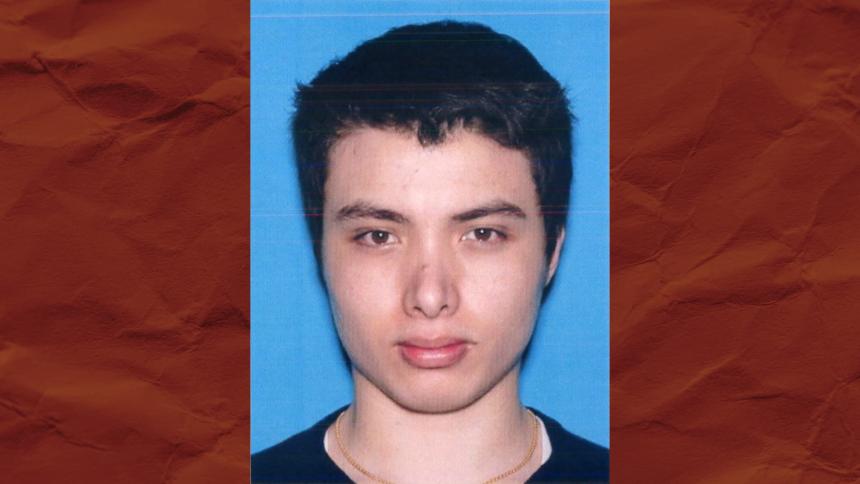
The original incel killer: Who was Elliot Rodger?
Ross Kemp: Lost Boys, Deadly MenElliot Rodger’s extremism and violent ideologies came into play in 2014 with a brutal attack in Isla Vista, California. This disturbing incident remains one of the most alarming acts of mass violence in US history.
The killings shocked the world not only because of their violence, but because Rodger left behind a detailed digital trail that exposed his grievances and his desire for notoriety. Rodger’s case continues to shape conversations around misogyny, online radicalisation and how violent ideologies can influence the modern world.
Nearly a decade later, these issues are being re-examined through a modern lens. The Crime+Investigation series Ross Kemp: Lost Boys, Deadly Men, starting Monday, 2nd March at 9pm, explores how young men can become isolated, angry and drawn toward harmful belief systems.

The Isla Vista attack
In the beach town of Isla Vista, California, Rodger stabbed and shot six people before taking his own life. In the days that followed, investigators and the media uncovered a detailed picture of a young man whose online activity and disturbing manifesto offered clues to an unresolved mystery: why did he carry out such a brutal attack?
Rodger’s rampage in Isla Vista was worryingly methodical. On that evening in May 2014, he first stabbed three young men in his apartment before driving around the neighbourhood shooting at people and striking others with his vehicle. Six people were killed and at least 14 were injured before Rodger died by suicide following a brief exchange of gunfire with police.
The authorities later found that Rodger had legally purchased multiple firearms and ample ammunition, and his attack was not an impulsive act. Nearly all details of the killings were foreshadowed by his own online activity, which included videos and a lengthy written declaration that foreshadowed his plan and motives.
Online footprint
Elliot Rodger left behind a 137‑page autobiographical document sometimes referred to as his manifesto. In it he chronicled his life, his frustrations and a worldview dominated by resentment toward others he felt had wronged him.
Within the document he wrote of intense social isolation, deep envy of sexually active young men, and a profound hatred of women who had rejected him. He even described his plan for his attack as a 'Day of Retribution'.
Rodger also uploaded a video titled 'Elliot Rodger’s Retribution' to YouTube moments before the attack. In that video, which was widely quoted in the aftermath, he said: 'Tomorrow is the day of retribution, the day in which I will have my retribution against humanity. Against all of you.' He went on to say, 'For the last eight years of my life, ever since I hit puberty, I’ve been forced to endure an existence of loneliness, rejection, and unfulfilled desires. All because girls have never been attracted to me.'
This online footprint later became central in understanding the motives behind the killings.

Incel identity
In the wake of Rodger’s actions, the term 'incel' entered public consciousness in a new and unsettling way. Short for 'involuntary celibate', the term began as a description for people struggling with romantic or sexual connection. But by 2014 some online corners of the internet had adopted an extremist interpretation of the term, turning isolation into entitlement and resentment into ideology.
Rodger frequently visited online forums where such attitudes were reinforced, and he became idolised in some of these spaces after the attack, with admirers giving him titles like 'the Supreme Gentleman'.
Aftermath
Online and in traditional media, conversations quickly turned toward the underlying causes of such violence: mental health, misogyny, gun access and the role of digital echo chambers where hate can be reinforced and unchecked.
Elliot Rodger’s attack remains a tragic and important case study in understanding modern violent radicalisation. It shows how deeply personal grievances can be amplified by online communities and how easily resentment can turn into violence.
Love true crime? Stay in the know with the Crime+Investigation Newsletter! Get exclusive access to new articles, episodes, clips, competitions and more—delivered weekly and completely free. Don't miss out—sign up today!