5 of London’s deadliest serial killers
London is home to some of the world’s most iconic landmarks, tourist attractions and celebrities – several of them famous for all the wrong reasons. Beneath the city’s glittering exterior lies a grisly criminal underworld that has fascinated web sleuths for centuries.
In this listicle, the Crime+Investigation team examines some of the deadliest London serial killers, from Jack the Ripper in the late 19th century to modern-day madmen like Stephen Port and Dennis Nilsen.
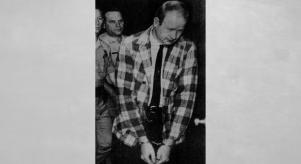
1. Gordon Cummins
Many serial killers go undetected by committing crimes during periods of chaos. Gordon Cummins was no exception. The notorious Blackout Killer, sometimes called the Wartime Ripper, terrorised London at the height of WW2, murdering four women within just five days.
He stalked his victims during blackouts, when they were particularly vulnerable and afraid. His MO was chillingly simple. He would meet women, often prostitutes, near the West End, follow them home, strangle them and mutilate their bodies.
Cummins was eventually arrested after leaving his gas mask at a crime scene, which investigators traced back to him through RAF records. Despite maintaining his innocence, he was found guilty and hanged in June 1942.
2. Stephen Port
Stephen Port, also known as the Grindr Killer, grew up in Dagenham, East London. He was always a loner and his peers described him as childish, quiet and immature. Consequently, he lived with his parents until his early thirties before eventually moving to Barking.
Port met his victims through dating apps, where he fabricated elaborate stories about his background to lure young men back to his flat. In one biography, he was an Oxford University graduate. In another, he served in the Royal Navy. Once alone with his victims, Port drugged, raped and murdered them.
Despite similarities between the deaths, the police initially treated them all as accidental overdoses. However, after the fourth victim was found, Port was arrested in 2015 and sentenced to life imprisonment. Later inquests exposed serious investigative failures and highlighted concerns about homophobia within the MET.

3. John Christie
John Christie was responsible for some of the capital's most disturbing murders. In the 1940s and early 1950s, he murdered at least eight women at his home in Notting Hill, enticing them in with promises of money and medical help.
His most notorious murder was that of Beryl Evans and her baby daughter, Geraldine, who was just 13 months old. After strangling the pair, he disposed of their bodies in an outdoor wash-house.
Despite mounting evidence against him, Christie falsely implicated Beryl's husband, Timothy Evans, in the murders. Timothy was wrongfully executed, a miscarriage of justice that contributed to the abolition of the death penalty in Britain.
Christie was finally arrested when new tenants found several bodies hidden within the walls of his property. Timothy was posthumously pardoned in 1966.
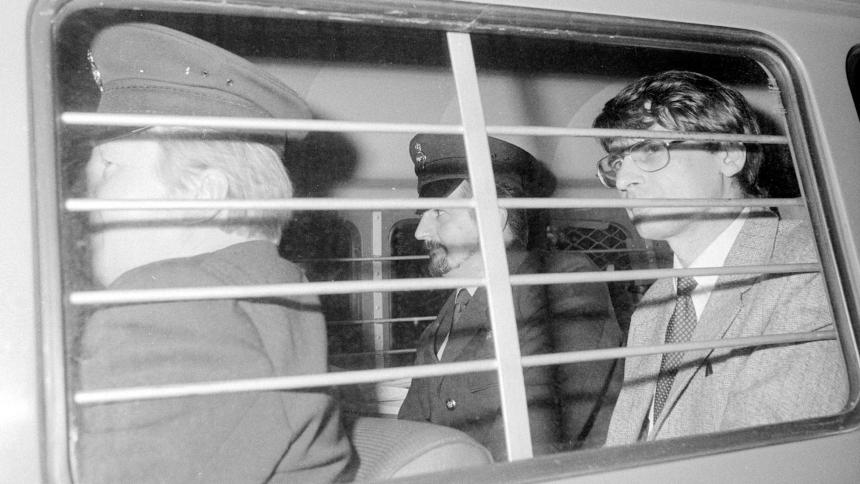
4. Dennis Nilsen
Dennis Nilsen was a Scottish serial killer and necrophile who murdered at least 12 young men and boys between 1978 and 1983 from two North London flats in Cricklewood and Muswell Hill. He targeted his victims in pubs, inviting them home before strangling them and sexually assaulting their corpses.
Unlike many other serial killers, Nilsen didn’t kill out of blind rage. Instead, he was driven by loneliness. Nilsen kept his victims' bodies for days, sometimes weeks, after the murder, talking to them as if they were still alive. When the bodies started to decompose, he would burn the remains.
Due to the transient lifestyles of his victims and the homophobia of the time, Nilsen’s crimes went undetected until blocked drains at his Muswell Hill flat exposed human remains. He was arrested in 1983 and sentenced to life in prison.

5. Jack the Ripper
Jack the Ripper is the most notorious serial killer in London's history. He stalked the streets of Whitechapel and the East End in 1888, brutally slaying at least five women, though the true number of victims is thought to be much higher.
Like Gordon Cummins, Jack the Ripper capitalised on the grim realities of the time to hide his crimes. Victorian England was riddled with extreme poverty, overcrowding and ineffective policing, which made identifying killers almost impossible.
The large number of attacks against women made it difficult to link the Ripper's murders. However, one thing stood out – the brutality of his crimes. Victims shared deep slash wounds to the throat and had organs removed. While there wasn't any evidence of sexual assault, their genital and abdominal areas often were mutilated beyond recognition.
Despite countless suspects and theories, the Jack the Ripper has never been identified. It's a mystery that continues to haunt London more than a century later.
Want more true crime stories like this? Sign up to the Crime+Investigation newsletter today. We’ll send you the latest news, episodes and competitions, so you’ll never miss a breaking story again.