‘It haunts me that there’s been no justice for Lucy’: Rob Rinder on The Crime I Can’t Forget
Rob Rinder: The Crime I Can't Forget20 years after a high-profile murder trial ended without a conviction, Rob Rinder returns to the case that has never left him. But this time his role is as a filmmaker, rather than a barrister.
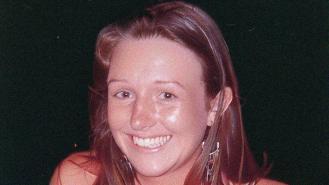
In August 2005, 22-year-old mother-of-three Lucy Hargreaves was murdered in her Liverpool home. A group of men broke into the house, shot her dead and set the building on fire in a crime that appalled the nation.
Two men were later arrested and brought to trial. Yet the judge would throw the case out, and the defendants were acquitted.
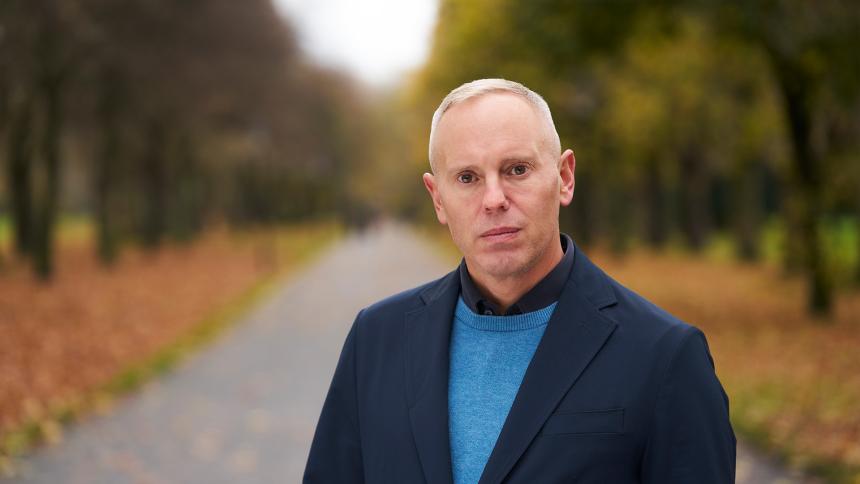
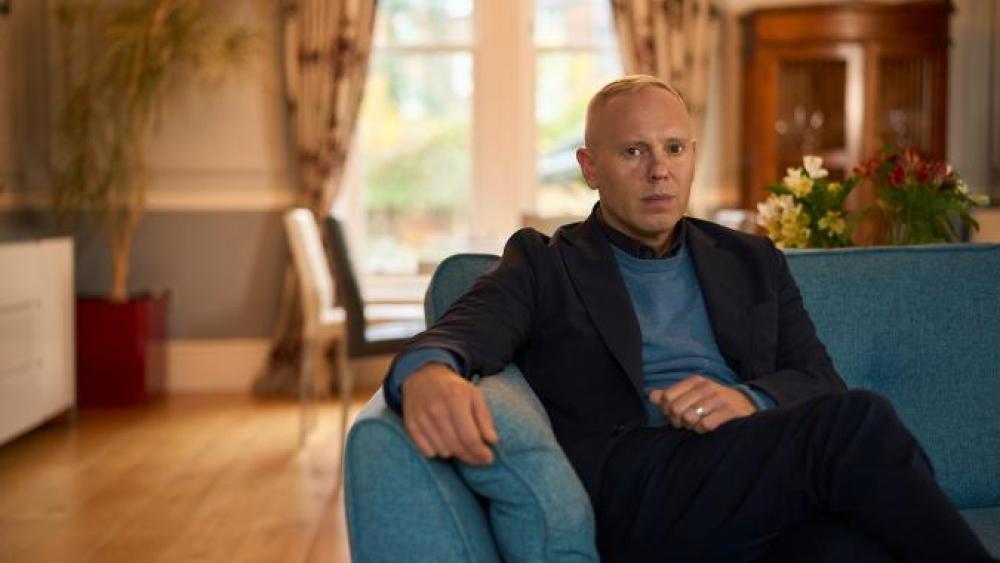
Rob Rinder was in his early twenties at the time and played a crucial role on the defence team for the accused. Now, two decades on, he has returned to the case in Rob Rinder: The Crime I Can't Forget, available on Crime+Investigation from Monday 8th June.
‘It's 20 years on and I know that no person has ever been held accountable for what happened to this young woman,’ he says. ‘It haunts me, and it should haunt all of us, that there's been no justice for Lucy.’
A case that stayed with him
Before he was known for his TV career, Rinder worked on some of the most high-profile criminal cases of his generation. But of all of them, it’s the Lucy Hargreaves case that has stuck with him the longest.
‘Of all of the ones that I remember, this is the one,’ he explains. ‘Because it's 20 years on, and I know that no person has ever been held to account. A young woman, a kind mum, killed in her house. What could she have been? What would she have contributed to her community? What did it mean to her family? To her kids? Those are unanswered questions.’
The case also coincided with a pivotal moment in his career. He was young, and professionally fascinated by the emerging forensic technologies the prosecution was relying on - in particular, cell site analysis, which uses mobile phone data to place individuals at locations.
‘It was really technology in its infancy,’ he recalls. "My job was to look at the way the prosecution brought the case and to unpick it. To think about whether it was fair to bring in that technology and where its limitations are.’
His assessment at the time was that the prosecution's case was weak. ‘The buffet of evidence that they brought struck me as circumstantial, as dubious,’ he says. When the trial judge, a figure Rinder speaks of with considerable respect, noting his role as prosecution counsel in the James Bulger case, halted proceedings at the halfway point, Rinder was satisfied. ‘We were absolutely and wholly satisfied that the right thing had happened, the right outcome had taken place.’
Then he adds, quietly: 'That doesn't mean that justice was done.'
Meeting Lucy for the first time
There is a deliberately impersonal and methodical way criminal barristers encounter victims: purely on paper – in reports, photographs and evidence bundles. Their rich lives become condensed into a legal record. ‘When you are involved in a murder trial, on paper, their entire lives get reduced to a name, a line and a photograph, if you are lucky,’ Rinder reflects.
But making this documentary allowed Rob to get to know Lucy in a completely different way.
In the series, he travels to Liverpool and walks the same streets she walked. He sits with her family, who have never publicly spoken about her murder, and hears the story of who she actually was.
‘To see the road that she walked on and the curtains next door that haven't been changed that she would've seen,’ he says. ‘It breathes life into somebody who is otherwise just a name, a photograph, or when something terrible happens to them, a victim.’
That reduction of a human life to the single word ‘victim’ is something Rinder returns to more than once. ‘When something terrible like this happens, they become one word. That becomes the beginning, middle, and end of their entire lives. And yet they are an entire exquisite buffet of beautiful human things – a mum, a friend, a neighbour. You are left with this dark outline where, of course, all the exquisite colour disappears.’
It was, he says, a profound and emotional experience. ‘This was the first time I'd really met Lucy Hargreaves – outside of thinking about her as a name.’
Revisiting the legal arguments
The documentary does not shy away from the legal questions at the heart of the case. Rinder reunites with his former lead defence counsel, Rod Johnson KC, to revisit the arguments that led to the trial collapsing. He is careful – as a matter of law and conscience – to make one thing absolutely clear.
‘One of the challenges in making a programme like this is that it is essential to me that nobody comes away thinking that the wrong decision was made,’ he says. ‘The judge threw the case out because there was insufficient evidence for the jury safely to convict.’
The ongoing wait for justice is by far the most agonising aspect of the case. Her family is haunted by unanswered questions: who killed Lucy, and where is her killer today?
The prime suspect is Kevin Parle. He is one of the UK’s most wanted fugitives and was already on the police’s radar for the murder of a teenage boy at the time Lucy was murdered.

Yet despite high-profile appeals and reports linking him to Spain, Australia and Dubai, Parle has never been arrested and his whereabouts remain unknown.
Former Metropolitan Police detective Peter Bleksley, who has spent years attempting to trace Kevin Parle across Europe and the Middle East, also features in the film. During filming, Bleksley confronts Rinder about the client he defended, who went on to be involved in further criminality after walking free. Rinder is unflinching in his response.
‘I'd feel a lot worse if I walked away from that case thinking that a man had been sent to prison for the rest of his life and it was an injustice and that I had played a part in it,’ he says. ‘The fact that he went on to do whatever he went on to do has nothing to do with me at all. It's a ticket price for freedom under the rule of law that we live in.’
He points to countries where suspects don’t receive a fair trial as being the uncomfortable alternative.
‘There are people, as we sit here on our shared earth, who live in that alternative for whom there are no fair trials. They get incarcerated, killed – executed – on no evidence. It's happening as we're sitting here now. Just think about the places in our world for whom that is a real lived experience and whether or not you'd want to live there.’
Why the documentary is doubly important
The Crime I Can’t Forget is primarily the story of Lucy, her family’s grief and their protracted wait for justice. But it arrives at a time when the criminal justice system itself is under significant scrutiny. The government's proposals to reduce the role of jury trials gave Rinder an additional reason to speak up.
‘12 ordinary people standing between you and the power of the state is one of the great protections of a free society,’ he argues. ‘The state accuses you. The state investigates you. The state prosecutes you. A jury is the point where ordinary citizens step in and say: prove it to us. Once you remove citizens from justice, something changes in the character of a country. Justice stops being something done by the people and becomes something done to them.’
He is equally clear on where responsibility for court delays actually lies. ‘Cases collapse because prison vans do not arrive. Courts are literally falling apart. There are not enough judges, not enough staff, not enough functioning courtrooms. Everybody working in the criminal justice system knows this. A jury is not an administrative burden. It is a democratic safeguard.’
It is the kind of compelling argument that only someone who has stood inside a murder trial – felt the weight of it, lived with it for two decades – can make with real authority. And it is, perhaps, the reason this documentary exists at all: not just to revisit one unsolved case, but to shine a light on what we risk losing when we stop paying attention to how justice actually works.
Don’t miss Rob Rinder: The Crime I Can’t Forget, airing exclusively on Crime+Investigation on Monday 8th June. To explore more stories like this, sign up to our newsletter today. Every week, you’ll receive articles, insights and analysis on the true crime cases everyone’s talking about.