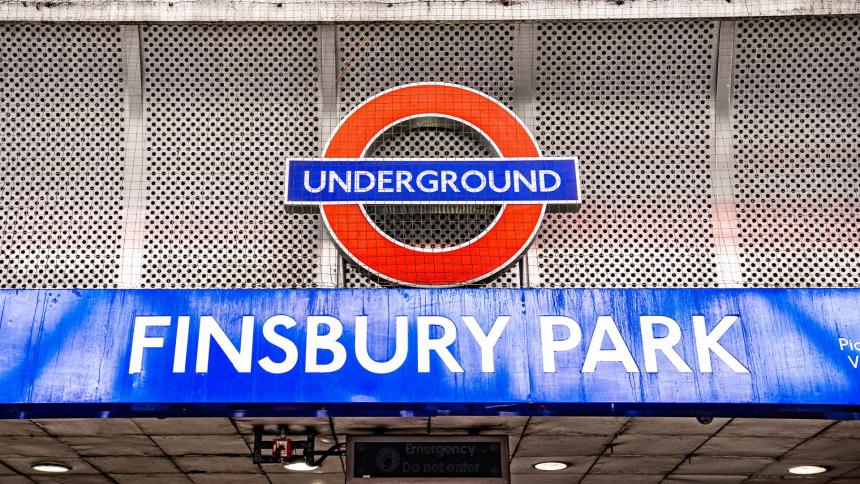
Finsbury Park terrorist attack: Tragedy during Ramadan
Ramadan should be a time of worship and celebration. In the early hours of 19th June 2017, a quiet street in north London became the scene of one of Britain’s most shocking acts of far-right terrorism.
Outside Finsbury Park Mosque, Muslim worshippers who had just finished evening prayers during Ramadan were suddenly targeted in a violent attack that left one man dead and many others injured.
Find out what happened on that fateful day nearly a decade ago and join Crime+Investigation as we explore the tragic events and subsequent outcomes.
Another moment of extremism
Coming only weeks after the Manchester Arena bombing and the London Bridge attacks, the incident deepened fears across the country and highlighted the growing threat of extremist hatred from the far right.
What unfolded that night was not random violence. It was a deliberate terrorist attack aimed at a Muslim community gathered during one of the holiest periods in the Islamic calendar.
How events unfolded
Just after midnight, worshippers had finished Tarawih prayers, special evening prayers observed during Ramadan, near Finsbury Park Mosque. A group of people had gathered around a man who had collapsed near the Muslim Welfare House on Seven Sisters Road. As some attempted to help him, a van suddenly mounted the pavement and drove directly into the crowd.
Witnesses described scenes of 'panic and horror as bodies were thrown into the air and injured worshippers lay scattered across the road'.
11 people were hurt in the attack, several seriously. The man who died was 51-year-old Makram Ali, a father and grandfather who had already collapsed before the van struck but later died from multiple injuries sustained during the attack.
The driver, later identified as Darren Osborne, attempted to flee but was restrained by members of the public. In a moment many later described as extraordinary, Imam Mohammed Mahmoud intervened to protect Osborne from the angry crowd until police arrived. His actions were widely praised and became a symbol of calm and restraint in the face of such atrocities.
Who was Darren Osborne?
Darren Osborne was a 47-year-old father of four from Cardiff. Before the attack, he was not known to the security services and, according to people who knew him, had not openly expressed extremist views for most of his life. However, investigators later uncovered evidence showing he had become rapidly radicalised in the weeks leading up to the attack.
During the trial, jurors heard that Osborne had consumed substantial amounts of anti-Muslim and far-right material online. Mr Osborne had reportedly become obsessed with conspiracy theories and extremist propaganda following several terror attacks earlier in 2017.
Far-right extremism and radicalisation
According to reports, Darren Osborne’s partner later said: 'He had changed dramatically after watching television programmes and online content focused on crimes committed by Muslim gangs.'
Investigators found evidence that Osborne had engaged with material linked to far-right figures and organisations, including Tommy Robinson and Britain First. Counter terrorism police later stated that online hate propaganda had played a 'significant role' in radicalising him.
The attack itself was carefully planned. Osborne rented the van in Wales before driving to London with the intention of targeting Muslims. According to evidence presented in court, he initially hoped to attack an Al Quds Day march earlier that weekend but later turned his attention to worshippers near the mosque.
The investigation
Police declared the incident a terrorist attack within minutes. Counter terrorism officers quickly took over the investigation, treating the case as an act of far-right extremism motivated by Islamophobia.
The attack prompted an immediate increase in security around mosques and Muslim communities across Britain. Political leaders, including the then Prime Minister Theresa May, condemned the violence and stressed that terrorism in any form must be confronted equally.
Mayor Sadiq Khan said that ‘London stands united against terrorism. We will always celebrate and cherish the incredible diversity of our city.’

The trial and sentence
Darren Osborne was charged with terrorism related murder and attempted murder just days after the attack. His trial took place at Woolwich Crown Court in early 2018. Prosecutors argued that he had deliberately targeted innocent Muslims because of their faith.
During proceedings, the court heard how Osborne had become consumed by hatred in a matter of weeks. The judge later described him as having allowed his mind to be ‘poisoned’ by extremist propaganda online.
Love true crime? Stay in the know with the Crime+Investigation newsletter! Get exclusive access to new articles, episodes, clips, competitions, and more – delivered weekly and completely free. Don't miss out – sign up today!