The baby under the floorboards: A chilling centuries-old mystery
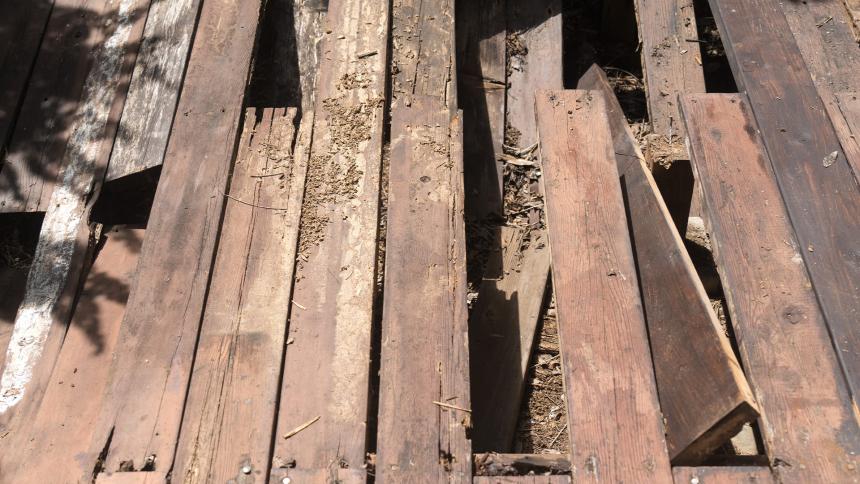
It began as a routine renovation. In July 2024, a builder working on a Victorian property in Bishop Auckland made a discovery that transformed his ordinary construction job into a haunting historical mystery. He found the skeletal remains of a baby under the floorboards, wrapped in newspaper from 1910, bound with twine and hidden for more than a century.
At first, it seemed like a tragic but straightforward historical case. But as investigators began to examine the remains, the story took an unexpected and deeply unsettling turn.
Join Crime+Investigation as we explore this shocking case in more detail.
A discovery frozen in time
The baby’s body had been deliberately hidden. Wrapped in a June 1910 edition of The Umpire newspaper and placed beneath the floorboards, the remains had been undisturbed for decades.
Forensic examination quickly established some key facts. The baby was male and believed to have been full-term, around 40 weeks’ development.
More troubling however, was the fact that twine was looped around the baby’s neck. This detail immediately suggested that it was a suspicious death.
But even with these clues, investigators faced a basic problem: there were no records, no name and no obvious identity. The child became known as 'Baby Auckland', a tiny life lost and forgotten.
Science rewrites the timeline
Based on the newspaper wrapping, the police initially believed the baby had died around 1910. This seemed to make perfect sense, until scientific testing suggested otherwise. Radiocarbon dating revealed that the child could have lived much earlier, possibly between 1726 and 1812.
This complicated the investigation dramatically. If true, it meant the baby had been dead for over a century before being wrapped in the 1910 newspaper. So had the remains been moved, preserved or reburied long after death?
Detectives were suddenly dealing with not just a cold case, but a case that could have crossed generations.
A forensic puzzle
The investigation has relied heavily on modern forensic techniques to help discover what the passage of time had lost.
DNA testing confirmed the baby’s sex and was used to try and identify potential relatives. However, without a match in existing databases or living family members coming forward, no answers have been found.
Post-mortem examinations have also revealed very little. Although they could assess the baby’s development, the cause of death is still 'unascertained'. Frustrating, but a very common outcome in cold cases with remains of this age.
Forensic anthropologists were crucial in carefully excavating the remains from beneath the floorboards, preserving even the smallest bones for analysis.
Each piece of evidence is painstakingly examined, but the passage of time has erased many of the answers investigators would normally rely on.
Following the history of the house
With little biological evidence, detectives have turned to historical research. One line of enquiry was to examine records from the early 20th century, particularly between 1900 and 1920. This was to try and identify who lived in the house when the baby was hidden.
The building itself adds another layer to the mystery. At one point, it was believed to have been used as a mother-and-baby unit run by a church. Investigators raised the possibility that the child’s death could be linked to institutional care or social stigma surrounding childbirth at the time.
There have also been appeals to the public, asking for any information about the property’s past occupants. Genealogical research, census data and local archives are all also being examined in the hope of uncovering a lead.
The challenge of time
Detective Chief Inspector Mel Sutherland, who has led the investigation, has described the case as uniquely challenging. The sheer age of the remains means that conventional policing methods aren’t always successful.
There are no witnesses to interview, no recent movements to trace and no digital footprint to follow. Instead, the investigation relies on fragments, such as a piece of newspaper, a length of twine and a set of bones. Even determining whether the baby was stillborn or murdered might never be possible.
And yet, despite these obstacles, the case remains active. For investigators, the passage of time doesn’t affect how important it is to find answers.

A mystery that endures
At the heart of this investigation is a simple but powerful aim: giving the child an identity and a story.
Police have emphasised their responsibility to act as 'the voice of the child', and make sure that the baby isn’t forgotten despite the time that has passed. To help ensure this, in April 2026, the remains were finally laid to rest in a dignified ceremony attended by members of the community.
But burial doesn’t mean closure. Even after centuries, the investigation goes on: because every life, no matter how short or long ago, deserves to be recognised.
Obsessed with true crime? Keep up with the latest by signing up for the Crime+Investigation newsletter. Get exclusive articles, episode updates, clips, competitions and more: delivered to your inbox every week, completely free.