The ‘Wild Man’ theory: Was Lizzie Borden really to blame?
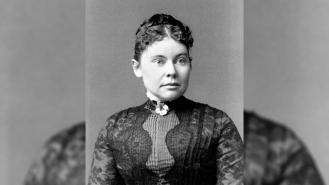
Lizzie Borden: 40 WhacksWhen we think of the Lizzie Borden murders of 1892, the name on everyone’s lips is, of course, Lizzie herself. The image of a young woman in a crisp Victorian dress standing stoically in court has become one of America’s most iconic true crime images.
But what if the real story is even stranger than that? What if someone entirely outside the family was responsible? That’s where the curious 'Wild Man' theory comes in, offering an alternative explanation to this fascinating story.
Join us at Crime+Investigation as we explore the Wild Man theory and look into whether there was an alternative ending to the epic Lizzie Borden story.
To find out everything you need to know about the biggest case of the 19th century, visit our in-depth Lizzie Borden Crime File.
A crime that captured attention
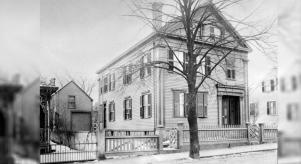
Before we dive into the Wild Man theory, here’s the context. On 4th August 1892, in Fall River, Massachusetts, Andrew and Abby Borden were found brutally murdered in their home. Both had been struck multiple times with a hatchet, in violent blows that suggested a crime of rage.
Lizzie Borden, their daughter, was soon arrested and charged with the killings. Her trial became a spectacle. She was ultimately acquitted, but the case never left the public imagination.
But who committed the murders? Was anyone convicted? One thing that has never changed is that no one has ever been tried for those murders. That leaves the door wide open for theories, and over the years some have been stranger than fiction. Among them, the Wild Man theory remains one of the most intriguing.

What is the Wild Man theory?
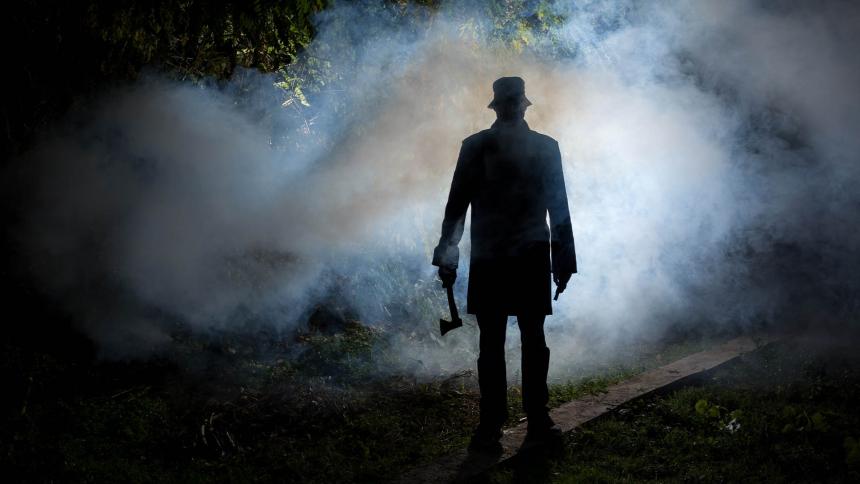
The Wild Man theory suggests that the murders were not committed by Lizzie, nor by a close family member, but by a mysterious person seen in the area during that time. The term is taken from witness reports from the days around the murders. Some neighbours and Fall River residents claimed they saw an unfamiliar man lurking near the Borden home, behaving in a way that seemed odd.
According to reports, this man was described as unkempt, perhaps mentally disturbed and not a regular in the community. People who saw him noted that something about his presence made them uneasy. In an era when most people moved within tight social circles, a stranger like this stood out.
The theory holds that this 'wild man' could have had the motive, opportunity, and physical ability to attack the Borden’s and then slip back into obscurity. Unlike other theories that focus on domestic tension or personal grudges, this one shows an outside element that, if true, would dramatically change what we know about this case.

Origin and anecdotal evidence
But where did this theory come from? A handful of locals told police and later researchers that they had seen a man matching a vague yet consistent description near the Borden house before and after the murders. Some recounted seeing him in moments of distress or acting strangely in nearby streets.
One account that circulates among historians involves a man seen trying to enter another home in the neighbourhood on the morning of the murders. Another claimed that this individual had been spotted heading toward the woods outside of town with what looked like a bag or bundle that could have hidden a weapon.
Does any forensic evidence support it?
Here is where the theory begins to lose some steam. Unlike modern investigations, the evidence in the late 1800s was limited. There was no DNA testing. Fingerprint analysis had not yet been adopted. Crime scene preservation was rudimentary. This means that there is simply no physical or scientific evidence that points to an unidentified man.
What we have instead are witness testimonies, circumstantial observations and speculation based on what people thought they saw. In other words, the evidence is the kind that true crime fans both love to debate and shake their heads at.
This lack of hard evidence is why most professional historians remain cautious about giving the Wild Man theory serious weight. It makes for an intriguing story, but it can’t be tested in the way modern forensic hypotheses can.
Why historians remain sceptical
Most historians who study the Borden case acknowledge that the 'Wild Man' is a compelling character in the lore of Fall River. But compelling story arcs are not the same as credible evidence. The issue with the theory is that it leans heavily on anecdote and lacks the kind of corroboration that might elevate it above speculation.
The 'Wild Man' remains an outsider with no verifiable identity; no confirmed sightings tied to time and place and no physical trace that could link him to the grim scene in the Borden home.
Love true crime? Stay in the know with the Crime+Investigation newsletter! Get exclusive access to new articles, episodes, clips, competitions, and more, delivered weekly and completely free. Don't miss out, sign up today!