Inside Kinky Cottage: The Maxwell and Sheila Garvie story
How well do you really know your neighbours? Most of us exchange a polite hello, maybe learn a few family details, and think little more of it. But behind closed doors, even the most ordinary-looking households can hide extraordinary secrets.
That unsettling truth sits at the heart of the case of Maxwell and Sheila Garvie – a respectable Scottish couple whose seemingly conventional life masked a world of secrecy, control and ultimately a brutal murder that shocked the nation.
Join us at Crime+Investigation as we explore the extraordinary story behind one of Scotland’s most notorious crimes.
A normal marriage turns dark
To friends and neighbours, Maxwell and Sheila Garvie began as a completely normal couple. Unremarkable, even.
Maxwell came from a well-to-do farming family in Kincardineshire. Both handsome and wealthy, he was described as the most eligible bachelor in the area. When he met Sheila Watson at a young farmers’ dance in the early 1950s, they hit it off immediately.
The pair were married by 1955, and children soon followed – including two daughters, Wendy and Angela, and a son, Lloyd, in the first few years.
It seemed like they had everything they needed to remain happy and grow old together – a lavish, comfortable lifestyle, children and a seemingly loving relationship. But, as is the case in many ‘perfect’ relationships, the truth behind closed doors was a very different picture indeed.
Perhaps it was a result of his wealthy background that meant that ‘ordinary’ wasn’t exciting enough for Maxwell. Soon, he was growing restless and indulging in increasingly dangerous activities.
In addition to an increased reliance on alcohol and pills, Maxwell would take to the skies in his plane and perform reckless acrobatic stunts over the North Sea. But even this adrenaline rush wasn’t enough to make him truly content.
The Kinky Cottage
By now, it was the 1960s, a decade in which swinging parties became increasingly popular, particularly among the young and hedonistic. Unsurprisingly, it was a lifestyle that Maxwell soon developed an interest in.
He became obsessed with pornography and nudism, had extramarital affairs with men and women and persuaded Sheila to accompany him on nudist holidays along with their young children.
His behaviour continued to escalate. He took nude photos of his wife and freely showed them to friends without her consent. He even took to setting up his own nudist colony at a small house, which later became known as ‘Kinky Cottage’ by gossiping locals.
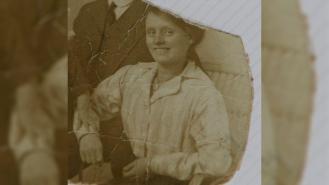
At first, these modest gatherings were for a select number of close friends. But they soon developed into sex orgies, which Maxwell pressured Sheila to take part in.
She had initially resisted, horrified by her husband’s change in behaviour, which was so different from the man she’d first met. Yet eventually, to pacify her increasingly abusive husband, she’d thrown herself into the games.
He’d accused her of being square and old-fashioned. But little did he know that his insistence would lead her to develop feelings for another man: Maxwell’s eventual murderer.
Brian Tevendale: Friend, lover…killer
Away from his colourful private life, Maxwell Garvie was an office bearer for the SNP. It was through this role that he first met and later formed a close friendship with Brian Tevendale. He was a good-looking 22-year-old bearded barman whose family owned the Bush Hotel in St Cyrus.
Garvie frequently invited Tevendale to the couple’s house. On one of these occasions in 1967, Maxwell shoved Sheila into Tevendale’s room – shivering and naked. She had been threatened to spend the night with him.

At the same time, Maxwell began an affair with Tevendale’s sister, Trudi Birse. It was a casual relationship that he quickly grew bored with, in contrast to Sheila and Brian, who had fallen deeply in love.
Sheila attempted to leave, running off to Bradford with Tevendale. But Maxwell pursued them and brought them home, threatening to shoot her if she attempted to leave again.
Before long, the pair started plotting how they could be rid of Maxwell for good.
Maxwell’s murder
On 15th May 1968, Sheila reported that Maxwell had gone missing. She claimed that she’d woken up that morning to find that he had simply vanished. For months, the case baffled police, with no reported sightings of Maxwell or any indication of his whereabouts.
A shocking twist came three months later, when his putrefied body was found in an underground culvert near the village of St Cyrus. He had a gunshot wound to his neck and a fractured skull.
Tipped off by Sheila’s mother, who had grown suspicious of her daughter’s involvement, she and Tevendale were charged with Maxwell’s murder.
During the subsequent trial, the former lovers turned on each other, both blaming the other. Sheila claimed she’d awoken to discover Brian had murdered her husband, with Tevendale claiming it had been her idea that he’d agreed to out of infatuation.
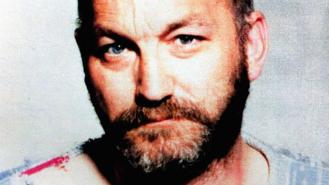
'She said it would be better with Max out the way. I would have done anything she wanted,' he claimed.
The trial made headlines across the country, with large crowds gathering to hear the scandalous details in court. It had everything to make a compelling case – a wild story of orgies, jealousy and a brutal murder.
It emerged that after Maxwell and Sheila had made love and gone to bed on the fateful evening, Sheila had let Brian into the house. While Maxwell was still sleeping, Tevendale had smashed his skull with the butt of his own rifle. Then, placing a pillow over his face, he shot him once in the head.
Tevendale was unanimously found guilty of murder. Sheila was found guilty of murder by a majority verdict. They were both jailed for life, and their previous bond was irrevocably broken.
'I have decided to have nothing more to do with you ever again,' Sheila wrote to Brian, while imprisoned.
No happy ever after
Both Sheila and Tevendale were released from prison in 1978, but they never reconciled. Tevendale later expressed remorse for his actions.
'If I could go back and undo it now, I would. But when I did what I did, I was stupid and naive and probably thought I was in love,' he admitted.

Tevendale died in 2003, just as he was preparing to relocate to Gambia. As for Sheila? She moved on with her life, writing a book about her story and marrying twice – the latter to a man whom she lived with happily until his death in 1992.
She would spend her final years in relative anonymity. Having developed Alzheimer’s, she died aged 80 in November 2014.
The real victim of a shocking crime - analysis by True Crime Caitlyn
Even now, the case remains one of Scotland’s most notorious and shocking cases - and it continues to capture the attention of true crime enthusiasts.
True Crime Caitlyn is a UK-based creator with more than half a million followers across different platforms, including TikTok and Instagram. The murder of Maxwell Garvie is a case she has researched in depth and shared with true crime fans.
Her conclusion? The real victim of the story isn’t Maxwell, it’s Sheila – a woman trapped in an abusive marriage she was unable to escape:
'At the time of the trial, Sheila was painted as a cheater, an alcoholic, a drug addict, a villain; however did anyone stop to ask: why?
She self-medicated with alcohol and prescribed tranquillisers to get her through what she had to endure with Maxwell. She detailed an occasion where he once held a shard of glass to her neck and almost popped out her shoulder by twisting her arm during a drunken rage. She lived in a constant state of fear and anxiety, and when she tried to flee from Maxwell and fear once again forced her to return.
I don't agree with the murder of Maxwell, I don't agree with gun violence. However, I can see things from Sheila's point of view, feeling like she had no way out. She had tried leaving on her own accord at least twice. She sought out the help of her family who told her to stay, she consulted with a divorce lawyer who advised her that she would probably lose her children should she leave Maxwell.
I think this is a heartbreaking example of how, back then and even today, women can find no safe way of leaving their abusers. We need to start believing women, believing victims, listening to them and helping.'

Want to discover more stories like this? Sign up to the Crime+Investigation newsletter today. Every week, you’ll receive exclusive access to new articles, episodes, clips, competitions, and more. If you can’t get enough of everything true crime related, it’s the newsletter for you.