The Death Investigator: Who is Barbara Butcher?
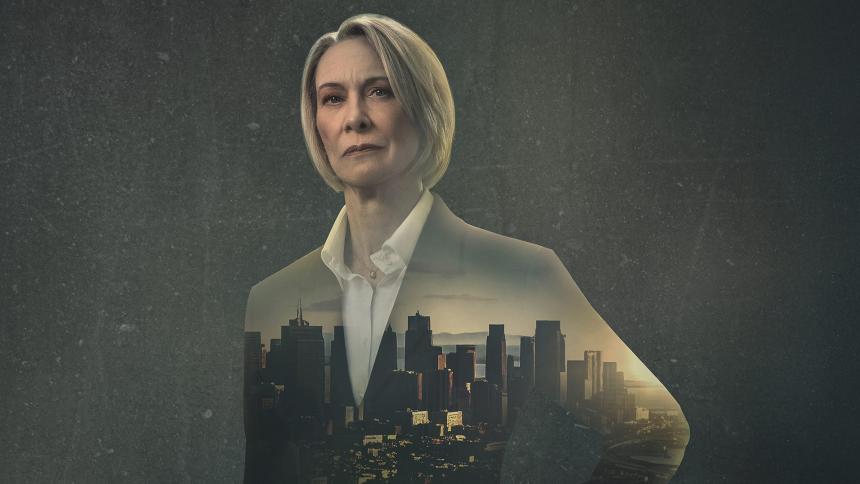
The Death Investigator with Barbara ButcherMost people spend their lives avoiding death, but medicolegal death investigator Barbara Butcher has built a successful career by walking straight towards it.
For more than two decades in New York City, Butcher stood behind police tape, stepped into crime scenes and examined the final moments of thousands of lives. Her job was not just to observe, but to understand. Who was this person? What happened to them?
Join Crime+Investigation as we delve into the mind of Barbara Butcher and explain what her job involves. Want to learn more? Don’t miss the new series, The Death Investigator with Barbara Butcher, available from Tuesday, 19th May on Crime+Investigation.
What does a death investigator actually do?
Barbara Butcher’s official title was medicolegal death investigator at the New York City Office of the Chief Medical Examiner. It’s a role many people can misunderstand.
In a nutshell, a death investigator is one of the first professionals called when someone dies unexpectedly. They attend the scene of the death, examine the body in its original setting and gather crucial evidence that helps determine how and why a person died.
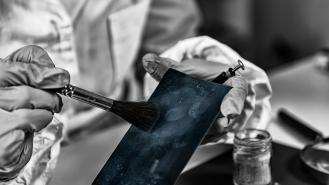
It’s similar to a forensic pathologist, except with one key difference. Unlike a forensic pathologist, who conducts autopsies in a lab, a death investigator works in real time, often at chaotic or distressing scenes. They speak to witnesses, observe the surroundings and document every detail that might later prove vital.
Butcher herself once described it simply, ‘If the police own the scene, the investigator owns the body.’ Over Barbara’s career, she investigated more than 5,500 deaths, including around 680 homicides.
From setback to second chance
However, Butcher’s path into this world was anything but straightforward. She originally trained as a physician’s assistant and later moved into hospital administration. But her life took a difficult turn when she lost her job because of alcoholism.
What followed was a period of recovery that ultimately reshaped Butcher’s future. Through a vocational rehabilitation programme, she was encouraged to consider a new direction. The suggestion was to work as a death investigator.
In 1992, she took that leap and joined the New York City Office of the Chief Medical Examiner. At the time, the field was still largely male-dominated. She was only the second woman hired into the role and the first to stay longer than a few months.
What began as a second chance quickly became a successful lifelong career, as Barbara Butcher rose through the ranks. Butcher eventually became Chief of Staff and Director of the Forensic Science Training Program, a role that went far beyond attending crime scenes.
As Chief of Staff, she was responsible for helping run the entire agency. That included managing operations, coordinating with law enforcement and overseeing large-scale disaster response. At the same time, she created a national training programme to teach best practices in death investigation, helping shape the next generation of forensic professionals.
Career-defining cases
Across more than 20 years, Butcher worked on some of the most significant and harrowing cases in modern history. One of the most defining moments came after the September 11 attacks. Butcher was part of the team responsible for recovering and identifying remains from the World Trade Center.
It was painstaking, emotionally overwhelming work. In many cases, identification came down to the smallest fragments of evidence.

Although the major disasters are often the ones that stay with investigators, it is the smaller, more personal cases that can have a real impact, too. Years later, Butcher has spoken about scenes that never left her. Not because of their scale, but because of their human impact.
An emotional toll
Although Barbara’s job was making an impact, that didn’t stop her career from taking an emotional toll. How can it not? Butcher has been open about the psychological impact of her repeated exposure to trauma, violence and grief, which can change how a person sees the world.
At times, Butcher has described feeling numb, as though death had become normal simply because she saw it so often. There is even a term for it. First responder syndrome is a kind of emotional wear and tear that builds over the years in high-stress roles.
But alongside that weight, there is also a sense of purpose. For Butcher, the job was never just about death. It was about answers, clarity for families, helping investigations move forward and giving victims a voice when they could no longer speak for themselves.
Watch The Death Investigator with Barbara Butcher on Crime+Investigation from Tuesday 19th May. Want more true crime content? Keep up to date with the Crime+Investigation newsletter! Get exclusive access to new articles, episodes, clips, competitions, and more – delivered weekly and completely free. Don't miss out – sign up today!