The Carnegie Deli murders: The night that shook New York
The Death Investigator with Barbara ButcherNew York City has seen its share of violent crime. But some cases cut through the noise and linger for years. The Carnegie Deli murders are one of them.
On a spring evening in May 2001, what should have been a relaxed night among friends soon turned into something far more sinister. Inside an apartment above New York’s famous Carnegie Deli, five people gathered to talk, drink wine and enjoy each other’s company. However, three of them would be dead within minutes, and two others would be left fighting for their lives.
Join Crime+Investigation as we deep dive into the events of that night and the findings of medicolegal death investigator Barbara Butcher, ahead of The Death Investigator With Barbara Butcher starting on Tuesday, 19th May.
Who were the victims?
At the centre of it all was Jennifer Stahl, a 39-year-old actress, singer and creative spirit. Best known for her appearance in Dirty Dancing, Stahl had built a life in Manhattan that blended art and music. She also sold high-grade marijuana to a trusted circle.
That night, Stahl was hosting friends, including Charles “Trey” Helliwell, Stephen King, Rosemond Dane and Anthony Veader. It was a small, familiar group. Nothing about the evening hinted at danger. Then came a buzz at the door.
The night that changed everything
Two men entered the apartment shortly after 7:30pm. There were no signs of forced entry, something that would later prove crucial. Inside, the mood shifted instantly. The men were armed, proving this was no casual visit.
What followed was quick and terrifying. Some of the guests were restrained with duct tape, while Stahl was separated from the others and taken into another room. Despite her pleas, telling the intruders to 'take everything and leave', the situation escalated beyond control.
One by one, all five victims were shot.
Stephen King and Trey Helliwell died at the scene. Jennifer Stahl was rushed to the hospital but later succumbed to her injuries. Against overwhelming odds, Rosemond Dane and Anthony Veader survived, Veader even managing to call 911 after freeing himself.
Barbara Butcher at the scene
Among the first professionals to confront the aftermath was Barbara Butcher, a death investigator with New York City’s medical examiner’s office. Her role required both precision and emotional resilience. Butcher walked into scenes that most people could barely imagine.

At the Carnegie Deli apartment, Butcher noticed something subtle but deeply important: there were no signs of forced entry.
That single observation helped shape the direction of the entire investigation. If the door hadn’t been broken down, it suggested the victims knew their attackers, or at least trusted them enough to let them in.
The investigation begins
Police quickly began piecing together what had happened. Surveillance footage showed two men entering the building that evening. It wasn’t long before they were identified: Sean Salley, who had connections to Stahl, and Andre “Dre” Smith.

Smith turned himself in within weeks, though initially he denied involvement. Under questioning, he eventually admitted to being part of the robbery, claiming the shooting wasn’t planned. Salley disappeared.
What followed was a multi-state manhunt. Investigators traced movements, followed leads, and even appealed to the public through America’s Most Wanted. It worked. Within an hour of the broadcast, a tip led authorities to Salley at a Miami homeless shelter. He was arrested shortly after.
The aftermath
Both men were charged with multiple counts of murder and robbery. In court, each tried to blame the other for the killings. But the jury found them both guilty. In 2002, they were sentenced to 120 years to life in prison. For the families, some justice prevailed, but not closure.
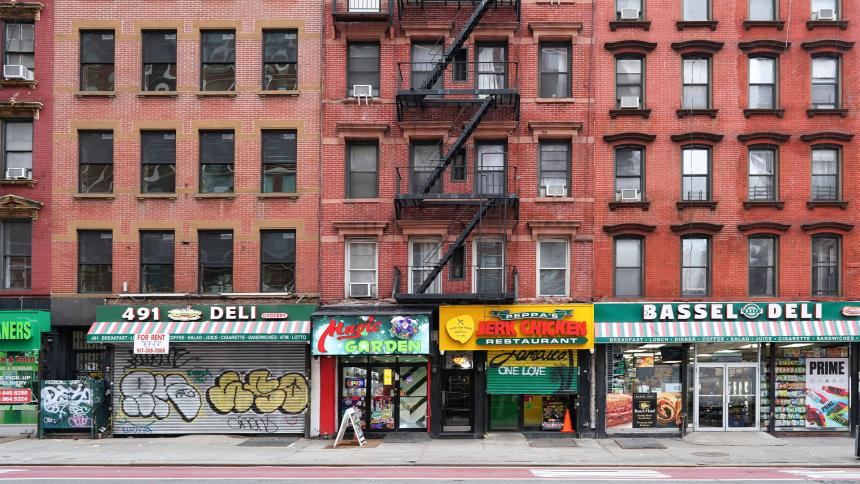
The Carnegie Deli murders shook New York not just because of their brutality, but because of where and how they happened. This wasn’t a dark alley or a distant neighbourhood, it was a home above one of the city’s most recognisable landmarks.
For investigators like Barbara Butcher, it was another reminder of how fragile ordinary moments can be, and how vital careful, human-centred work is in the aftermath. Learn more about her life and career by watching The Death Investigator With Barbara Butcher from Tuesday 19th May on Crime+Investigation
Love true crime? Stay in the know with the Crime+Investigation newsletter! Get exclusive access to new articles, episodes, clips, competitions, and more – delivered weekly and completely free. Don't miss out – sign up today!