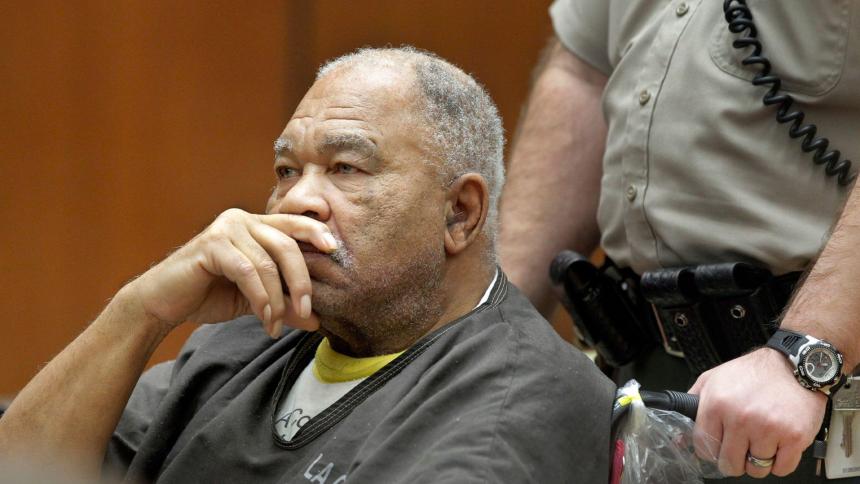
America’s deadliest serial killer: Who was Samuel Little?
When you think of serial killers, names like Bundy or Gacy might come to mind. But there is perhaps no more chilling case in American history than that of Samuel Little. Little’s confirmed victims alone make him the deadliest serial killer the United States has ever seen.
Samuel Little was convicted of three murders, yet in prison, he confessed to killing 93 people between 1970 and 2005. As of 2020, investigators had confirmed at least 50 of those killings, spanning multiple states.
Join us at Crime+Investigation as we dig deep into Samuel Little’s crimes, how he selected victims and why many of his confessions haven’t resulted in convictions.
Drifter, boxer, predator
Born Samuel McDowell on 7th June 1940 in Georgia, Little had a troubled upbringing. He was raised by his grandmother and dropped out of school early. As a young man, he slipped into criminality, theft, robbery, drug offences and violence across multiple states.
In the 1960s and 70s, Little drifted from place to place, often living on society’s margins. His victims included women who were drug users, sex workers and people without stable homes. Little himself admitted that he deliberately targeted those he believed 'would not be missed'.
His former life as a boxer would influence his method of killing. Over decades, Little’s signature modus operandi emerged: he would punch a victim unconscious, strangle her and then dump the body in a secluded area.
There’d be no bullets, no knife wounds, often no sign of violence, which meant many deaths were ruled overdoses or accidental.
Confessions of a killer
For years, Little got away with his crimes. But that all changed in 2012. Arrested on a narcotics charge at a Kentucky homeless shelter, he was extradited to California, where DNA linked him to three unsolved homicides from 1987 and 1989.
In 2014, he was convicted of those murders and given three consecutive life sentences – but authorities suspected there was far more victims.
During a long series of interviews conducted by Texas Ranger James Holland in 2018, Little began to confess. Over 700 hours of questioning unearthed a horrifying catalogue of killings, 93 in total, according to Little’s account.
He didn’t just rely on memory. Little actually drew portraits of dozens of the women he claimed to have killed. The FBI’s Violent Criminal Apprehension Program (ViCAP) reviewed each confession and concluded that each was credible.
The bureau declared Little the most prolific serial killer in US history.
Cold cases without conviction
If Little confessed to nearly a hundred murders, why aren’t there that many convictions? The victims were often ignored, their deaths misclassified, and their bodies never properly examined.
Because Little rarely used weapons, and because many victims were found in a condition consistent with overdose or 'natural causes', local police often closed cases quickly. Even where foul play was suspected, evidence was minimal. No DNA, no witness statements, no preserved crime scene.
Corroborating Little’s confessions is a painstaking process. Even with a sketch and a sequence of events, investigators often lack physical evidence. Time has worn away the traces. For example, the victim’s next of kin may be unknown, or witnesses may be dead. More than 50 confessions have been verified as of 2020, but many remain cold cases.
Agencies continue to appeal to the public for help, for families to come forward, for old case files to be re-examined, for memories to be refreshed. The hope is to bring closure for some of the countless women Little said he killed, and to give names back to the 'Jane Does'.
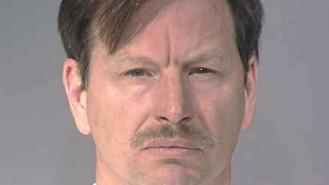
Lost lives, forgotten people
What makes Samuel Little’s story so painful isn’t just the number of victims. It’s that he targeted women who he believed would not be missed in life, and in death. The fact that many deaths were dismissed as overdoses or accidents speaks to a grim reality.
When Little confessed, he didn’t celebrate. He claimed he saw himself as a grim sort of redeemer, helping authorities’ close cases and maybe freeing innocent people who had been wrongly convicted.
'If I can help get somebody out of jail,' he told interviewers, 'then God might smile a little more on me.'
He died in custody on 30 December 2020 at the age of 80, still a convicted murderer, with many victims’ names lost to time.
Love true crime? Stay in the know with the Crime+Investigation newsletter! Get exclusive access to new articles, episodes, clips, competitions, and more – delivered weekly and completely free. Don't miss out – sign up today!