Crime Files
Lizzie Borden
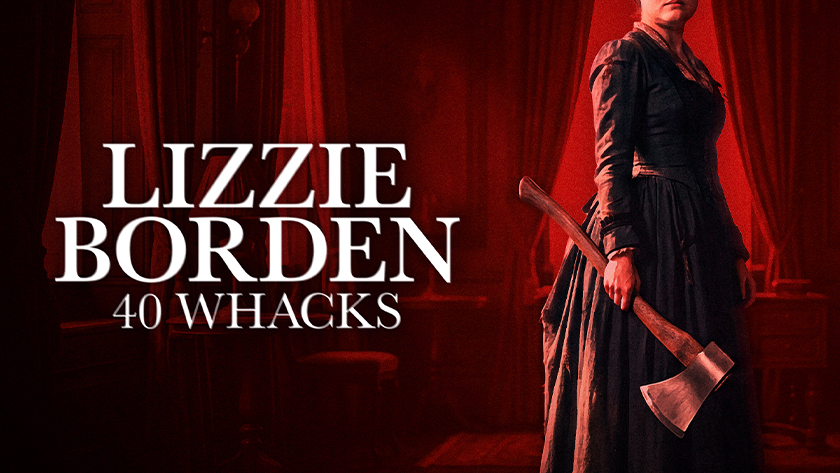
Lizzie Borden was tried and acquitted of the 1892 Fall River axe murders. Inside the case, the trial, the verdict and the unsolved mystery.

Introduction
On the morning of 4th August 1892, Andrew and Abby Borden were hacked to death in their own home in Fall River, Massachusetts. Andrew, a wealthy businessman, was found on the sitting room sofa, his face split open. His wife Abby lay upstairs in the guest room, killed over an hour before him. There was no sign of a break-in and nothing had been stolen.
Suspicion fell almost at once on the one family member in the house at the time: Andrew's 32-year-old daughter, Lizzie. She was arrested, charged and put on trial for a double murder that had gripped the entire country. Ten months later, a jury took barely more than an hour to acquit her.
No one else was ever charged. Lizzie lived out the rest of her life in Fall River, shunned by the town, until her death in 1927. More than a century on, one question still hangs over the case.
If Lizzie Borden didn’t kill her father and stepmother, who did?
Crimes
The Bordens were not a happy household. Andrew was a very wealthy man, but notoriously tight with his money. The Borden family home at 92 Second Street had limited plumbing by modern standards, with a kitchen pump and cellar toilets but no bathroom or electricity.
Lizzie and her older sister Emma had long resented their stepmother Abby, particularly over Andrew's habit of gifting property to Abby's relatives. In the days before the murders, the whole house had been violently sick. Abby had privately feared they were being poisoned.
On the morning of 4th August 1892, Andrew left for his usual walk into town. Abby went upstairs to make the bed in the guest room. There she was struck on the side of the head and fell face down. She was then hit multiple times, 18 or 19 blows in total, and died where she lay. The time was estimated to be somewhere between 9am and 10:30am.
Andrew returned home around 10:30am to find the front door bolted. The maid, Bridget Sullivan, let him in. He settled on the sitting room sofa for a nap. It’s believed that shortly after 11am he was attacked in the same brutal way, struck 10 or 11 times with a hatchet. One blow split his eye cleanly in two. His wounds were still bleeding when he was found, a sign the attack had only just happened.
At around 11:10am, Lizzie called out to Bridget: 'Maggie, come quick. Father's dead. Somebody came in and killed him.' Abby's body upstairs was not discovered until a little later, by Bridget and a neighbour who went up the stairs together and saw her through the guest room door.
The weapon has passed into legend as an axe, but the murders were almost certainly committed with a hatchet. A handleless hatchet head was found in the cellar and presented by the prosecution, although it was never definitively established as the murder weapon.
Read more:
Arrest
From the start, Lizzie's account did not add up. She told police she had been out in the barn loft looking for lead sinkers for a fishing trip during the few minutes her father was killed, yet the dusty loft floor showed no footprints and the space was stiflingly hot. Her answers about where Abby was that morning kept changing.
Two days after the murders, a drug clerk named Eli Bence testified that Lizzie had come into his shop the day before the killings and tried to buy prussic acid, a deadly poison. She said she wanted it to clean a sealskin cape. The chemist had refused to sell it to her.
An inquest opened on 9th August before Judge Josiah Blaisdell. Over four hours of questioning by District Attorney Hosea Knowlton, Lizzie gave confused and contradictory answers, possibly affected by the morphine a doctor had prescribed to calm her nerves. Two days later she was arrested. She was taken to jail in Taunton and, at a preliminary hearing later that month, Blaisdell ruled her 'probably guilty' and sent the case to a grand jury.
The grand jury was slow to act. It was the testimony of Alice Russell, a family friend staying with the sisters, that helped secure an indictment. Alice claimed she had seen Lizzie burn a blue dress in the kitchen stove days after the murders, saying it was ruined with paint. Lizzie was indicted on 2nd December 1892.
Trial
The trial of Lizzie Borden opened on 5th June 1893 at the courthouse in New Bedford, before a panel of three judges and a jury of 12 men. The prosecution was led by Knowlton and William Moody, the future United States Supreme Court Justice. Lizzie was defended by a formidable team that included Andrew Jennings and George Robinson, a former Governor of Massachusetts.
The drama began early. As Moody opened the state's case, he tossed Lizzie's blue dress onto the table and revealed the skulls of her murdered parents, brought into court as evidence. Lizzie fainted at the sight.
The prosecution argued that only Lizzie had both the motive and the opportunity. Bridget Sullivan placed her alone in the house at the crucial time. Alice Russell described the burned dress. But the case had real weaknesses. There was no observable blood on Lizzie, no clear murder weapon, and no explanation for how she could have cleaned herself and hidden the evidence in the few minutes available. The broken-handled hatchet head the state produced was never convincingly tied to the crime.
Two rulings badly damaged the prosecution. The judges excluded Lizzie's rambling inquest testimony, ruling she had effectively been a prisoner giving evidence without a lawyer. They also barred the drug clerk’s account of the attempted prussic acid purchase. Then, in his charge to the jury, Justice Justin Dewey delivered what reporters described as a plea for the defence, urging jurors to weigh Lizzie's respectable Christian character in her favour.
Read more:
Verdict
The jury took about an hour and a half to reach a decision. On 20th June 1893 the foreman delivered the verdict: not guilty. Lizzie cried out, sank into her chair and buried her face in her hands. Spectators rushed to congratulate her.
The press largely approved. Many found it impossible to believe that a churchgoing, upper-middle-class woman could have committed such savagery, and the case against her was entirely circumstantial. Whether that meant she was innocent is another matter. Most historians who have studied the evidence since believe the prosecution simply failed to prove beyond reasonable doubt what many suspected: that Lizzie did it.
But if she didn’t, then who did? Over the years, suspicion has been cast on several others. Bridget Sullivan, the maid, was in the house and was briefly suspected. Uncle John Morse, who had stayed the night before, gave an oddly detailed alibi for the time of the killings. Some have even pointed at Emma, whose alibi placed her miles away in Fairhaven.
Another theory is the killer was someone entirely removed from the family. The ‘Wild Man’ theory points to a mysterious individual who eyewitnesses reported seeing near the Borden family home around the time the murders took place. According to reports, this man was described as unkempt, perhaps mentally disturbed and not a regular in the community.
Despite the range of theories, none have ever been proven and Lizzie was the only person ever charged. Over 130 years later, the Borden murders remain officially unsolved, and will likely remain so for eternity. Just as with many other infamous unsolved cases, it’s the mystery that fuels the timeless public fascination.
Aftermath
Acquittal did not mean acceptance. Many Fall River residents continued to believe that Lizzie was guilty, and she spent the rest of her life an outcast in her own town.
With their inheritance, Lizzie and Emma bought a large house in the fashionable Hill district that Lizzie named Maplecroft. Around this time she began calling herself Lizbeth. She developed a love of the theatre and mixed with actors and artists, unusual company for a woman of her background. She would host numerous parties at the house and formed a close friendship with the actress Nance O’Neil. In a 1913 interview, Emma said that living in the house had become ‘absolutely unbearable’.
Lizzie's health declined after gallbladder surgery, and she died of pneumonia on 1st June 1927, aged 66. Her funeral was small and few attended. Emma died just nine days later. Neither sister ever married, and they were buried side by side in the family plot at Oak Grove Cemetery, near the parents Lizzie was accused of killing.
Family
The people at the heart of the Borden case were all under one roof, and the tensions between them are central to any theory of what happened.
- Andrew Borden, Lizzie's father, was a self-made businessman who had grown wealthy through property, banking and a furniture and casket trade. He was known for his extreme frugality despite his fortune.
- Abby Borden was Lizzie's stepmother, whom Andrew married two years after the death of Lizzie's mother. Lizzie pointedly called her 'Mrs Borden' and believed she had married Andrew for his money.
- Emma Borden was Lizzie's older sister and lifelong companion. She was away in Fairhaven at the time of the murders, which removed her from immediate suspicion, and she stood by Lizzie throughout the trial. Their eventual estrangement in 1905 was one of the great mysteries of Lizzie's later life.
- Bridget Sullivan, known to the family as Maggie, was the Bordens' young Irish maid. She was in the house on the morning of the murders and became the single most important witness at the trial.
- John Morse was Lizzie and Emma's maternal uncle. He had stayed at the house the night before the killings, and his presence, combined with a suspiciously precise alibi, briefly made him a person of interest.
Read more:
House
The Borden home still stands. At the time of the murders, it was 92 Second Street, since renumbered 230 Second Street, a plain clapboard house in what was then a respectable part of Fall River.
Today it is one of the most notorious murder homes in America, and it has been turned into a museum and a bed and breakfast. Visitors can take guided tours of the rooms where Andrew and Abby died, and the more daring can book a night's stay, sleeping in the house where the killings took place. Much of the original period styling remains, and the property has become a fixture of dark tourism, drawing true crime enthusiasts from around the world.
Read more:
Rhyme
Almost everyone knows the rhyme, even if they know nothing else about the case.
'Lizzie Borden took an axe, and gave her mother forty whacks. When she saw what she had done, she gave her father forty-one.'
It is catchy, chilling, and wrong on almost every count. Abby was struck around 18 or 19 times, not 40, and Andrew around 11, not 41. Abby was Lizzie's stepmother, not her mother. And of course Lizzie was acquitted of the killings the rhyme so cheerfully pins on her. The verse is thought to have been invented to sell newspapers, set to the tune of a popular song of the day, and it has outlived every other detail of the case in the public memory.
Read more:
On Screen
Few crimes have been retold as often as this one. Lizzie Borden has been the subject of films, television dramas, a ballet, an opera, a musical and countless books, and interest in her has never really faded.
The 1975 television film The Legend of Lizzie Borden starred Elizabeth Montgomery in an Emmy-nominated performance. In a strange twist, it was later discovered that Montgomery and Borden were distant cousins. Lifetime's Lizzie Borden Took an Ax (2014), with Christina Ricci in the title role, was followed by the spin-off series The Lizzie Borden Chronicles (2015). The 2018 film Lizzie cast Chloe Sevigny as Borden and Kristen Stewart as Bridget Sullivan.
The latest and highest-profile retelling is Monster: The Lizzie Borden Story, the fourth season of the Netflix anthology from Ryan Murphy and Ian Brennan. Ella Beatty plays Lizzie, with Vicky Krieps as Bridget Sullivan, Charlie Hunnam as Andrew Borden, Rebecca Hall as Abby Borden and Billie Lourd as Emma. It is the first season of the anthology to centre on a woman, and the first on someone who was acquitted.
Beyond the screen, the case inspired the 1948 ballet Fall River Legend, a 1965 opera, and Lizzie: The Musical. There is even an American heavy metal band, Lizzy Borden, named after her.
Read More
Timeline
Lizzie Andrew Borden is born in Fall River, Massachusetts.
Lizzie's mother, Sarah, dies.
Andrew Borden marries his second wife, Abby Durfee Gray.
Andrew and Abby Borden are found hacked to death at 92 Second Street.
Lizzie is arrested and charged with the murders.
A grand jury indicts Lizzie.
Her trial opens in New Bedford.
The jury acquits Lizzie after around 90 minutes.
Emma Borden moves out of Maplecroft. The sisters never speak again.
Lizzie dies of pneumonia, aged 66.
Emma dies nine days later.
Key Figures

Lizzie Borden
The accused. Andrew's younger daughter. Tried and acquitted of the murders. Later called herself Lizbeth.
Andrew Borden
Lizzie's father. Wealthy, frugal businessman. Murder victim.
Abby Borden
Lizzie's stepmother. Murder victim, killed before Andrew.
Emma Borden
Lizzie's older sister. Away in Fairhaven at the time. Stood by Lizzie, then became estranged in 1905.
Bridget Sullivan
The Bordens' maid, known as Maggie. In the house that morning and the key trial witness.
John Morse
Lizzie's maternal uncle. Stayed the night before. Briefly a suspect.
Hosea Knowlton
District Attorney in Massachusetts who interviewed and later prosecuted Lizzie.
William Moody
Prosecutor, later a US Supreme Court Justice.
George Robinson
Lead defence attorney and former Governor of Massachusetts.
Andrew Jennings
Defence attorney and the Borden family lawyer.
Justice Justin Dewey
Trial judge whose charge to the jury heavily favoured the defence.
Alice Russell
Family friend whose evidence about the burned dress helped secure the indictment.Frequently Asked Questions
Who was Lizzie Borden?
Lizzie Borden was an American woman who was tried and acquitted of the 1892 axe murders of her father and stepmother in Fall River, Massachusetts. The case became a national sensation and remains unsolved.
Did Lizzie Borden kill her parents?
She was charged with the murders but found not guilty at trial. No one else was ever charged, and the case is officially unsolved. Many historians believe the evidence pointed to Lizzie, but the prosecution could not prove it beyond reasonable doubt.
Why was Lizzie Borden acquitted?
The case against her was entirely circumstantial. There was no observable blood on her, no clear murder weapon and no witness to the killings. Two key pieces of evidence were also ruled inadmissible, and many jurors found it hard to believe a respectable Victorian woman capable of the crime.
How did Lizzie Borden die?
She died of pneumonia on 1st June 1927 in Fall River, aged 66, following gallbladder surgery from which she never fully recovered.
How many people did Lizzie Borden kill?
She was accused of two murders, her father Andrew and stepmother Abby. She was acquitted of both.
Did Lizzie Borden have any children?
No. Lizzie never married and had no children.
Where is Lizzie Borden buried?
She is buried in the family plot at Oak Grove Cemetery in Fall River, alongside her sister Emma and the parents she was accused of killing.
Is the Lizzie Borden story true?
Yes. The murders and the trial were real events in 1892 and 1893. The many films and dramatisations, including Netflix's Monster, are based on the real case, though they take creative liberties.
Can you visit the Lizzie Borden house?
Yes. The house at 230 Second Street in Fall River is now a museum and bed and breakfast, offering tours and overnight stays.
Related Articles
Subscribe
Looking for more killer content? Subscribe to the Crime+Investigation newsletter for exclusive access to our latest crime stories, videos and investigations into the darkest corners of human nature.