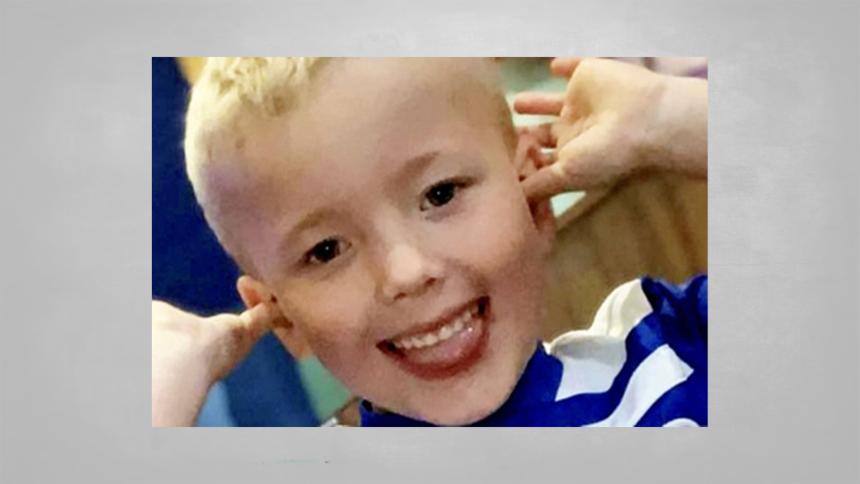
Arthur Labinjo-Hughes: A little boy failed by the system
Arthur Labinjo-Hughes should have been safe with the adults responsible for his care. Instead, prosecutors later described the treatment he endured at the hands of his father, Thomas Hughes, and his stepmother, Emma Tustin, as a 'campaign of appalling cruelty'.
This is the story of how a six-year-old boy was let down by those who should have protected him.
Join Crime+Investigation as we dive into the horrific murder, the events that led to his death and why the abuse was allowed to carry on for so long.
Arthur’s early life
Arthur was born in 2014 and spent much of his early childhood living between his separated parents. Family members later described him as energetic, affectionate and football mad. He was a little boy who loved spending time with relatives and playing with friends.
His life changed dramatically in 2019 after his mother, Olivia Labinjo-Halcrow, was imprisoned for killing her partner. Arthur then moved into the full-time care of his father, Thomas Hughes. Initially, relatives believed he was settling well. But concerns gradually emerged after Hughes began a relationship with Emma Tustin.

Family members and teachers noticed changes in Arthur’s behaviour. He became quieter, more anxious and frightened of getting into trouble. School staff observed that he no longer seemed as happy as before.
Life in lockdown
When the COVID-19 lockdown began in early 2020, Hughes and Arthur moved into Tustin’s home in Solihull. Isolated from teachers, relatives and many outside contacts, Arthur became increasingly vulnerable behind closed doors.
The abuse Arthur suffered escalated over several months. Court evidence later showed he was regularly insulted, deprived of food and water, poisoned with salt, physically assaulted and forced to stand alone in a hallway for hours at a time as punishment.
Disturbingly, much of the abuse was recorded by Hughes and Tustin themselves through photos, audio recordings and messages recovered by police. In some recordings, Arthur could be heard crying for his grandmother and saying, 'Nobody loves me'.

In one especially heartbreaking detail, prosecutors revealed Arthur spent around 35 hours over a three-day period standing isolated in the hallway. He was monitored by cameras while other members of the household ate meals and watched television nearby.
Events leading to Arthur’s death
On 16th June 2020, Arthur suffered the fatal assault that ended his life. Earlier that day, witnesses described him as gaunt, exhausted and struggling physically. He had reportedly collapsed from weakness while out with Tustin.
Prosecutors later argued that Emma Tustin violently shook Arthur and repeatedly banged his head against a hard surface inside the family home. The attack caused a severe brain injury that doctors said was unsurvivable.
One of the most chilling details revealed in court was that Tustin photographed Arthur as he lay dying and sent the image to Hughes before calling emergency services.
Arthur died in the hospital the following day at just six years old.
In December 2021, Emma Tustin was convicted of murder and sentenced to life imprisonment with a minimum term of 29 years. Thomas Hughes was convicted of manslaughter and child cruelty. His prison sentence was later increased to 24 years.

Why was the abuse allowed to continue?
One of the most painful questions surrounding Arthur’s death is why nobody intervened in time to save him.
Relatives had raised concerns repeatedly. Arthur’s grandmother contacted social services after finding bruises on his body and pleaded for him to stay with her instead of returning to Tustin’s home. His uncle also contacted the police.
Arthur’s maternal grandmother later told reporters, 'I think they are cold, calculating, systematic torturers of a defenceless little boy. They’re wicked, evil. There’s no word for them, especially your own child.'
But why wasn’t Arthur moved out of their care?
A social worker visited the household in April 2020 after those concerns were reported. However, the explanations provided by Hughes and Tustin were accepted, and Arthur was described as 'very happy and very safe'.
Critics later argued that lockdown conditions played a significant role in allowing the abuse to remain hidden. Schools were closed, face-to-face contact with professionals was reduced, and vulnerable children became less visible to safeguarding services.
Former Children’s Commissioner Anne Longfield later said, 'Many at-risk children had effectively 'slipped from view' during the pandemic'.
For more on cases that changed how Britain thinks about child safeguarding, sign up to the Crime+Investigation newsletter. Every week, you'll receive the latest articles, episodes and more from C+I delivered straight to your inbox.