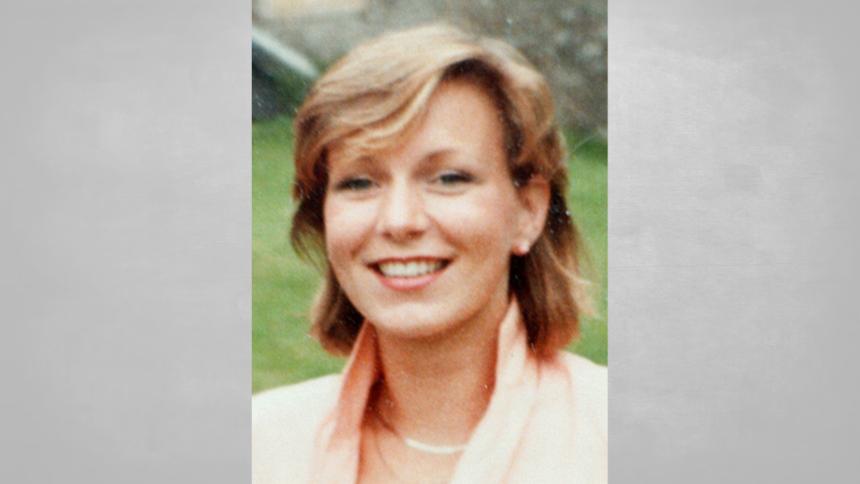
Suzy Lamplugh: The case that changed Britain's stalking laws
It’s been nearly 40 years since Suzy Lamplugh went missing. The estate agent left her office in London to meet a prospective client only known as 'Mr Kipper'. Suzy was never seen again.
Despite one of the largest missing person investigations Britain had ever seen, no trace of Suzy was found. Her car was later discovered nearby, but the young woman herself seemed to have vanished without a trace.
Crime+Investigation examines how Suzy's disappearance changed Britain's approach to stalking and asks whether four decades of reform have gone far enough.

Before stalking had a name
Looking back on 1986 can be difficult. Stalking was viewed very differently 40 years ago. Today, it is widely recognised as a serious crime that can escalate into extreme violence and murder.
In the 80s, the legal framework barely existed. Repeated unwanted contact was often dismissed as harassment, nuisance behaviour or simply an unfortunate part of modern life.
From their grief, Suzy's parents, Diana and Paul Lamplugh, channelled their loss into action, establishing the Suzy Lamplugh Trust in 1986. The charity became one of the UK's leading voices on personal safety, stalking awareness and victim protection.
Over the following decades, campaigners worked to educate the public about behaviours that are now recognised as classic warning signs: obsessive monitoring, repeated unwanted communication, following, surveillance and coercive behaviour.
What happened to Suzy?
Suzy was declared legally dead in 1993, though her body has never been recovered to this day. The case remains one of Britain's most enduring unsolved mysteries.
For decades, investigators believed that convicted killer John Cannan was responsible. Although he was repeatedly questioned about the case, he was never charged with Suzy's murder and denied involvement until his death in 2024.
Yet while the mystery of what happened to Suzy on the day she went missing remains unsolved, the legacy of her disappearance has become unmistakably clear.

The long road to better protection
Although Suzy has never been found, progress toward better protection from harassment remains in full swing.
The introduction of the Protection from Harassment Act in 1997 marked an important milestone, while specific stalking offences were later introduced in England and Wales in 2012. More recently, Stalking Protection Orders (SPOs) were created to allow earlier intervention before behaviour escalated into more serious offending.
Yet despite those developments, concerns have persisted that stalking victims continue to fall through gaps in the system.
Inspectors, campaigners and victims have repeatedly detailed inconsistent police responses and difficulties identifying stalking behaviour early. The rise of online abuse has also transformed the nature of stalking. Modern perpetrators can track, monitor and harass victims through social media, anonymous accounts and digital technology, often without ever meeting them in person.

What has changed in 2026?
Four decades after Suzy disappeared, the new Crime and Policing Act 2026 represents the latest attempt to strengthen protections for victims.
One of the most significant changes involves Stalking Protection Orders. Previously, police had to apply separately for an SPO through a magistrates' court. Under the new legislation, courts can now impose these orders directly following a conviction or even an acquittal if they believe a person still presents a stalking risk. This is intended to close gaps that previously left some victims unprotected.
The Act also introduces a statutory duty for the Home Secretary to issue multi-agency stalking guidance. This guidance aims to improve cooperation among police, healthcare professionals, schools, and other public bodies so that stalking behaviours are identified and managed more consistently.
Most notably, the legislation strengthens what has come to be known as the victim's 'Right to Know'. In cases involving anonymous or online stalkers, guidance will support police in disclosing a suspect's identity when necessary to safeguard the victim. For many campaigners, this addresses a long-standing frustration where victims knew they were being targeted but had no idea by whom.

Is it enough?
The question many campaigners continue to ask is whether stronger laws alone are enough.
Legislation can create powers, but those powers still need to be used effectively.
The Suzy Lamplugh Trust has long argued that early identification remains critical. Many stalking cases involve repeated warning signs before behaviour escalates. Victims often report feeling that they are not taken seriously until the risk becomes obvious. By then, valuable opportunities for intervention may already have been lost.
For more on the cases that have shaped Britain's approach to personal safety and victim protection, sign up to the Crime+Investigation newsletter. Every week, you'll receive the latest articles, episodes and more from C+I delivered straight to your inbox.