The case of Sabina and Ursula Eriksson: A shared psychosis?
On a summer afternoon in 2008, two Swedish sisters were seen running repeatedly into fast-moving traffic on the M6 near Stoke-on-Trent. Both were struck by vehicles. Both survived.
The incident was shocking not only because of the immediate danger, but because of what followed. Within hours, one of the sisters would go on to commit an inexplicable murder, leaving investigators searching for answers in psychology, psychiatry and the rare dynamics of identical twins.
But what was going on? Why were the sisters behaving so erratically? Join Crime+Investigation as we explore the psychiatric disorders investigated and how the role of identical twins played a part.
Chaos and collisions
Police were first alerted after reports of two women behaving strangely on the motorway. Officers from Staffordshire Police arrived and attempted to bring the situation under control. The twins, however, were uncooperative, agitated, and appeared deeply paranoid.
When officers tried to speak to them, both women suddenly broke away and ran into traffic. Ursula was struck by a lorry travelling at high speed, her body thrown violently into the air. Moments later, Sabina also ran into the road and was hit by a car.

Remarkably, both women survived. Ursula suffered severe injuries, including multiple fractures, while Sabina appeared to recover quickly, despite the force of the impact. Even more unusual was their behaviour immediately afterwards. Instead of reacting with shock or relief, both women continued to resist help, shouting and accusing others, including police, of trying to harm them.
Witnesses described their behaviour as frantic, fearful and disconnected from reality.
Detained and released
Following the incident, both women were taken into custody. Ursula required hospital treatment due to her injuries, while Sabina, who appeared physically stable, was held and assessed.
During questioning, Sabina made bizarre and paranoid statements, suggesting people were stealing her organs or plotting against her. Despite this, she was deemed fit enough to be charged with minor public order offences related to the motorway incident.
Incredibly, within hours of being released from custody the following day, Sabina would commit a far more serious crime.

A fatal encounter
After leaving the police station, Sabina wandered through nearby streets before encountering Glenn Hollinshead, a 54-year-old man who offered her help. Described as kind and trusting, Hollinshead invited Sabina to stay at his home in the town of Fenton, Stoke-on-Trent.
At first, there seemed to be no cause for alarm. But later that same evening, events took a sudden and tragic turn. Sabina fatally stabbed Hollinshead, inflicting multiple wounds before fleeing the scene.
A passing motorist attempted to apprehend her, but she managed to escape after striking him with a roof tile. Sabina then jumped from a nearby bridge, surviving the fall but breaking both her ankles and fracturing her skull.
Shared psychosis?
One of the most widely discussed explanations for the twins’ behaviour is a rare psychiatric condition known as Folie à Deux, or shared psychotic disorder.
This condition occurs when delusional beliefs are transmitted from one individual to another, often between people with a close emotional bond. In many documented cases, one person is considered the “primary,” while the other adopts and reinforces those beliefs.
In the case of Sabina and Ursula, experts have suggested that Ursula may have been the dominant influence during the motorway incident, with Sabina mirroring her paranoia and fear. The twins’ identical genetic makeup and lifelong closeness may have intensified this shared mental state.
What makes this case particularly unusual is how quickly the shared behaviour appeared to dissolve. After the motorway incident, Ursula was hospitalised and separated from Sabina. Some experts believe that once separated, Sabina’s behaviour shifted, but not toward stability. Instead, her paranoia may have continued independently, culminating in violence.
Trial and aftermath
Sabina was arrested in hospital and later charged with murder. At Nottingham Crown Court on 2nd September 2009, she pleaded guilty to manslaughter on the grounds of diminished responsibility – a plea accepted by the prosecution.
By the time of sentencing, psychiatrists assessed her as fully recovered from her mental illness, which significantly limited the sentencing options available to the judge.
Mr Justice Saunders sentenced her to five years in prison, acknowledging that the outcome would seem inadequate to Glenn Hollinshead's family. His brother Garry later said he did not hold Sabina personally responsible, but was deeply critical of a system that had released her knowing she was unwell.
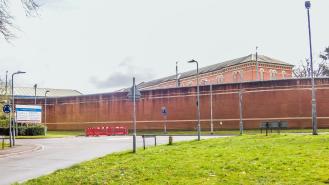
Sabina served her sentence at Bronzefield Women's Prison. Ursula, who was never charged, recovered from her injuries and eventually returned to Sweden. Many questions about what triggered the sisters' behaviour that day have never been fully answered.
For more on cases where psychology and crime collide, sign up to the Crime+Investigation newsletter. Every week, you'll receive the latest articles, episodes and more from C+I delivered straight to your inbox.