The campaign behind Sam Hallam's overturned conviction
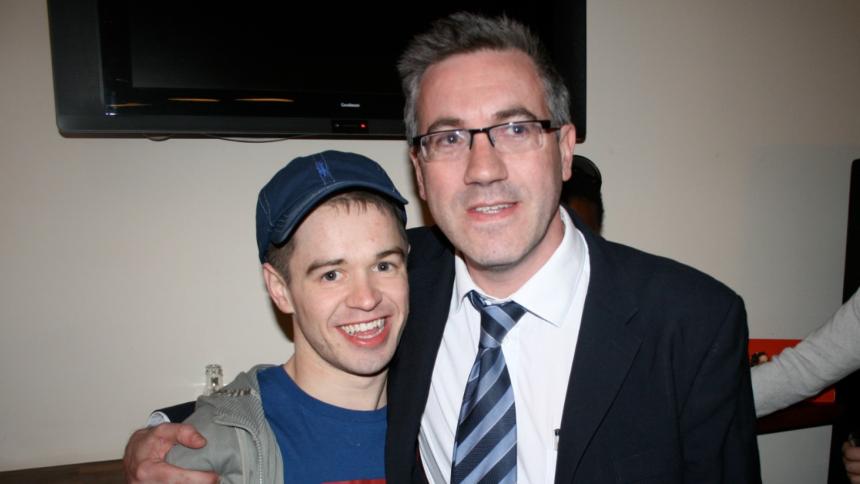
Convictions Gone Bad with Will MellorMatt Foot is the co-director of APPEAL, the legal charity dedicated to challenging wrongful convictions. He previously worked as a defence solicitor at Birnberg Peirce for more than 17 years, representing clients including Sam Hallam.
In this guest article, Matt looks back at Sam's wrongful conviction for murder, the campaign that helped overturn it and his continuing fight for justice and compensation.
Matt also features in episode four of Convictions Gone Bad with Will Mellor, which looks back on Sam's journey from the very beginning.
The road to getting a miscarriage of justice overturned is a long and arduous one, with no guarantee of success. It causes trauma to those stuck in prison and their families. There is one simple reason it takes so long – the criminal justice system never wants to admit it gets it wrong. The result is that people spend years in prison before the wrongful conviction is grudgingly finally recognised. So set against contrition is the criminal justice system that those exonerated find their ordeal continues even after their release. This is the story of Sam Hallam.
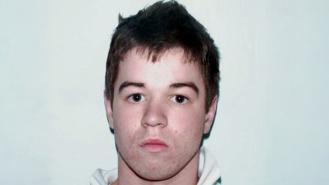
Sam Hallam had never been to Court before he had to give evidence aged just 17 in a murder trial at the Old Bailey. In the run up to the trial he was on remand having to learn how to survive in Feltham Young Offenders Institute. The case against him rested primarily on identification of Sam being at the scene. There were two identification witnesses.
The first witness admitted at trial, 'I was looking for someone to blame'. The second witness did not mention seeing Sam in his initial statement even though he knew him. Only after speaking with the first witness did he mention Sam. He initially described a white boy with blondish hair having a baseball bat. Sam had brown hair. The second witness at trial resiled from his identification, but was treated as a hostile witness to elicit his previous identification.
The prosecution case also relied on the fact that Sam wasn’t accurate about exactly where he was at the time of the murder. In police interview he stated he ‘believed’ he was playing football with his mate, but his friend told the police he hadn’t seen Sam that week. Sam was convicted of the murder of Essayas Kassahun on 26th October 2005.
A year later Sam lost his first appeal but then came his first bit of luck. Paul May had attended the appeal. May was a veteran campaigner who had led campaigns for the release of the Birmingham Six and the Bridgewater Four. Despite a taxing job for Islington Council in the Housing Department, he worked relentlessly, organising public opposition to what were considered settled cases. I don’t know how Sam’s family had got Paul involved but after he attended that first appeal and heard the barrister tell Sam there was nothing more that could be done, he invested the next six years proving the barrister wrong.
Paul May joined up with Sam’s mum Wendy and the family and they set out about building a campaign. Firstly, a local public meeting was organised in Hoxton – 200 people turned up. Local vigils were organised. A bus with a with band travelled up to wish Sam happy birthday on his 24th birthday. Numerous witnesses were located who said Sam was not at the scene.
They obtained the support of Ray Winstone who was related to one of Sam’s friends. He fronted a short documentary piece for ITN News which portrayed a collection of people who said Sam wasn’t at the scene. It also reinforced there was no forensics, CCTV, or mobile evidence to place Sam at the scene. In the run up to Sam’s second appeal, May had worked with a writer Tess Berry-Hart, who put on a play which took its title from the expression made by the key identification witness at trial who said she was looking for ‘Someone to Blame’. The play was excellent.
May came to see me where I worked at Birnberg Peirce Solicitors and asked me if I would get involved. I went to see Sam in HMP Aylesbury. What I found was the politest client, opening the door for me as I struggled with lever arch files. I worked on the case for the APPEAL. I had one particular advantage in representing Sam. I had attended City and East London College in Hoxton when I was 17 so I knew the geography. I had been to the George and Vulture pub which this new Will Mellor Crime+Investigation documentary shows was central to Sam’s case.
Sam was also lucky that he had a very good Case Review Manager at the Criminal Cases Review Commission. Glynn Matheson (who has sadly since left) understood the case and interrogated the prosecution papers, finding material that had not been disclosed which should have, including reference to another Sam who was implicated in the rumour mill. The CCRC then decided to instruct a separate police force to carry out a review. Thames Valley Police found even more witnesses who said Sam was not at the scene, including the intended victim of the attack.
They also considered Sam’s mobile phone which had apparently not been turned on by the original Met Police investigation team. The phone revealed two important bits of evidence the jury never got to hear. Sam had played football with his mate but it was on the day after the murder, so his friend had been wrong that he wasn’t with him that week. Sam’s phone also showed him at the George and Vulture pub on the night of the murder which provided support that he didn’t go to the scene.
Finally, on 16th May 2012, Sam’s second appeal was heard. The public gallery was packed with his supporters. He had been brought from prison and was sat on his own behind bars in the corner of the Court. Defence counsel Henry Blaxland QC set out the appellants case with great skill and clarity, exposing the inherent weaknesses in the identification evidence, and the further fresh evidence that undermined the conviction. Throughout the morning the APPEAL judges sounded in unison with Henry, interrogating the prosecution on the weaknesses of the ID evidence. During the lunch break, shortly before we were due to return to court, the prosecution informed our legal team they were no longer contesting the appeal.
As the afternoon session started, the prosecution barrister stood up and told the court the news. There followed the most enormous visceral roar from the public gallery. Finally the case was coming to an end. The formalities had to play out. Sam got bail at the end of that day and the following day returned to hear his conviction quashed. Each of those decisions were met with another enormous roar.
The battle for compensation
Sam’s release dominated the media. After that he had to work at trying to get back to some sort of normal life. However he was beset with one other legal hurdle in his way. Due to an appalling law that came in in 2014, he was denied any compensation. The law introduced a new test, that in order for those whose convictions were quashed - miscarriage of justice victims - to get compensation, they had to prove they were innocent beyond all reasonable doubt.
Having never been to a court before his murder trial, Sam has now been to every level of court in trying to overturn this test - from the Court of Appeal, the Supreme Court, to the European Court of Human Rights. All have turned him down. The test has impacted on hundreds of innocent people, many of whom have spent years in prison. They are left destitute without a penny.
Last year APPEAL, collaborating with JUSTICE, and with the support of the former Lord Chancellor Charlie Falconer, and David Davis MP launched a campaign to scrap the test. The Law Commission are due to report on the compensation issue soon. If as we hope their report recommends reform the Government needs to act swiftly not least because Sam has had to fight injustice from the age of 17 for something he didn’t do. He is now 39.
Please give your support to the campaign to compensate miscarriage of justice victims on the APPEAL website: https://appeal.org.uk/
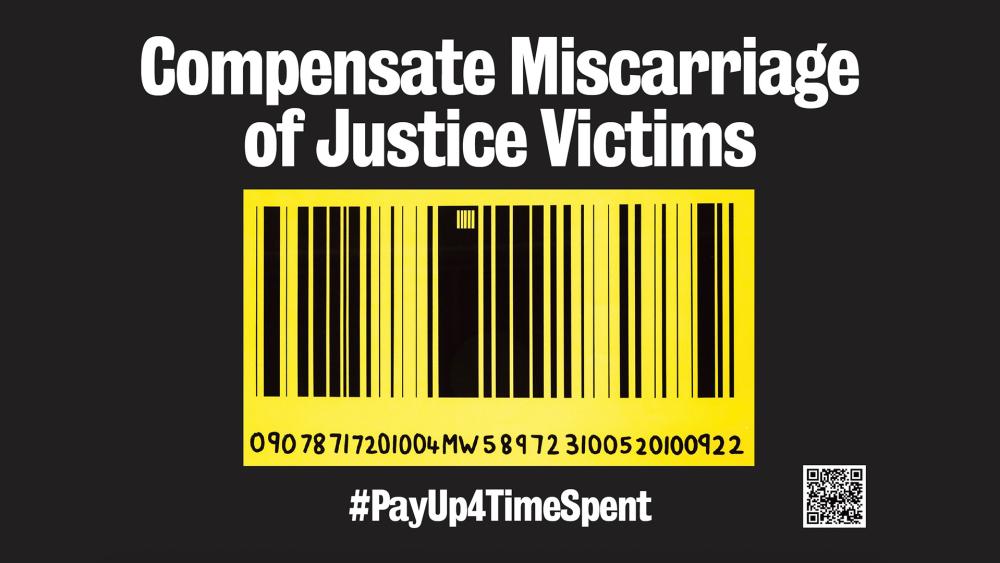
The core image of our call to scrap the test for compensation, Barcode, was created by Patrick Maguire, the youngest member of the Maguire Seven and a victim of miscarriage of justice himself - wrongfully convicted at just 13 years old. The artwork was created in support of Sam Hallam, another victim of wrongful conviction who continues to fight for compensation. The numbers in the painting represent key dates and figures from Sam's time spent unjustly in prison.