The Birmingham Six: Britain's most shocking miscarriage of justice?
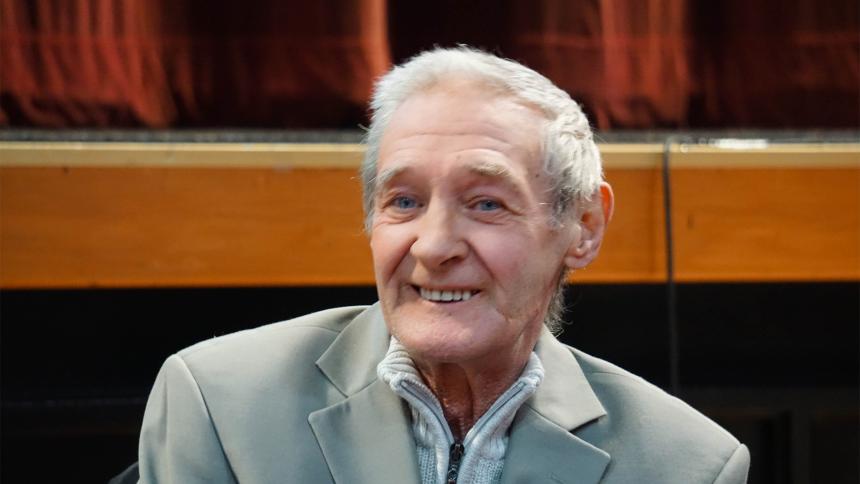
Image credit: Patrick Hill, one of the Birmingham Six, at the first Gerry Conlon Memorial Lecture at St Mary's College Belfast, 2015 . Photo by Brian O'Neill . Licensed under CC BY-SA 4.0 .
On 14th March 1991, six men, their faces filled with relief, walked out of the Old Bailey as a jubilant crowd watched on. The six men had become known to the public as ‘the Birmingham Six’, and their 16-year nightmare was finally over. Their prison sentences had been quashed. No longer were they serving time for heinous crimes they knew they didn’t commit.
What exactly were those alleged crimes? On the evening of 21st November 1974, two bombs were set off in quick succession in the heart of bustling Birmingham. Two of the West Midlands city’s pubs, the Mulberry Bush and Tavern in the Town, were engulfed in flames. The twin blasts, one in each pub, killed 21 people in total and left another 182 injured. It was quickly seen as an act of terrorism.
Back then, terrorism was associated with one group above all: the Provisional IRA (Irish Republican Army). On 15th August 1975, a jury found six Northern Irish men guilty of the bombings. However, in the ensuing years, cracks began to form in the evidence that had won the day for the prosecution. We at Crime+Investigation look at how the Birmingham Six eventually cleared their names and walked free.
The Birmingham pub bombings of 1974
Shortly after 8pm on 21st November 1974, a Birmingham newspaper received a chilling call. Over the phone, an Irish voice warned that bombs had been planted in two parts of the city centre: the Rotunda and New Street. Within minutes, there were explosions in the Mulberry Bush at the Rotunda and the Tavern in the Town on New Street. The bombing claimed 10 lives at the former and 11 at the latter.
With the flying shrapnel having also injured dozens of pubgoers and bystanders, police were determined to track down the perpetrators. Incidentally, five Northern Irish men – Patrick Hill, Gerard Hunter, Richard McIlkenny, William Power and John Walker – had left Birmingham by train earlier that evening. They were on their way to attend the Belfast funeral of friend (and IRA member) James McDade.
Upon reaching the Lancashire coastal retreat of Heysham, the five men were stopped by police. Along with another friend, Hugh Callaghan, who had waved them off at Birmingham’s New Street station, they were taken into custody. There, they found themselves subjected to threats and beatings by West Midlands police officers determined to get confessions out of them. Eventually, the Birmingham Six relented, but these crowbarred admissions of guilt weren't the only half-baked evidence to be used against them in court.
How flimsy forensic evidence landed the Birmingham Six in prison
Frank Skuse, a forensic scientist from the Home Office, conducted the ‘Griess test’ on Hill and Power. This test, designed to detect traces of the explosive liquid nitroglycerine, returned a positive result on both men. According to Skuse, this all but confirmed that Hill and Power had been handling explosives. On paper, this claim, combined with the signed confessions from the Birmingham Six themselves, must have appeared to make an irrefutable case. The convicted men were each sentenced to life imprisonment.
Nonetheless, the investigative journalist Chris Mullin remained unconvinced that the case against the Birmingham Six really held up. He told the British Scandal podcast in 2025 that the supposedly genuine confessions from the six men ‘contradicted each other in almost every significant respect.’ Even the results of the Griesse tests seemed suspect, as Mullin also recalled on the shos.
‘Anything containing nitrous cellulose, which is a constituent of polishes and varnishes and all sorts of household sprays, could produce a positive Griesse test.’ This hypothesis had not been scientifically proven at the time of the trial. It also failed to sufficiently sway the Court of Appeal when it heard the case in 1988. By the time of the 1991 appeal, however, the forensic evidence prepared by Skuse for the 1975 trial had been thoroughly discredited.
The hunt for the real perpetrators
In 2019, an inquest into the Birmingham pub bombings deemed the Provisional IRA responsible, but the organisation itself has never officially claimed so. The inquest also did not identify specific perpetrators. Families of the bombing victims have continued to push for a public inquiry, despite the UK government’s resistance. Meanwhile, in recent years, several members of the Birmingham Six have passed away, including Hugh Callaghan in 2023 and Patrick Hill in 2024.
Fascinated by miscarriages of justice? Sign up to the Crime+Investigation newsletter to read more stories like this. Every week, you'll receive the latest articles, episodes and more from C+I delivered straight to your inbox.