The bag in the bath: What happened to Gareth Williams?
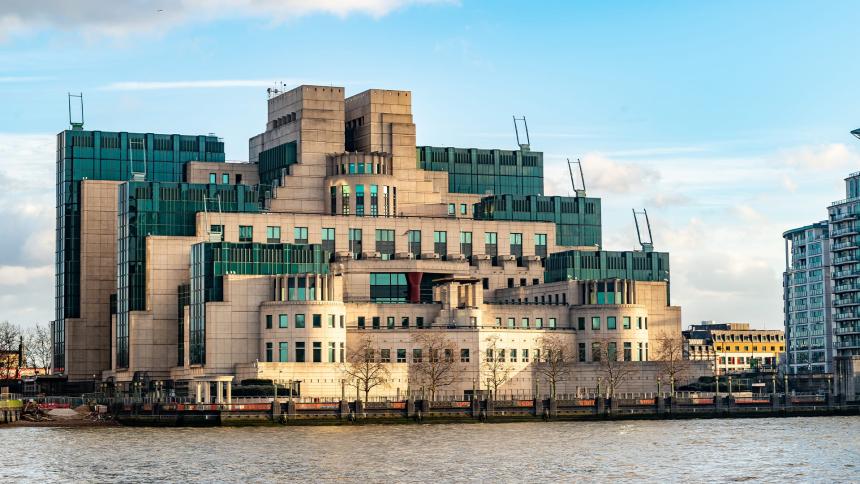
On 23rd August 2010, the Metropolitan Police made a discovery so eerie it felt like a plot twist from a spy novel rather than a real-life tragedy. They knocked on the door of a top-floor flat in Pimlico, London – a safe house used by Britain’s intelligence services.
What they discovered shocked them to the core. The naked body of 31-year-old MI6 code-breaker Gareth Williams was curled inside a red sports holdall, locked from the outside, and sitting in the bath. The key was found beneath his body.
Join us at Crime+Investigation as we explore known facts, the leading theories, how investigators approached the case, and why it remains one of the UK’s most puzzling modern mysteries.
What we know
What followed was a tangled investigation, a highly unusual inquest, and a cascade of theories, but no satisfactory answer. Even now, more than a decade later, the case remains one of the UK’s greatest unsolved mysteries.
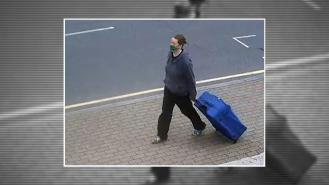
Williams was last seen alive on CCTV around 14th August 2010. His laptop was logged on to a cycling website in the early hours of 16th August, after which he disappeared. It wasn’t until a week later that police entered his flat, responding to a welfare check after he failed to show up for work.
The scene was strange. The holdall was a standard North Face bag. The bag was zipped, locked and the padlock key lay inside – under Williams’s body. Yet investigators found no fingerprints, no usable DNA, no sign of struggle, no forced entry and no evidence that the flat had been cleaned to destroy traces.
An official inquest in 2012 delivered a 'narrative verdict'. Williams’s death was of 'unnatural cause' and 'likely to have been criminally mediated'. The coroner concluded that a third party locked the bag and placed it in the bath.

The theories
Over the years, several main theories have taken root, each unsettling in its own way. Perhaps the most controversial hypothesis was that Williams voluntarily climbed into the bag, zipped it up, locked it and then suffocated. Forensic pathologists at the inquest said suffocation from CO₂ build-up could have rendered him unconscious in just a few minutes. No drugs or poisons were found in his system.
However, once details emerged that Williams had purchased women’s clothing, a wig, and make-up, alongside evidence of visits to bondage or fetish websites, some commentators floated the theory of an auto-erotic asphyxiation or consensual bondage session that went horribly wrong.
For the family and many who knew Williams, the idea was deeply offensive and improbable, but it helped feed wider speculation and tabloid coverage. The lack of visible injury, lack of drugs or alcohol and absence of defensive wounds left room for such scenarios.
Given Williams’s employment with MI6 and GCHQ, conspiracy theories proliferated. Some believe he was killed because of something he discovered, a mole, a covert operation or sensitive intelligence tied to organised crime or foreign interests.
Yet, despite the pressure, investigators found no concrete evidence of espionage, foreign involvement, or a motive. No DNA linked to another person could be identified – and after a new forensic review completed in November 2023, police confirmed no new DNA, no new suspects, and no fresh lines of enquiry.

Investigation and review
Over the years, the investigation has seen multiple phases. The initial crime scene work in August 2010, the 2012 inquest, the Metropolitan Police three-year murder inquiry and the most recent forensic review (2021–2023). Yet despite it all, the official conclusion remains unresolved. The Met has said they believe Williams 'most likely died alone', but publicly admits the case cannot be resolved beyond a reasonable doubt.
The problem? Decomposition. By the time his body was discovered, decomposition had rendered many forensic avenues useless – toxicology, poisons, volatile agents, even precise determination of time of death.
Adding to the frustration is the context. A flat owned by a spy agency, the missing memory sticks and the delay in reporting him missing. That has fuelled enduring suspicion among family, former colleagues, and independent investigators that something darker is being concealed.
Love true crime? Stay in the know with the Crime+Investigation Newsletter! Get exclusive access to new articles, episodes, clips, competitions, and more – delivered weekly and completely free. Don't miss out – sign up today!