PENTTBOM: Inside the FBI's 9/11 investigation
On the morning of 11th September 2001, 19 terrorists hijacked four commercial aircraft and changed the world.
Two planes crashed into the World Trade Centre in New York, one struck the Pentagon, and a fourth crashed in a field near Shanksville, Pennsylvania. It was the deadliest terrorist attack in history, with nearly 3,000 people killed. Thousands more would die in the aftermath.
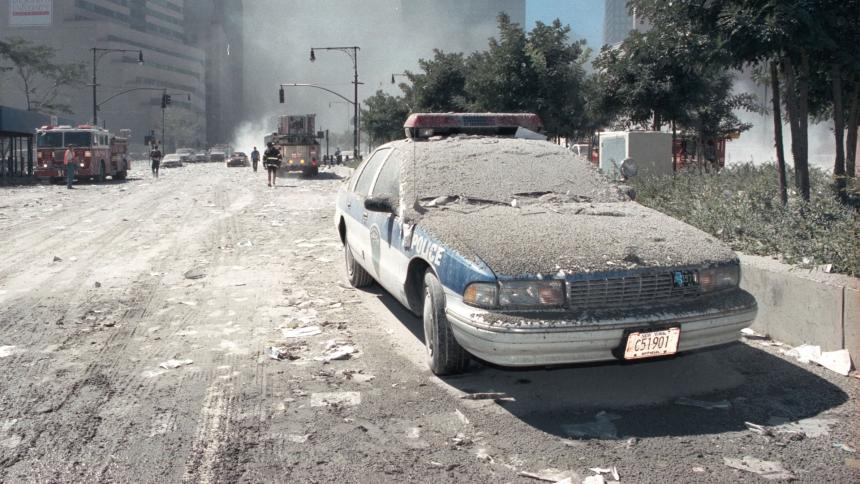
Within minutes of the first impact, the FBI's response was underway. At its Washington headquarters, officials activated the Strategic Information and Operations Centre. By the end of the day, command posts had been established at each of the three crash sites.
Crime+Investigation examines PENTTBOM – the FBI's investigation into the attacks – and what it revealed about how the conspiracy was planned, executed, and ultimately understood.
PENTTBOM: Pennsylvania, Pentagon and Twin Towers bombing
The investigation into PENTTBOM was a sizable operation. It had to be. The sheer number of avenues special agents had to investigate was difficult to grasp.
More than 4,000 special agents and 3,000 professional employees eventually worked on the recovery and investigation. At its peak, more than half of the FBI's agents were involved.
In New York alone, more than 1,000 FBI employees from 55 of the bureau's 56 field offices helped recover victims, personal belongings and evidence from the World Trade Center site. The FBI also established a presence at the Pentagon and the crash site in Pennsylvania. Agents and specialists from at least 30 overseas offices worked with international partners to follow leads worldwide.
Investigators received more than 500,000 leads, including hundreds of thousands of tips from the public. Agents conducted more than 167,000 interviews and processed more than 150,000 pieces of evidence.
Who was behind the attacks?
One of the FBI's first priorities was to identify the 19 hijackers. Investigators began doing so within hours of the attacks.
The men had boarded four commercial flights and taken control of them before using the aircraft as weapons. All 19 were identified as members of al-Qaeda or trained by the organisation.
15 came from Saudi Arabia. Two were from the United Arab Emirates, one from Egypt and one from Lebanon.
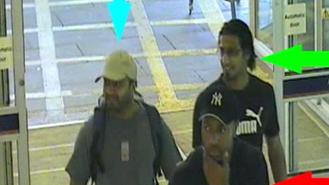
Three of the suspected pilots, Mohamed Atta, Marwan al-Shehhi and Ziad Jarrah, had been part of an al-Qaeda cell based in Hamburg, Germany. All four pilots had also taken flying lessons in the United States.
Now that investigators had names and faces, the next challenge was to understand how they had entered the country and prepared for the attacks.
Piecing the evidence together
PENTTBOM was not simply about identifying the hijackers. Special agents needed to reconstruct the entire conspiracy.
That meant examining everything from flight records and financial transactions to telephone calls, travel documents, photographs and personal belongings recovered from the crash sites.
The FBI's forensic teams worked around the clock. Fingerprint examiners conducted more than 126,600 comparisons. Document specialists examined more than 1,600 damaged pieces of paper. Computer experts analysed more than 35 terabytes of data during the first 30 days alone.
Specialists also examined aircraft wreckage, building debris, cockpit voice recordings and flight data recorders.
DNA played another crucial role. FBI Laboratory personnel worked to identify victims and hijackers through genetic evidence, while investigators also painstakingly recovered personal effects from the devastation. The three attack sites became the largest crime scenes in FBI history.
A hunt for answers
The investigation quickly stretched far beyond American borders. Agents followed leads across the world, working with foreign law enforcement and intelligence agencies to establish how the hijackers had organised themselves and how al-Qaeda had supported the operation. The investigation also focused on potential co-conspirators.
One of the most significant cases was that of Zacarias Moussaoui, a French citizen who had been arrested in August 2001 after raising suspicions during flight training in Minnesota. Moussaoui was later charged in connection with the 9/11 conspiracy. In 2005, he pleaded guilty to six charges and was sentenced to life imprisonment in 2006.
His case became one of the first major criminal prosecutions arising from the investigation.
What changed after 9/11?
Identifying the hijackers, however, was just the beginning. The sheer scale of the attacks exposed weaknesses in the way US law enforcement and intelligence agencies shared information. In the aftermath, the FBI fundamentally changed how it approached terrorism.
The bureau placed a greater emphasis on intelligence gathering and prevention. Cooperation between federal, state and local law enforcement also became increasingly important.
The FBI says the case 'forever changed' the way it works with law enforcement and intelligence agencies to protect people in the US and abroad.
For more on the investigations and events that defined modern history, sign up to the Crime+Investigation newsletter. Every week, you'll receive the latest articles, episodes and more from C+I delivered straight to your inbox.