DCI Peter Jay: The detective who caught Nilsen
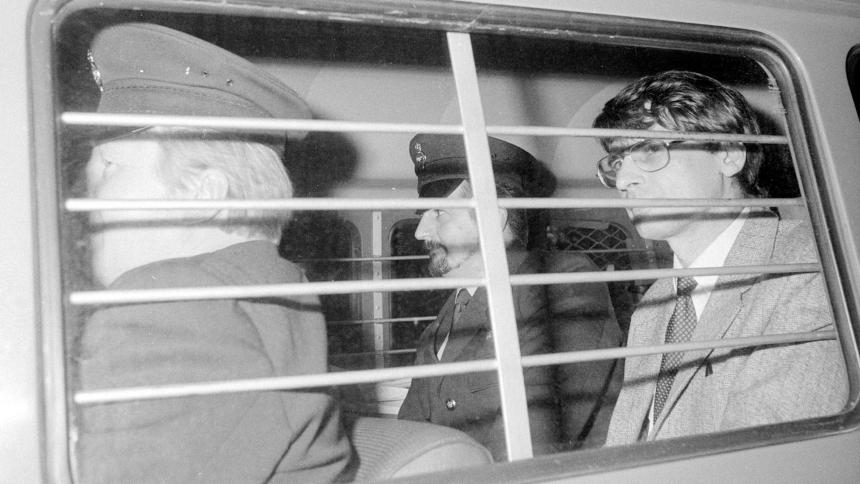
Dennis Nilsen is one of the most notorious serial killers in UK criminal history. Between 1978 and 1983, Nilsen brutally killed several vulnerable young men after luring them to his home. He would strangle his victims before keeping their remains for weeks or months at a time. He often engaged in necrophilia with the bodies, but he also photographed, dressed and bathed them, using them to keep himself company.
DCI Peter Jay was the lead investigator in the case of Dennis Nilsen. It would understandably become the most famous case of his career, though his achievements are often overshadowed by the unsettling nature of Nilsen’s crimes. Crime+Investigation examines the career of the detective whose work finally brought one of Britain's most disturbing serial killers to justice.
Who was DCI Peter Jay?
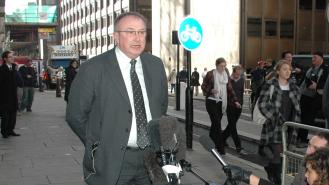
Peter Jay was born and raised in the town of Felixstowe, East Suffolk. Other than that, little else is known about Jay’s early life. What we do know is that in the 1980s, Jay had worked his way up through the ranks to become a Metropolitan Police Detective. He worked with Scotland Yard as a DCI from 1981 to 1986. He also had a wife, Linda, and a son, Simon. Jay was working in London at Hornsey Police Station when he became the lead of the Dennis Nilsen case.
The Dennis Nilsen case
On 9th February 1983, DCI Peter Jay attended 23 Cranley Gardens in north London after a grisly report from a drainage technician. The report stated that bone and human flesh was suspected to be creating clogs in the local drains. He and his team thoroughly inspected the shared drain system, finding what seemed to indeed be fragments of human tissue. This was later confirmed with a preliminary pathological assessment.
After interviewing the residents in the building, suspicion quickly turned to the flat in the attic on the top floor. The resident was 37-year-old civil servant Dennis Nilsen. Upon this discovery, Jay and his team waited for Nilsen to return, as he was out of the flat for work. When he returned, Jay introduced himself as a police officer and informed Nilsen of the grisly findings in the drain.
Nilsen initially feigned ignorance. Even when Jay and the other officers entered his flat and detected the odor of rotting flesh, Nilsen pretended to be shocked. Jay easily saw through Nilsen’s lies, telling him, ‘Don't mess me about, where's the rest of the body?’ It was then that Nilsen dropped the act.
He told Jay and the officers that there were more body parts
The investigation
Jay’s team was tasked with a confusing reverse investigation of sorts. They had the murderer, with Nilsen confessing to killing 15 young men during a 30-hour interview. Despite this, they still had to prove that Nilsen was guilty.
This was made all the more difficult when Jay began to recover all of the body parts still left in the flat. Nilsen targeted homeless and vulnerable young men, so despite their best efforts, they were unable to identify all of his victims. There were also issues with a lack of forensic evidence for certain victims and unclear motives.
Nilsen went on to plead guilty of manslaughter on the grounds of diminished responsibility, which made it even harder for Jay and his team. However, they eventually managed to obtain enough evidence, including buried smashed skulls and a cooking pot used to boil body parts, to bring Nilsen to justice,
The verdict
After 24 hours of jury deliberation and a 10-day trial, the plea of diminished responsibility was rejected. A verdict of guilty was given on all six of the murder charges as well as two charges of attempted murder. Dennis Nilsen was sentenced to life imprisonment, with a minimum term of 25 years. This was later changed to a whole life order.
The television series
In May 2018, Nilsen died in prison. DCI Peter Jay passed away the same year after battling cancer. Jay’s son Simon and widow Linda continued his memory by actively participating in the making of the popular ITV series Des.
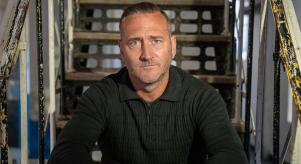
In the series, Jay is played by Daniel Mays, and he spent time with Linda and Simon when researching the role. Simon also helped the production team by giving them access to his father’s case documents. Jay’s work was imperative in bringing Nilsen to justice, and his efforts will never be forgotten.
For more on the detectives who brought Britain's most notorious killers to justice, sign up to the Crime+Investigation newsletter. Every week, you'll receive the latest articles, episodes and more from C+I delivered straight to your inbox.