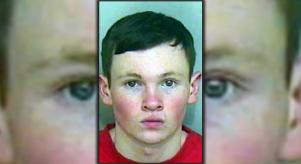
Richard Reid: The failed shoe bomber
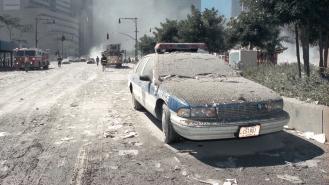
102 days after 9/11, Richard Reid boarded American Airlines Flight 63 from Paris to Miami. Initially, the trip was like any other, until a passenger complained about the smell of smoke.
Reid had lit a match. What he was trying to ignite would shock the world and fuel further panic in the aftermath of September 11th.
Crime+Investigation examines Reid’s background, how he became the shoe bomber, and what happened in the skies above the Atlantic that December morning.
Who was Richard Reid?
Richard Reid was born on 12th August 1973 in Bromley, South London, to an English mother and Jamaican father. His dad was a career criminal who was in and out of prison for car theft and other offences. Nevertheless, Reid idolised his dad and began emulating his behaviour, frequently getting into trouble at school.
Reid left education at 16 without qualifications and soon turned to petty crime, accumulating more than 10 convictions for 'crimes against persons and property'. He served several sentences at Feltham Young Offenders Institution and Maidstone Prison.
In 1992, while serving a three-year sentence for street robberies, Reid converted to Islam.
Reid’s radicalisation
When Reid left prison in 1995, he attended the Brixton Mosque. At this time, there was no indication that he had been radicalised. However, over the following years, his views became increasingly extreme. Reid began arguing with members of the mosque over violent jihad and associating with extremists outside the congregation.
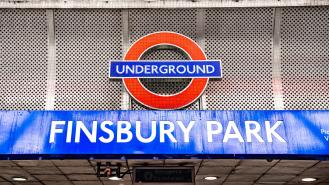
Reid later attended the Finsbury Park Mosque in north London, headed by Abu Hamza al-Masri. Hamza was staunchly anti-American and frequently preached Islamic fundamentalist views. On the first anniversary of 9/11, he even held a conference where he publicly praised the hijackers.
It was at Finsbury Park Mosque where Reid was reportedly approached by ‘terrorist talent spotters and handlers’. Between 1999 and 2000, Reid travelled to Pakistan and Afghanistan, where he received training at al-Qaeda camps.
How Richard Reid became the shoe bomber
While in Afghanistan, Reid met senior al-Qaeda figures who gave him a mission: To attack an American flight using specially constructed shoe bombs.
These modified shoes featured hollowed-out cavities in the soles which contained explosives and a makeshift initiation system. The shoe bomber plot seemed like the perfect plan. Even after 9/11, airport security didn't routinely remove and check footwear.
During a preliminary hearing, the FBI revealed just how dangerous the device was. Had it detonated, it would have blown a catastrophic hole in the aircraft's fuselage.
American Airlines Flight 63 from Paris to Miami
Around 90 minutes into the flight, Reid’s behaviour became more worrying.
A passenger complained about the smell of smoke. When a flight attendant investigated, she found Reid sitting alone by a window, lighting matches. She told him he couldn’t smoke on board.
A few minutes later, the flight attendant returned and noticed Reid trying to light another match. When she challenged him, he grabbed her, exposing a shoe in his lap packed with explosives.
With the events of 9/11 fresh in their minds, passengers and crew rushed to overpower Reid, who was 6 feet 2 inches tall and weighed almost 100kg. They eventually restrained him using plastic handcuffs, seatbelt extensions, leather waist belts and headphone cords.
In a stroke of fate, an off-duty doctor found a tranquiliser in the emergency medical kit and injected Reid to help subdue him. The flight was immediately diverted to Logan International Airport in Boston, Massachusetts.
The passengers came close to losing their lives that day. But the delayed flight prevented the bomb from detonating. Investigators believe the additional time Reid spent wearing the shoes, combined with continuous rain, made the fuse too damp to ignite.
The aftermath
When the plane landed, Reid was immediately arrested and charged in federal court in Boston. FBI investigators found around 10 ounces of explosives inside his shoes, which was enough to kill everyone on board the flight.
Reid eventually pleaded guilty to eight federal offences, including attempted murder, attempted use of a weapon of mass destruction and attempted destruction of an aircraft. The investigation also established his links to al-Qaeda and terrorist training camps in Afghanistan.
On 31st January 2003, he was sentenced to three consecutive life sentences plus 110 years, with no possibility of parole. Today, the shoe bomber is serving his sentence at ADX Florence in Colorado, a supermax facility that holds some of the most dangerous prisoners in the federal system.
For more on the terror plots and criminal cases that defined the post-9/11 era, sign up to the Crime+Investigation newsletter. Every week, you'll receive the latest articles, episodes and more from C+I delivered straight to your inbox.