John Sweeney: The crimes of the 'Canal Killer'
When police discovered the dismembered remains of two women a decade apart, one in Rotterdam and one in London, they couldn't have imagined that the cases would be connected.
However, the discoveries would become part of an extraordinary murder investigation, eventually leading detectives to the man who would become known as the ‘Canal Killer’.
Crime+Investigation examines how a decade-old murder finally connected to a second, and exposed a pattern investigators had missed for years.
John Sweeney: The Canal Killer
The hunt for the Canal Killer would ultimately lead investigators back to one man: John Sweeney. He was born in Liverpool in 1956 but he didn’t stay in his home county for long. After training as a carpenter, he worked on construction sites across the UK and mainland Europe.
At 20 years old, he married Anne Bramley and had two children. However, the relationship wasn’t happy. Anne called the police multiple times to report Sweeney’s violent behaviour. In 1982, it came to a head when officers found him hiding in the family home with a hammer and an axe. The couple subsequently divorced.

With his marriage over, Sweeney moved to London, where he met American model and photographer Melissa Halstead in 1986. Their relationship would mark the beginning of a pattern of violence against women that culminated in two murders.
The murder of Melissa Halstead
Sweeney’s possessive nature carried over into his relationship with Melissa. While they were together, he had three convictions for assaulting her in London. When she was deported from the UK for overstaying her visa, he followed her to mainland Europe.
Far from being the fresh start she craved, the brutality only escalated. While staying in Vienna, Sweeney attacked Melissa with a claw hammer but received a suspended sentence after she pleaded for leniency. Shaken, she told her sister that if she ever disappeared, Sweeney would have killed her.

Melissa was living in Amsterdam when her prediction came true. She went missing in 1990. Around this time, investigators also discovered a woman’s dismembered remains in an army kitbag in Rotterdam’s Westersingel canal.
The head and hands were missing, making identification difficult. At this point, nobody knew the remains belonged to Melissa.
The murder of Paula Fields
A decade later, more than 200 miles away, another woman connected to Sweeney disappeared. Shortly after, another dismembered body was found in a canal.
Police eventually identified the woman as Paula Fields, a 31-year-old mother of three. Originally from Liverpool, she moved to north London and became a sex worker to fund a drug addiction. She was vulnerable when she met Sweeney in 2000 and started a sexual relationship. Three months later, she disappeared.

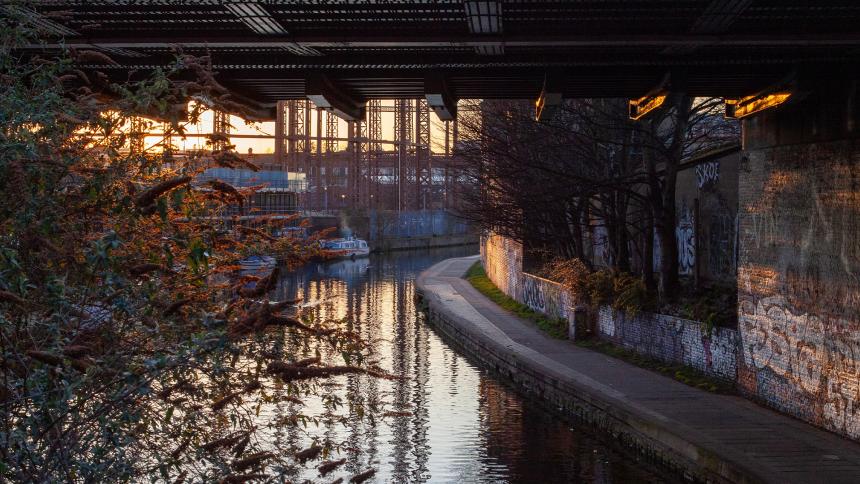
Her remains were found in February 2001 when two young boys spotted a holdall while fishing in Regent’s Canal. Divers continued to search the area, where they found more bags containing body parts. Like Melissa, Paula’s head, hands and feet were missing.
The attack on Delia Balmer
Paula and Melissa’s murders might have gone unconnected if it wasn’t for Delia Balmer. The 39-year-old nurse met Sweeney in London in 1991, around a year after Melissa’s disappearance. The couple started a relationship which was initially happy, but Sweeney couldn’t contain his violent behaviour for long.
When Delia tried to end their relationship in 1994, Sweeney retaliated by holding her captive in her own home for several days, tying her to a bed and repeatedly raping her. During the ordeal, he told Delia that he had killed Melissa and disposed of her body in a canal.

When Delia escaped, she immediately informed the police. Sweeney was arrested but released on bail. About a month later, he returned to Delia’s home and attacked her with a knife and axe.
Despite suffering horrific injuries, Delia survived. Sweeney fled and went on the run, evading police for the next six years.
Arrest and trial
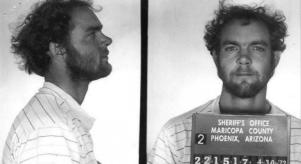
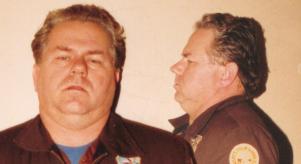
Police finally caught up with Sweeney in March 2001 while he was working on a building site in London. When officers searched his home, they found weapons and more than 300 drawings and poems depicting violence against women and dismemberment. He was charged with the attempted murder of Delia, and was jailed for life in 2002.
But it wasn’t until 2008 that police finally linked Sweeney to the murder of Melissa. Although he had confessed to Delia, investigators had no way of linking him to the unidentified woman in Rotterdam in 1990.
The breakthrough came when DNA from Melissa’s family was compared with samples taken from the unidentified remains, finally confirming that the victim was Melissa Halstead.
Suddenly, investigators had two similar murders linked to the same man. Both Melissa and Paula had been involved with Sweeney, both had been dismembered and dumped in canals and both were missing their heads and hands. Police finally had enough evidence to bring him to trial for both murders.
In 2011, Sweeney was found guilty of murdering both Melissa Halstead and Paula Fields. He was sentenced to life imprisonment and died in August 2026.
For more on the cases where patterns took years to uncover, sign up to the Crime+Investigation newsletter. Every week, you'll receive the latest articles, episodes and more from C+I delivered straight to your inbox.