The Chameleon Killer: Who was Terry Rasmussen?
The Chameleon KillerImagine discovering a rusty barrel in the woods, only to find human remains inside. Now imagine that this discovery is just the beginning of a case that takes decades to unravel.
This was the reality of the Bear Brook murders, a chilling case that exposed serial killer Terry Rasmussen. He murdered women and children, concealed their bodies in metal barrels and moved across the United States under a string of false aliases.
Crime+Investigation examines how a man who lived under at least four names hid his crimes for decades, and how genetic genealogy finally revealed who he was.
The Bear Brook barrels
What kicked off the search that sparked a trail of discoveries? On 10th November 1985, a hunter at Bear Brook State Park in Allenstown, New Hampshire, found the remains of an unidentified woman and young girl inside a metal barrel.
Both had died from blunt force trauma to the head. However, investigators struggled to establish who they were or who had killed them. The case went cold until 2000, when investigators discovered a second barrel nearby. This time, the remains belonged to two young girls.

Investigators now faced an even more disturbing mystery. Who were these victims, and why had someone gone to such lengths to conceal their bodies?
It would take years of painstaking detective work and advances in DNA technology to uncover the truth. The same kind of forensic genealogy that cracked cases like Carla Walker’s murder would eventually help in this one. In 2017, investigators named Terry Rasmussen as the most likely suspect, a man whose crimes stretched far beyond the New Hampshire woods.
Who was Terry Rasmussen?
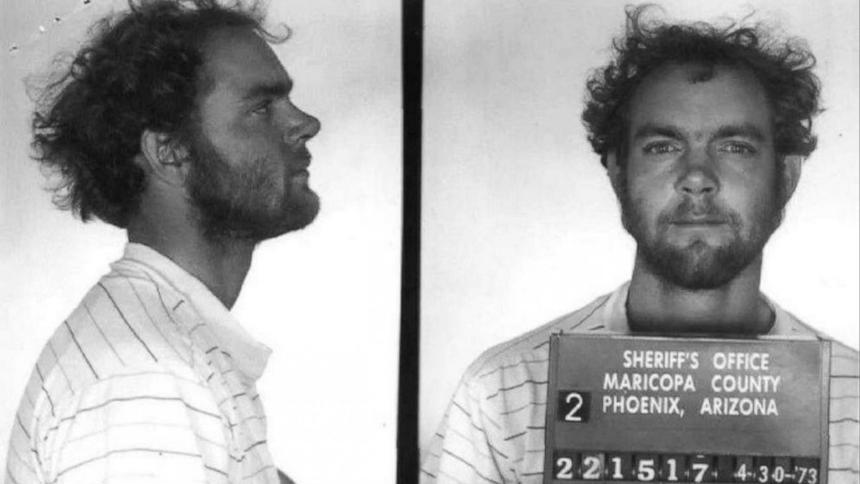
So, what do we know about the man behind the killings? Born in Colorado in 1943, Rasmussen served in the US Navy before training as an electrician. He married in 1968 and later had four children.
However, his family eventually became estranged from him. By the mid-1970s, he had effectively disappeared from their lives.
Rasmussen began moving between locations and adopting different identities. To the outside world, he looked like an ordinary man, going about his business. This is why it took detectives so long to uncover the truth.
One of his aliases was Bob Evans, the name he used while living in New Hampshire. He also went by Gordon Jensen, Curtis Kimball and Larry Vanner.
Although Rasmussen used many identities, one very dangerous man lay behind them all.

A trail of victims
In 1978, Marlyse Elizabeth Honeychurch disappeared with her two daughters, Marie Vaughn and Sarah McWaters, following a family Thanksgiving gathering in California. Marlyse was reportedly in a relationship with Rasmussen at the time. Their remains were eventually discovered in the barrels in New Hampshire.
Rasmussen left New Hampshire in 1981 with the infant daughter of his girlfriend, Denise Beaudin. Denise has never been found, and investigators believe she was another victim. Her daughter, Dawn, survived. Reporting says Rasmussen abandoned her alive in 1985, and she grew up under the name Lisa.
Meanwhile, Rasmussen continued moving between states and assuming new identities. In California, he began a relationship with chemist Eunsoon Jun, whom he unofficially married. After Eunsson disappeared in 2002, investigators searched the property where Rasmussen had lived as Larry Vanner.
They discovered her body concealed beneath a large pile of cat litter in a crawl space. Rasmussen was arrested and charged with her murder. He pleaded guilty in 2003 and received a sentence of 15 years to life in prison.
Rasmussen died behind bars in 2010, years before he was linked to the Bear Brook murders.
Naming the victims
It took until 2019 for three of the Bear Brook victims to be named, with the help of genetic genealogy, the technique that unmasked the Golden State Killer. The woman and the girl in the first barrel were Marlyse Honeychurch and her daughter Marie Vaughn. One of the girls in the second barrel was Marlyse’s other daughter, Sarah McWaters.
The identity of the final victim, the second girl found in 2000, remained unknown until 2025. She was Rea Rasmussen, Terry Rasmussen’s own daughter. Her mother, Pepper Reed, has been missing since the late 1970s, and authorities believe she may also have been one of his victims.

Why was he named the Chameleon Killer?
Rasmussen earned this moniker because he could change identities and blend into different communities. He used multiple aliases, moved between states and repeatedly reinvented himself. Each new identity made it harder for investigators to connect the pieces.
His use of false names also made it harder to identify his victims. Records associated with one alias did not necessarily lead investigators to the same person under another name.
For years, the man known as Bob Evans appeared separate from the individuals called Gordon Jensen, Curtis Kimball and Larry Vanner. Investigators didn’t realise they were all the same person, hiding in plain sight.
The breakthrough came in 2017, seven years after his death, when investigators announced that the man they had been searching for as Bob Evans was Terry Rasmussen. Fingerprints, historical records and DNA evidence helped reveal that these identities belonged to him.
Four victims of the Bear Brook murders have now been named, but not every question has been answered. Denise Beaudin and Pepper Reed have never been found, and investigators have not ruled out the possibility that there were others.
For more on the cases that took decades to solve, sign up to the Crime+Investigation newsletter. Every week, you’ll receive the latest articles, episodes and more from C+I delivered straight to your inbox.