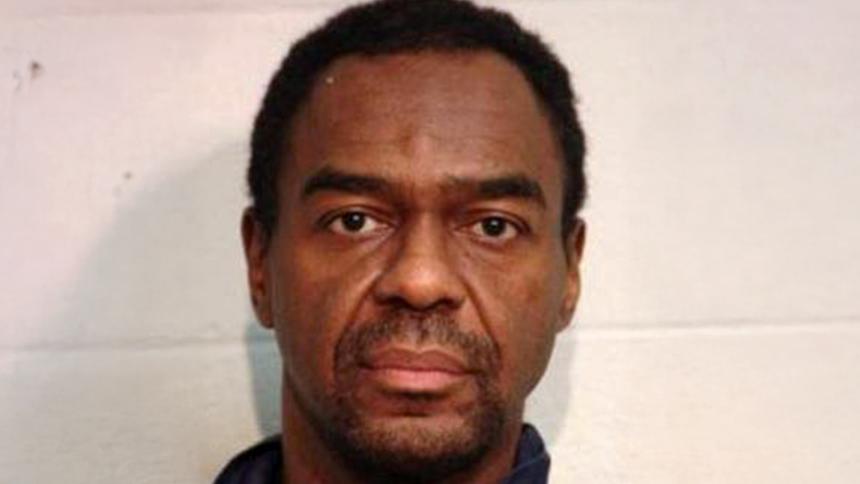
The Sunday Morning Slasher: The crimes of Carl Watts
Sunday Morning SlasherSome serial killers become household names. Others, despite an extreme number of suspected victims, remain unknown.
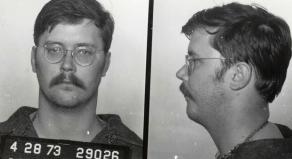
Carl Eugene Watts, known as the ‘Sunday Morning Slasher’, falls firmly into the latter category.
He is believed by some investigators to have murdered over 100 women between the early 1970s and 1982. While he was only convicted of two murders, police spent decades trying to piece together the true scale of his killings.
Starting Wednesday, 5th August, Crime+Investigation's new documentary Sunday Morning Slasher examines the life and crimes of one of America's most prolific and least known suspected serial killers – and the questions that remain unanswered decades later.
A disturbing pattern
Born in Killeen, Texas in 1953, Watts moved with his family to Michigan as a child. Friends and relatives later recalled a noticeable change in his personality after he contracted meningitis at the age of eight. Once outgoing, he became withdrawn and began describing disturbing dreams involving women and what he called 'evil spirits'.
As a teenager, Watts’ violent fantasies escalated into real-life attacks. In 1969, at just 15 years old, he assaulted a woman while delivering newspapers. Although he underwent psychiatric treatment, he was released and returned to the community.
Over the following decade, Carl Watts developed a chilling pattern. His victims were young women walking alone or returning home in the early hours. Rather than abducting them, he often attacked just yards from their front doors, using knives, strangulation or drowning before disappearing almost without a trace.
The absence of sexual assault or robbery made it extremely difficult for investigators to establish a motive or link cases together – a significant factor in why his crimes went undetected for so long
‘The Sunday Morning Slasher’
Many serial killers are given a moniker, whether the media or the public pens it; it’s a way to recognise and remember the antagonist. In Carl Watts’ case, he was described as ‘The Sunday Morning Slasher’. Here’s why.
By 1979, police in Michigan realised several murders appeared linked.
Women were being attacked during the early hours of Sunday mornings, often after returning home from nights out. Many had been stabbed repeatedly, sometimes dozens of times, and several were killed within sight of their homes.
Among the known victims were journalist Jeanne Clyne, who was stabbed to death outside her home in October 1979, 17-year-old Shirley Small, Eastern Michigan University graduate Glenda Richmond and University of Michigan student Rebecca Greer-Huff. Each case shared striking similarities, prompting detectives to finally believe they were hunting a serial killer
The killings spread fear across college campuses in Michigan, with many women afraid to walk home alone after dark.
The killing continued
As time went on, police found themselves just one step behind the killer, even after forming a task force and placing Watts under surveillance.
In 1981, Watts left Michigan and moved to Texas. Instead of disappearing, the violence followed him.
Investigators now believe Watts continued targeting women in the Houston area, attacking victims in similar circumstances to Michigan. One of the most significant cases involved 20-year-old college student Elena Semander, who was strangled and her body abandoned in a dumpster in February 1982.
Authorities later linked Watts to her murder, along with several other unsolved killings.
By this point, Watts had become increasingly brazen. His attacks often occurred in broad daylight or outside victims' homes, suggesting he felt confident he could avoid capture.

The attack that ended his spree
Watts' attacks finally came to an end on 23rd May 1982.
That morning, he attacked two Houston roommates, Lori Lister and Melinda Aguilar. After strangling both women, he attempted to drown Lori in a bathtub while believing Melinda was already dead.
Melinda had pretended to lose consciousness. As soon as Watts left the room, she escaped by jumping from a balcony and screamed for help.
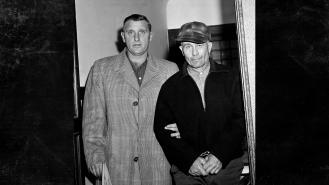
Her actions almost certainly saved both women's lives. Police quickly located Watts nearby and arrested him before he could flee. It was only after his arrest that investigators began to appreciate the sheer scale of the crimes they might be dealing with.
An unclear body count
Watts died behind bars in 2007 from pancreatic cancer. Yet more than four decades after his arrest, he remains one of America's most enigmatic suspected serial killers.
Police believe many of his victims have never been identified, while others remain among the hundreds of unsolved murders reviewed during the investigations into his crimes. Unlike many notorious offenders, Watts rarely sought publicity or left behind lengthy confessions explaining his actions.
Instead, he left investigators with partial admissions, possible victims and a trail of unanswered questions. That uncertainty is perhaps the most chilling part of his story.
For more on the serial killers whose crimes have never been fully accounted for, sign up to the Crime+Investigation newsletter. Every week, you'll receive the latest articles, episodes and more from C+I delivered straight to your inbox.