The Hog Trail Murders: Who is Daniel Conahan?
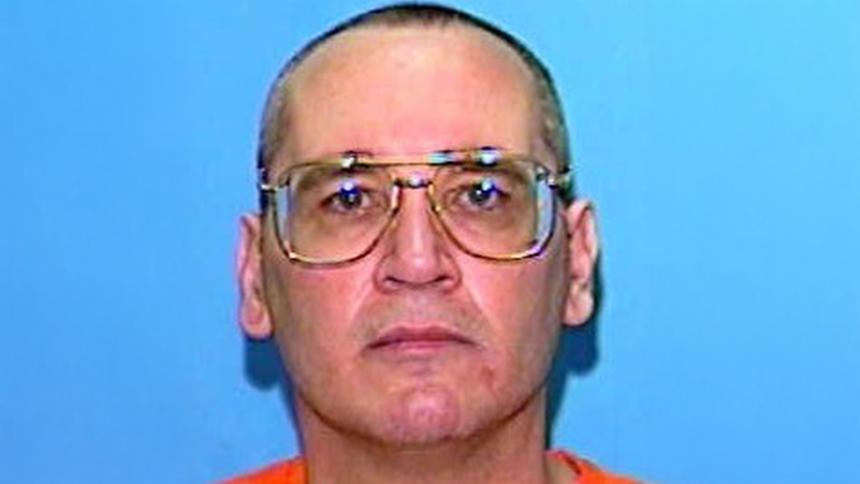
Hog Trail MurdersDaniel Owen Conahan Jr. was a licensed practical nurse from Punta Gorda, Florida. To those who knew him, he appeared unremarkable. But to investigators working Charlotte County's most disturbing crime scenes in the early 1990s, his name would eventually become synonymous with one of America's most chilling suspected serial killing sprees.
Known as the ‘Hog Trail Killer’, Conahan is currently serving a death sentence for the murder of just one man. Yet detectives believe he may have killed at least a dozen victims across southwest Florida during the 1990s.
Over the years, advances in DNA technology have continued to identify victims linked to the investigation, suggesting the true scale of his crimes may never be fully known. Starting Wednesday, 12th August on Crime+Investigation, Hog Trail Murders examines the crimes that made Conahan one of America's most suspected serial killers – and why only one murder conviction was ever secured.
A chilling pattern emerges
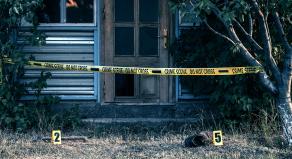
At the start of the 1990s in Charlotte County, Florida, the police were being called to several disturbing crime scenes. The victims they found were always men living on the fringes of society. For example, many were hitchhikers, drifters or travelling workers with little to no family.
Their bodies were found in remote woodland areas, alongside isolated dirt tracks. These tracks were known locally as hog trails, giving the crime spree the moniker 'Hog Trail Murders'.
Investigators on the case noticed striking similarities among the victims and believed there had to be a connection. Many had been bound with rope before being killed, while several other victims had suffered horrific post-mortem mutilation. These comparisons suggested they were looking for a serial killer.
Who was Richard Montgomery?
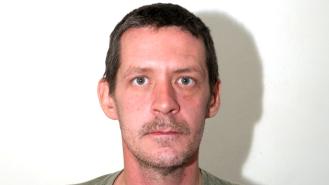
The only murder for which Conahan was convicted was that of 21-year-old Richard Allen Montgomery. In April 1996, Montgomery's body was discovered in woodland near another victim, Kenneth Lee Smith. The young man had been sexually assaulted, bound and murdered only a day before he was found.
The investigation took a significant turn when Montgomery's mother told detectives that her son had recently spoken about meeting a man named Dan Conahan. It was the first time investigators had a name connecting one of the victims to a potential suspect.
Digging deeper, detectives discovered that Conahan had been targeting vulnerable men by offering them work, money or companionship. He then lured them to isolated areas where they were powerless.
Cracking the case
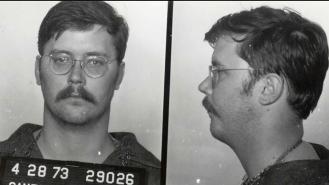
But how did Conahan eventually get caught? Ironically, it wasn’t a murder that brought him down. It was one of his survivors.
In 1994, a man named Stanley Burden had survived a terrifying attack after accepting a ride from Conahan. Burden later told police he had been tied to a tree and nearly strangled before somehow escaping.
Frustratingly, at the time, there wasn't enough evidence to pursue the case.
But after Montgomery's murder, detectives revisited Burden's account and realised it closely matched the injuries and circumstances surrounding several homicide victims. Rope marks, secluded woodland locations and the method of restraint all pointed towards the same offender.
Then, another crucial witness also came forward after escaping Conahan when his vehicle became stuck while driving down a dirt road. That account, combined with Burden's testimony and physical evidence recovered during searches of Conahan's home, gave investigators enough to make an arrest.
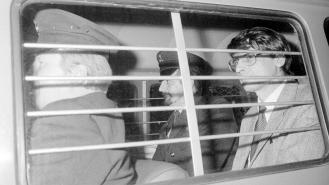
In July 1996, Daniel Conahan was taken into custody.
From trial to death row
When Conahan stood trial in 1999, prosecutors focused entirely on Richard Montgomery's murder.
Rather than attempting to prove a string of killings, they concentrated on the strongest evidence available. Burden became one of the prosecution's key witnesses, describing in detail how Conahan had attacked him in a similar way.
The judge found Conahan guilty of first-degree murder and kidnapping after just 25 minutes of deliberation. He was later sentenced to death and remains on Florida's death row.
Although the conviction related to a single victim, investigators believed it represented only a fraction of his crimes.

Why Conahan wasn’t charged for multiple murders
By the time Conahan was arrested, many of the suspected victims had been dead for months or even years. Most of the remains recovered from the hog trails were skeletal, leaving investigators with little forensic evidence capable of proving exactly how each victim died or who was responsible.
Many of the men also lived nomadic lifestyles. Some had never even been reported missing, while others had few surviving relatives who could help investigators reconstruct their final movements.
While detectives believed the murders were connected, proving each one beyond a reasonable doubt in court presented a much higher legal threshold. As a result, prosecutors chose to pursue the case they believed they could prove conclusively.
For more on the serial killers whose crimes were never fully accounted for in court, sign up to the Crime+Investigation newsletter. Every week, you'll receive the latest articles, episodes and more from C+I delivered straight to your inbox.