Monsters or Madonnas? How women involved in murder are judged differently
At a time when the questions of gender, nature vs nurture, and reform of the criminal justice system are argued daily in the media, there is one indisputable fact; women commit a lot fewer murders than men. To be a woman accused of this heinous act, means that she has transgressed not just the laws of man, but a woman’s perceived role in society. And society is quick to punish through its representatives in the popular press and media.
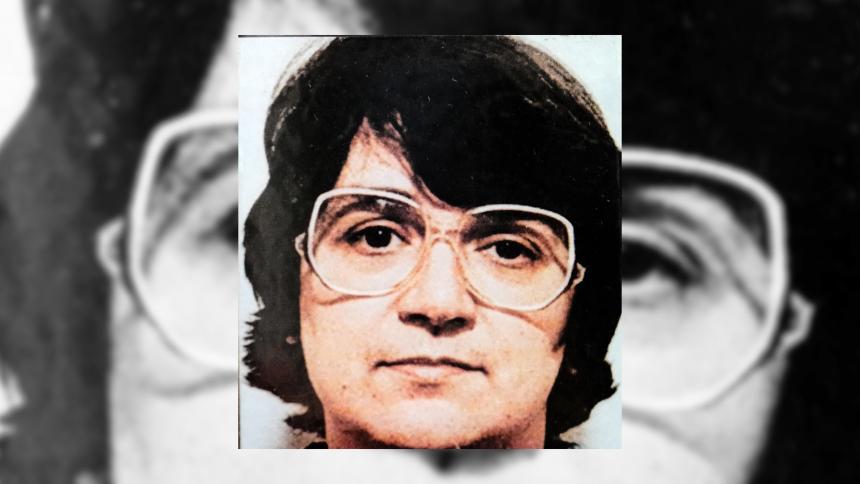
In Britain, the names of notorious male murderers remain familiar. But women who kill are far less common, and a small number of cases have come to dominate how female murderers are perceived. Myra Hindley and Rosemary West are remembered for the crimes they committed, but also through media narratives that cast them as shocking exceptions to expectations of women as caregivers. So, why do we remember them with so much more revulsion?
In reality, only 7% of homicides in the UK (murder and manslaughter) are attributed to women. Their victims are most commonly their partner in defence of their own lives, or more rarely their own children while in the grip of a mental illness. If a man undertakes these sorts of crimes, he is deemed a violent inadequate. If a woman does…she is a monster.
But how much worse must it be to have been vilified as a monster, while being completely innocent?

Angela Cannings
Angela Cannings was convicted and sentenced to life imprisonment in 2002 for the murder of two of her infant sons. The deaths took place several years apart, but their similarity led to an investigation that concluded, while relying on faulty expert medical testimony, that she had smothered her children.
The very thing that condemned her, the similarity of the deaths (along with that of the un-indicted death of an infant sister who died of Sudden Death Syndrome) should have helped exonerate her, yet the press and prosecution condemned her as a heartless, selfish monster.
Finally, after years of relentless slander, it was established that Cannings’s family had a history of cot deaths going back generations. The deaths of her children were the result of a genetic inheritance. This is a tragedy in any circumstance, but more so to hear such a diagnosis in a jail cell where you are facing life imprisonment.
Angela Cannings repeatedly endured the deaths of her children, was tried by the state, imprisoned, branded as a serial killer of infants by the press, and finally exonerated only because she carries a genetic defect.
Angela Cannings was undoubtedly a miscarriage of justice. But what if the line is less solidly drawn?
Ruth Ellis
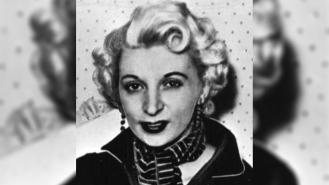
Ruth Ellis was the last woman executed by the state in the UK in 1955. She certainly killed her lover David Blakely outside a pub in Hampstead. But she was also unfairly vilified by British society, which cast her as a platinum blonde symbol of moral decline, rather than a woman born with limited opportunities, who became trapped in what we would recognise today as an abusive physical and emotionally manipulative relationship. There is no doubt she pulled the trigger and killed a man, but why did all responsibility for this action fall on her shoulders alone?
The courts, press and politicians had a vested interest in portraying Ellis as a dangerous woman who was sexually and socially transgressive. The courts did so because of our adversarial system, the press because saucy stories and salacious gossip sold papers, and politicians because they were our moral guardians. After-all, at a time when domestic abuse was largely unpunished, it was held in society as a whole that you couldn’t have women running around killing their husbands just for them being on the end of the 'odd slap'.
So instead of being shown as a victim of sustained violence and exploitation with a correspondingly diminished responsibility, Ellis was characterised as a cold-blooded harlot of weak moral character deserving of her fate. Her fate being execution by hanging and becoming an abject lesson to all women who fight back.
Lizzie Borden
Thanks to an enduring 19th century children’s rhyme involving an axe and ‘40 whacks’, one could be forgiven for thinking the infamous Lizzie Borden was executed for her blood-soaked crimes. But she wasn’t. She was acquitted of the brutal murder of her father and stepmother in 1893.
In an ironic twist, the same social norms that punished women who transgressed their nurturing role in society, gave a woman of her class and respectability the benefit of the doubt. At least in the law. The public on the other hand was fuelled by a lurid sensationalist press who vilified her for years after her acquittal.
Despite the jury finding her not guilty, and the evidence itself being circumstantial, she was haunted by public opinion and portrayed as a scheming, calculating murderess who “got away with it”. Her home was often vandalised, her neighbours snubbed her on the street and in church, and she was unwelcome in the township.
Lizzie became a cultural villain remembered even today as a result of the vilification after the fact, rather than the murders themselves. She is an example of the mythmaking wrought by the idea of a woman murdering … regardless of the truth.

Aileen Wuornos
The modern-day vilification of Angela Cannings shows that the gender expectations and social mores that weighed heavily on Lizzie Borden and Ruth Ellis haven’t abated.
The serial killer Aileen Wuornos and her case for compassion would test a Saint. How she became the woman who shot and robbed seven men in motel rooms around Florida would make that Saint cry.
Born to a father who was jailed for raping a seven-year-old, and a teenage mother who abandoned her to the merciless sexual and physical abuse of her own alcoholic parents, Wuornos was raped as a child and passed around in exchange for cigarettes, booze, drugs and food. She was pregnant at 14 from a rape. Kicked out of her home at 15, she lived in the woods and supported herself by prostituting herself. It was all she had ever known…except for the beatings.
Having been created and primed by her upbringing, Wuornos killed seven men and robbed them in motels up and down Florida’s highways. She was damaged beyond repair and when apprehended played the role of monster perfectly. Courtroom outbursts, and her refusal to show feminine remorse, empathy or submission were not seen as indications of her mental state, but as further proof that she was a monster. How she became one, was ignored.
Media paid for movie rights, interviews with family, and negotiated appearances for minor acquaintances. Wuornos became a money tree for those around her and the more lurid and horrible the tales the better. There were no plea deals offered, or psychological assessments considered. She was exploited and ignored to the end. She received 6 death sentences and was executed in 2002.
Charlize Theron won the best actress academy award in 2003 for portraying Wuornos.
Wuornos was certainly vilified as a murderer, but the people who created her were the monsters.
But what about the vilification of the victims in these cases? Victim shaming and vilification is common. It’s human nature to say, “Well…that’ll never happen to me because…”

Meredith Kercher
In 2007, Meredith Kercher, an exchange student from South London, was murdered in Italy. She was vilified by victim-shaming, degrading her humanity and sexualising her to heighten newsworthiness. She was a kind, witty and intelligent young woman who became in public opinion the “ideal victim”.
Instead of a young woman whose life was violently cut short, Kercher became a trope. She was someone whose every Facebook message or image could be mined for sensationalistic content, and every embellished story was seen as part of the narrative of her murder being the likely outcome of the “bad decisions” she had made. All so the reader could feel better about their own decisions.
Others involved in her murder paid a high price for the need to fit narratives rather then find the truth. But Kercher and her family were denied dignity. It should have been the very least expected when having to bury a child.
If a woman is involved in a murder, after the fact you can count on the courts, press, and politicians vilifying the female perpetrator as “other” or the female victim as “unfortunate”. Women are either “Monsters” or “Madonnas”. Ripe for vilifications or canonisation. They are rarely complex individuals in charge of their own agency, and we are all the poorer for it.