Ross Kemp asks, 'Are we teaching boys the wrong lessons?'
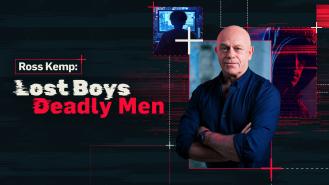
Ross Kemp: Lost Boys, Deadly MenWhat does it mean to be a man?
It’s an uncomfortable question, and one that doesn’t have a definitive single answer. Yet in recent years, it’s become an increasingly important discussion, and for good reason.
A rise in violent crimes against women has led to greater urgency than ever to understand what is happening to young men. Described as a ‘national emergency’, it’s a topic that’s close to the heart of Ross Kemp, a father and actor who shot to fame through playing 'macho' soap characters.
In Lost Boys, Deadly Men, Ross investigates harrowing stories of what led seemingly normal young men to become killers. Through the series, he learns that it’s often a combination of factors, from a lack of positive male role models to consuming misogynistic messaging from the online manosphere.
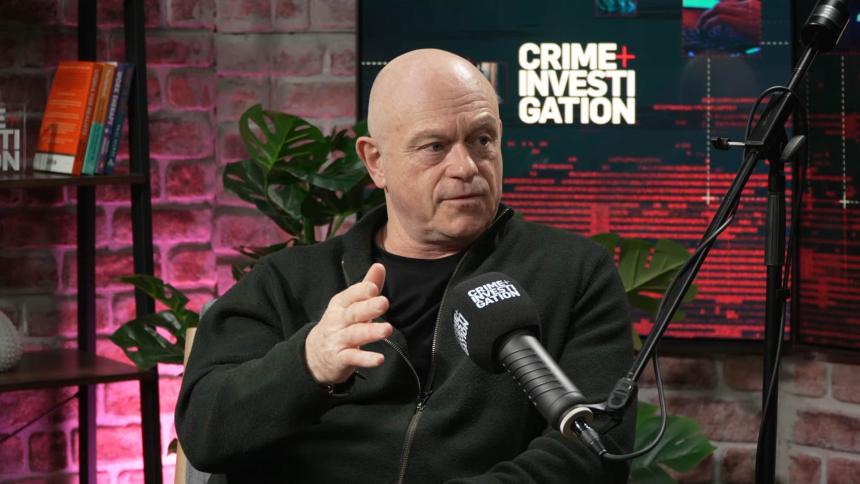
Ross recently sat down with Ben Hurst from Beyond Equality, a charity that works with men and boys to challenge harmful masculinity, to discuss the topic in greater detail. In this article, Crime+Investigation shares their conversation.
The video game effect
‘I think that young men are incredibly confused about what it is to be a man,’ says Ross Kemp, before confessing that confusion existed even when he was growing up. It’s perhaps a surprising admission from a man who is known for playing macho characters and presenting hard-hitting documentaries about soldiers and gangs.
Like many, he argues that the internet and mainstream media have added to the problem, but also points to the role of gaming.
‘I'm not going to lay everything at the feet of the internet – but with the advent of the internet and also, may I say, mainstream media…in terms of nearly all computer games that boys play, generally there's an element of violence, an element of a, let's call it, a macho type character.’
'Nearly all those games are predominantly about being macho and violent,' he continues. 'They win, they don't show emotion, they move on to the next one. And women are often portrayed as weaker – they're generally scantily clad. You will play again and again and again, and it's drip-feeding to you an image.'

It’s an interesting perspective, and one that is easily misunderstood. This isn't an argument that video games cause violence. It's subtler and, in some ways, more concerning than that. It's about the slow, cumulative effect of spending hundreds of hours inhabiting a particular kind of character: one who wins by force, never wavers, never asks for help and becomes more successful for it.
For many boys, gaming is an activity that dominates their free time. Yet in many examples, the characters they play are sending a message about what strength looks like, what men do, and – crucially – what men don't do.
But while these might be appealling attributes in a fictional digital world, they rarely translate into the real world. The collision with reality, Kemp argues, tends to come in the early teenage years. 'You go into school at 13, 14, you've been playing those games for a period of time, and you suddenly become very much aware that that image of masculinity is not realistic.' Ben Hurst puts it plainly: 'It's not fit for purpose. It doesn't actually work in school.'
It doesn't work in friendships, either. Or in relationships. The template that gaming so often hands boys, of silent, invulnerable, emotion-free individuals, is precisely the opposite of what is required in handling the complexities of everyday life. Yet sadly, in too many cases, this image becomes an actively unhelpful blueprint.
What Adolescence did differently
If gaming represents the problem in its most persistent, everyday form, then the Netflix drama Adolescence has unexpectedly become one of the most powerful cultural responses to it.
The show, which follows a 13-year-old boy charged with the murder of a female classmate, prompted an enormous public conversation about young men, online culture and the warning signs that go unseen.
Kemp's admiration for it is clear: 'It was brilliant. One of the best dramas that's been made in the last decade. Brilliantly acted, brilliantly produced, and most importantly, it brought to the attention of a wider audience what no documentary could ever do with this subject.'

But it's Ben Hurst who identifies what made Adolescence genuinely different, and it's not what most people have focused on. While public discussion has largely centred on the young perpetrator, Jamie, and the disturbing world of incel culture he inhabits, Hurst found himself drawn to something else entirely: the way the show portrays the men around him.
'I thought one of the most interesting parts of that show was the way that they showed the internal worlds of men without using any dialogue to do it.'
Think of Jamie's father – the scenes in which his devastation, his guilt, his love and his helplessness play out entirely through expression and silence. There’s no speech, explanation or tidy emotional arc. Just a man, visibly struggling with something that few of us could ever comprehend – his son being a murderer. It is, in its quiet way, a radical act of storytelling.
‘We need more of that,’ Ben says. ‘We need more of those stories. I think the trap that we sometimes fall into is we try to produce the archetype. So we say, "Oh, the man needs to be the hero."’

Even Bond had to ask the question
Few figures in popular culture carry the weight of masculine expectation quite like James Bond. For six decades, the franchise has offered a remarkably consistent vision of what a man should be: ruthless, charming, self-sufficient and – above all – untroubled. That’s even reflected in the saying he’s synonymous with: ‘shaken, not stirred’.
Which is why No Time To Die, Daniel Craig's final outing as 007, felt like a significant shift. For Hurst, the difference from previous Bond films was clear.
'I love the last James Bond film where they show this character that we've seen for all of these generations just being one specific way, starting to grapple with the internal world of – am I failing my family? Am I failing the woman I love? Am I doing good by myself? Do I want to do this stuff anymore?'
These are not the questions we expect Bond to ask. They are, however, the questions that many men ask – in private and often without anyone to ask them to. The fact that even one of the most legendary and stereotypically macho characters in British popular culture was finally shown wrestling with them felt, to many, like a form of validation. That even the people we aspire to be are capable of such feelings and emotions, and it doesn’t make you less of a man.
Hurst is clear that this isn't about dismantling the idea of male strength. 'It's not that you can't have these storylines of men being strong or men being heroes or men being protectors. Those things are sometimes real life and those stories need to be told as well. But I think it's about how we navigate that internal world that men are experiencing and feeling.'
The point that Ben makes is simple. Bond can still save the world. He just also has to be allowed to feel something about it.

The missing middle ground
What connects gaming, Adolescence and Bond is a single, persistent absence: the middle ground. The space between the womanising action hero and the romantically-rejected bumbling idiot. Between the man who feels nothing and the man who can't cope. Between the stereotype and the truth.
Kemp names it directly. 'There doesn't seem to be any middle ground. They're either violent, unemotional, or they are bumbling idiots that are the butt of the joke and they need somebody, like a responsible female, to come in and sort it out.'
Because alongside the macho archetypes, there's another familiar figure: the hapless dad, the well-meaning fool, the man who exists primarily so that someone more capable can roll their eyes and set things straight. It's a gentler image, perhaps, but it's no less clichéd – and leaves boys feeling like they have to choose between two versions of manhood, neither of which reflects the reality of most men's lives.
'I don't think there is enough of what the majority of us live in, which is the middle ground of just being normal,’ Kemp says. ‘You have to be strong and protective when needed, but you also have to show vulnerability – all the different things that make up a human being, whether male or female.'
It sounds simple. But on screen at least, it is still enormously rare. Yet, Adolescence and No Time To Die have shown a shift towards it. And conversations like the one between Ross and Ben are part of why it's slowly becoming harder to ignore.
Boys are absorbing messages about what it means to be a man long before anyone sits them down to talk about it. The question is what those messages are telling them – and whether we're ready to tell better stories.
Watch Ross Kemp: Lost Boys, Deadly Men, available now on Crime+Investigation. Want more content like this? Sign up for the Crime+Investigation newsletter today. Every week you’ll receive news, articles, insights and more on the true crime stories that everyone’s talking about.