James Rampton remembers Roger Cook, the trailblazing investigative journalist
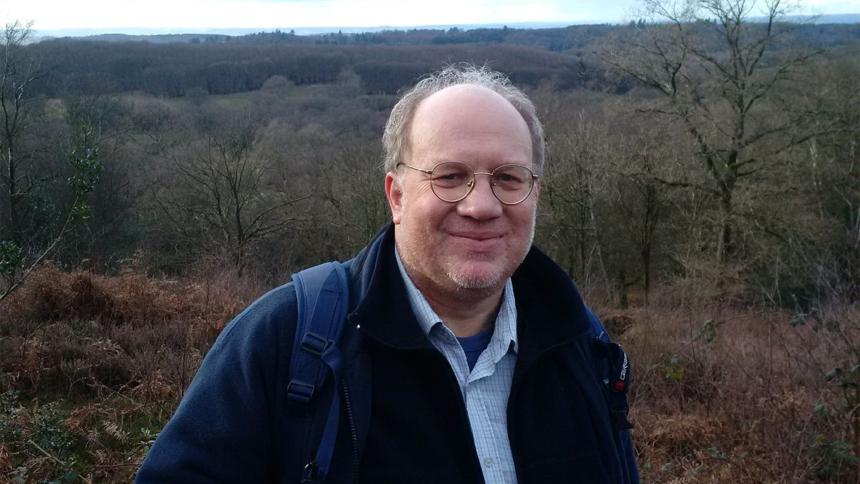
He was the investigative journalist whose legendary doorstep ambushes attracted millions of viewers for more than a decade. Yet for Roger Cook, who died aged 83 on Saturday 14th June 2026, it wasn’t the popularity, awards or infamy that drove him. It was the desire to get answers and hold crooks, killers and conmen accountable.
Never afraid to put his body on the line for a story, Cook left a template that true crime documentarians are still working from today – long after The Cook Report aired for the final time in 1999.
Crime+Investigation and veteran journalist James Rampton look back at his career and pay tribute to a giant of the investigative journalism industry.
From Sydney to the doorstep
Born to New Zealand parents, Roger Cook was raised in Australia, where he began his broadcast career as a reporter and newsreader with the Australian Broadcasting Corporation.
By 1968, he moved to London, joining BBC Radio 4's The World At One as a reporter and presenter, before going on to work across several other BBC programmes including PM, Nationwide and Newsnight.
It was on the radio that the approach for which he would become famous first took shape. In 1973, Cook created the BBC Radio 4 programme Checkpoint, which exposed con men, major criminals and official incompetence – and where, he would later acknowledge, the doorstep interview was born.
Even from the start, this technique was full of risk for his own personal safety. In 1981, he suffered three cracked ribs after being violently assaulted by an antiques dealer he had confronted over fake items. Yet famously unflappable, he summed the incident up simply: ‘Mr Harris invited me to step outside and talk things through, but his means of communication proved to be a metal bar’.
The technique that changed journalism
The doorstep interview ambush would see Cook and his TV crew arrive at the home or workplace of an intended subject without prior warning, firing questions at them as they attempted to get away.
Over the decades, there have been many infamous examples, from the likes of Michael Crick ambushing Tony Blair to Alex Thomson questioning Kelvin MacKenzie as the latter attempted to drive away. But the first use of the technique is generally attributed to Cook.

Roger himself admitted to hating the approach. But he was equally clear that it was necessary – that for the people he was pursuing, a politely booked interview was never going to happen, and the public deserved to see them confronted with the evidence against them.
That willingness to make himself a visible, physical presence in the story – enduring dislocated shoulders, broken fingers and death threats – would earn him respect from peers and admiration from the public. It even gained him the unenviable title of ‘the most beaten up journalist in Britain’.
The Cook Report: 12 years, 12 million viewers
Cook moved to ITV in 1985 to launch The Cook Report for Central TV in Birmingham. The programme ran from July 1987 to August 1999, across 16 series, and became the most-watched current affairs programme on British television – attracting peak audiences of 12 million.
The Cook Report
Among the many subjects it exposed included Northern Ireland protection rackets, baby trading in Brazil and Guatemala, canned hunting in South Africa, the ivory trade, people smuggling, timeshare fraud, war criminals in Bosnia, the Russian black market in weapons-grade plutonium. and the contaminated blood scandal. The latter documented how haemophiliacs had been infected with HIV through contaminated blood products at a time when around 100 had already died of AIDS.
But this work wasn’t just for TV entertainment. Cook’s undercover stings led to police investigations and criminal convictions, including a money-laundering exposé involving the notorious fraudster Johnny ‘Goldfinger’ Palmer.
James Rampton
Investigative journalist James Rampton, who has worked on several national newspapers, comments: 'The extremely brave practice of investigative journalists confronting criminals simply would not exist without Roger Cook.
'He was a trailblazer in the "door-stepping" method of catching criminals unawares at home or at the office. Dauntless in approaching villains, he sustained many injuries and wound up in hospital several times for his pains.
'It was worth it, however; his courageous efforts resulted in myriad jail sentences for the dodgy, the dubious and the downright criminal.
'But it was no mere macho endeavour for Cook. He was not just taking on bad guys face-to-face for the cameras. His primary concern was always unearthing the truth and exposing wrongdoing. He was on a lifelong mission to uncover crime and bring down offenders.
'He was also a vital role model for the investigative journalists who came after him, from Ross Kemp to Stacey Dooley. No Cook, no Kemp.
'All reporters have been inspired by Cook. He set extraordinarily high standards in the field. Every aspiring investigative journalist wishes to follow in his fearless, formidable footsteps.
'We will always look up to Cook the ceaseless crusader.'
An incredible legacy: the technique that continues to live on
The Cook Report ended in 1999 when ITV, facing budget pressures, chose to consolidate its current affairs output. The programme and its production team won 11 national and international awards, culminating in a BAFTA special award in 1997 for 25 years of outstanding quality investigative reporting.
But his real legacy is the technique, now standard practice across investigative journalism worldwide, and the broadcasters who cite him as a direct influence.
When some journalists made notes from the sidelines, Cook believed that accountability often required confrontation, and that important stories were worth putting yourself on the frontline for. That tradition continues in the work of journalists and documentarians who followed him, from the undercover investigations of Duncan Campbell to the frontline reporting of Ross Kemp, whose work exposing organised crime networks owes something to the template Cook helped establish.
The man who invented the doorstep interview never much liked doing them. He did them anyway. That, more than anything, is what made him Roger Cook.
Stay up to date with the latest true crime coverage – sign up for the Crime+Investigation newsletter for the stories that matter.