Andrew Borden: Did Lizzie Borden kill her father?
Lizzie Borden: 40 WhacksOn 4th August 1892, 69-year-old Andrew Borden was found brutally murdered on his sitting room sofa in Fall River, Massachusetts. His wife, 64-year-old Abby Borden, had already been killed upstairs. Both had been attacked with a hatchet-like weapon, suffering injuries so severe they were barely recognisable.
The gruesome murders became the focus of one of America’s most compelling true crime mysteries. Crime+Investigation examines who Andrew Borden was, the tensions that divided his household, and why one of America's most compelling murder mysteries has never been officially solved.
Who was Andrew Borden?
Andrew Borden was born on 13th September 1822 in Fall River, Massachusetts. The Borden family dated back to the colonial period and became influential by the 19th century. Various branches invested heavily in the city’s economic development, particularly textile manufacturing, banking and property.
Despite his illustrious family name, Andrew himself wasn’t born wealthy. He didn’t receive an inheritance when his father died, so had to find employment to support himself and his family. He initially worked as an undertaker and cabinetmaker, before investing in real estate.
At the time of his death, his estate was worth around $300,000. This was a huge fortune in 1892, equivalent to several million pounds today.
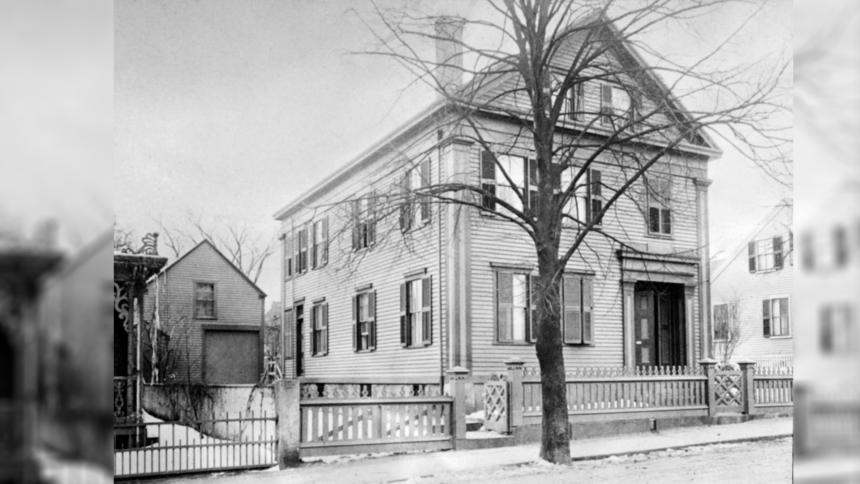
However, the frugality of his childhood never quite left him. Andrew developed a reputation for being famously economical and showed little interest in material things. Rather than joining Fall River's wealthy elite in the fashionable neighbourhoods, he chose to live in a relatively modest house at 92 Second Street with his wife, Abby, and two adult daughters, Emma and Lizzie.
Tensions at 92 Second Street
While Andrew had plenty of money, life at 92 Second Street was surprisingly modest. His frugality sometimes bordered on cruelty, and his daughters often felt that they weren't being offered the same opportunities as their wealthier friends.
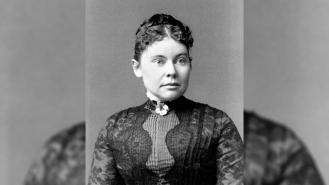
Perhaps more troubling for the girls was their stepmother, Abby. She married their father when Lizzie was around five years old, but the trio never developed a loving relationship. Inside the house, the girls called her 'Mrs Borden', and their living quarters were separated.
Lizzie and Emma’s relationship with Abby only became worse over the years. Lizzie was particularly suspicious of her stepmother, believing she had married Andrew for his money. Tensions intensified in 1887, when Andrew bought a half-share in a property owned by Abby's sister and transferred it to his wife.

The Borden murders
On 4th August 1892, Andrew left the house for a business meeting in the city. Abby, Lizzie and their maid, Bridget Sullivan, stayed at home. Sometime that morning, between 9:30am and 10:30am, Abby went upstairs to make the bed in the guest room. This is where her body was ultimately found.
Investigators later determined that she was facing her attacker at the time of her murder. They believed she was first hit with a hatchet-like weapon on the side of the head, causing her to fall. Once subdued, the killer struck her approximately 17 more times to the back of her head.
Andrew returned home at around 10:45am and tried to enter the house, but the door was jammed. Sullivan came to help and later told investigators that she heard Lizzie laughing from the top of the stairs, something which Lizzie would deny at her trial.
The investigation into Andrew Borden’s murder
It didn’t take long for investigators to turn their attention to Lizzie, whose account of the evening was 'strange and contradictory'.
She couldn’t pinpoint her exact location at the time of the murders. Police also commented on her 'attitude', believing she was strangely 'calm and poised'. More importantly, there were no signs of forced entry, suggesting the attacker had already been inside the house.
Despite not checking Lizzie for bloodstains or searching her bedroom, she was arrested several days later and charged with both murders. Prosecutors argued that she killed her father and stepmother because of tensions over money and property.

However, the case against Lizzie was largely circumstantial. Police couldn't link any forensic evidence to her, and there were no eyewitnesses to either murder. The press later criticised officers for their lack of diligence
In June 1893, after a highly publicised trial, the jury took around an hour to find Lizzie not guilty. No one else was ever charged with Andrew and Abby’s murders, leaving their deaths officially unsolved.
Tune in to Lizzie Borden: 40 Whacks on Crime+Investigation for more on the case – and sign up to the Crime+Investigation newsletter. Every week, you'll receive the latest articles, episodes and more from C+I delivered straight to your inbox.