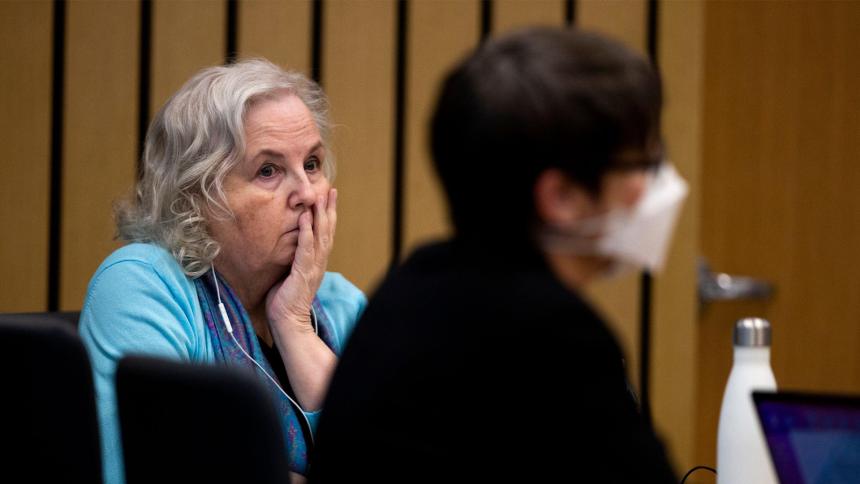
When fiction became reality: The story of Nancy Crampton Brophy
Killer GranniesIt’s a story that seems ripped straight from a crime thriller: a woman writes an essay titled How to Murder Your Husband, years later her husband ends up dead, and she’s charged with his murder. That’s exactly what happened with Nancy Crampton Brophy, whose life took a nightmarish turn that would shock even the most seasoned crime enthusiasts.
On 2nd July 2018, Daniel Brophy, Nancy’s husband, was found dead at work. He had suffered multiple gunshot wounds. Authorities discovered that Nancy had purchased the firearm used in the shooting just months before. The unusual circumstances of the death, coupled with her self-penned murder checklist, aroused suspicion.
Join us at Crime+Investigation as we focus on the crime itself, her motive, the eerie connection to her writing career and how the case will be featured in our brand new series, Killer Grannies, starting Wednesday, 21st January.

Who was Nancy Crampton Brophy?
Nancy Crampton Brophy was born in 1950 to two lawyers in Wichita Falls, Texas. She graduated from the University of Houston before moving to Oregon in the early 90s and meeting her husband (and the victim) Daniel Brophy.
The killer writer had built a career teaching culinary arts at the Oregon Culinary Institute where her husband was an instructor. She was known as an articulate writer often writing and self-publishing articles for magazines and online outlets. Nancy had a flair for the macabre, but nothing in her public persona suggested the darkness behind closed doors.
A chilling connection
By the time of her husband Daniel Brophy’s death in 2018, Nancy was 61 years old. She had spent decades balancing her career, her writing and her marriage, crafting a public persona of intelligence and sophistication. But the chilling connection between fact and fiction was shocking.
As for the crime? Well, it was grisly and sudden. One summer’s day in July, Daniel Brophy was found dead at his work at the Oregon Culinary Institute. Authorities discovered that Nancy had purchased the firearm used in the shooting just months before.
As the investigation unfolded, the eerie echoes of her past work became impossible to ignore. In 2011, Nancy had penned a piece for the now-defunct Writers’ Digest titled How to Murder Your Husband. In it, she discussed the mechanics of killing a spouse in a cold and calculated way. Covering all angles, some might say. Even though the essay was intended as fiction, a mere morbid exploration of crime from the comfort of a keyboard, there was something sinister to it.
Once her husband was dead under suspicious circumstances, the essay was thrust into the spotlight as a grim blueprint come to life.
'How to Murder Your Husband'
When Nancy Crampton Brophy was arrested in 2018, her motive seemed tied to both money and opportunity. Prosecutors argued that Nancy stood to gain financially from her husband’s death, citing life insurance policies and estate planning as part of the motive.
Witnesses and investigators also revealed tensions in the marriage, pointing to disputes over money and property. While these factors painted a conventional picture of motive, the public was fixated on the coincidence between her blog and real-life actions. Here is the start of her infamous article itself:
'As a romantic suspense writer, I spend a lot of time thinking about murder and, consequently, police procedure. After all, if the murder is supposed to set me free, I certainly don’t want to spend time in jail.'
The trial and sentence
The trial itself was a mixed bag. Nancy’s defence team homed in on her accomplishments, age, and her seemingly benign public persona. They argued that she was a devoted wife and educator and that her writings were purely fictional. But prosecutors presented a compelling narrative of premeditation. Nancy had bought the gun, researched shooting techniques, and executed a plan that mirrored the hypothetical scenarios in her essay.
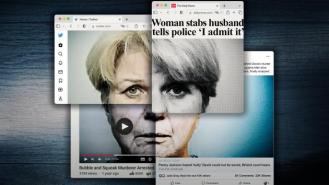
For the jury, the question was not just whether she had committed murder, it was whether she had written her own story of crime before ever acting it out.
In 2022, Nancy Crampton Brophy was convicted of first-degree murder, receiving a life sentence without the possibility of parole. The verdict sent shockwaves through both literary and true crime communities.
Love true crime? Stay in the know with the Crime+Investigation newsletter! Get exclusive access to new articles, episodes, clips, competitions, and more – delivered weekly and completely free. Don't miss out – sign up today!