Marital rape: Why was it legal for so long?
There are many archaic laws in the UK that don’t make much sense in the 21st century. Most of these laws are harmless historical curiosities that might pop up in a pub quiz from time to time. But until surprisingly recently, another had far more devastating consequences.
Until 1991, English law effectively granted husbands immunity from prosecution for raping their wives, thanks to the ‘presumption of irrevocable consent’. Crime+Investigation examines the legal history of marital rape – and asks why it took so long to recognise that marriage cannot override a woman's right to say no.
The origins of marital rape
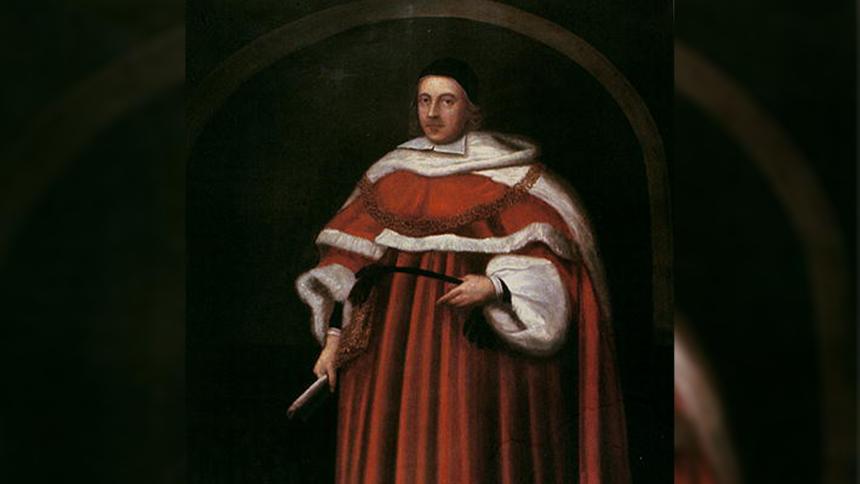
In the 17th century, a hugely influential English jurist and later Lord Chief Justice called Sir Matthew Hale proposed a principle that would later appear in his History of the Pleas of the Crown, published posthumously in 1736. He wrote that a husband couldn’t be prosecuted for raping his wife because the act of marriage itself was a form of consent.
No earlier English legal commentators appear to have made the same argument. Nevertheless, Hale’s interpretation was essentially accepted as common law for centuries to come.

Why was marital rape legal for so long?
In the 17th century, when Hale’s ideas first came to prominence, women had very few legal rights of their own.
Married women had little separate legal identity under the doctrine of coverture, an old English common law principle that merged a married woman’s legal identity with her husband’s. This gave husbands enormous control over their wives’ lives, including their property and finances.
This control also extended to a woman’s personal life. Marriage came with sexual obligations, the most important being having children. Women were expected to consent without question, and domestic and sexual violence was regarded as a private matter rather than something that required state intervention.

Changing attitudes
However, attitudes started to change by the 20th century. Women were given equal voting rights in 1928, married women had more rights over their property and finances and divorce became commonplace. Yet the marital rape exemption stubbornly remained.
Then arrived the Women’s Liberation Movement of the 1960s and 1970s. Campaigners vehemently argued that marriage shouldn’t eradicate a woman’s right to decide what happened to her own body. They rejected traditional ideas about sex and domestic violence, which had been historically dismissed as a private matter.
The movement also coincided with the opening of the first women’s refuges in Britain during the 1970s. Violence against women was becoming harder to ignore, and the conversation eventually entered public and political consciousness.
At the time, Britain wasn’t the only country with a marital rape exemption. Similar attitudes towards women and principles existed across much of the world. However, several countries had already dismissed the outdated law, including Sweden in 1965 and Norway in 1971.
By the 1980s, the idea that marriage meant permanent sexual consent was becoming impossible to defend and creating tension within the judicial system. But it would be another 11 years before the exemption was finally removed from English common law.

R v R and the end of the exemption
The issue finally came to a head in the landmark case of R v R. The case focused on a couple whose marriage had become strained, so the wife moved into her parents’ house. While her parents were out, her husband broke in and attempted to rape her.
The husband was eventually arrested and charged with attempted rape and assault, but challenged the rape charge on the grounds of the marital rape exemption. Unbelievably, Hale’s centuries-old principle was being used as a defence in a modern British courtroom.
When the case eventually reached the House of Lords in 1991, the judges unanimously rejected the marital rape exemption. Lord Keith noted that the position of women in society had changed ‘out of all recognition’ since Hale’s time, and therefore was no longer applicable in English law.
During the trial, Lord Lane, who was the Lord Chief Justice at the time, powerfully reminded the world that: ‘A rapist remains a rapist subject to the criminal law, irrespective of his relationship with his victim’.
For more on the legal history and landmark cases that changed how Britain treats victims of crime, sign up to the Crime+Investigation newsletter. Every week, you'll receive the latest articles, episodes and more from C+I delivered straight to your inbox.