What happened to Britain’s most notorious murder houses?
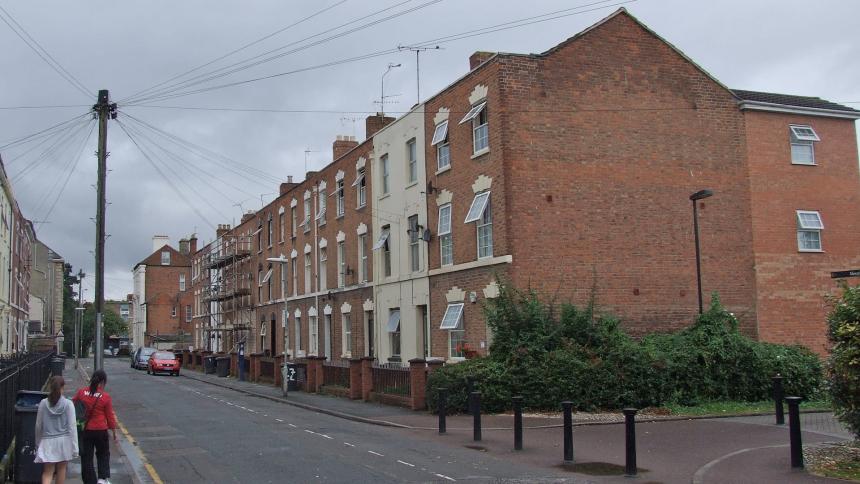
Image: Cromwell Street in Gloucester. Number 25, the home of Fred and Rose West, once stood in the space behind the bollards. | Credit: “Cromwell Street, Gloucester” by Chris Whippet , from Geograph Britain and Ireland. Cropped by Sky HISTORY. Licensed under CC BY-SA 2.0 .
Some crimes are so horrific that the kindest course of action is to erase as many physical reminders as possible. In some cases, this means demolishing properties altogether to protect local residents from unwanted visitors, morbid curiosity and souvenir hunters.
Crime+Investigation looks at what became of six of Britain's most notorious crime scenes, and why so many were ultimately torn down.
10 Rillington Place
10 Rillington Place in Notting Hill became one of Britain’s most notorious crime scenes after serial killer John Christie murdered several women at the property during the 1940s and 1950s. His victims included his wife, Ethel, his neighbour Beryl Evans and her baby daughter Geraldine, who was just 13 months old.
When police finally searched the house in 1953, they discovered human remains hidden inside the walls and beneath the floorboards. The skeletons of two more victims were excavated from the garden.
The street was ultimately renamed Ruston Close in 1954 to distance the area from Christie's crimes. 16 years later, the house was demolished as part of a wider redevelopment.
25 Cromwell Street
For almost two decades, 25 Cromwell Street in Gloucester was home to serial killers Fred and Rose West. The couple murdered at least 12 young women and girls between 1967 and 1987, burying many of their victims underneath the house and in the garden.
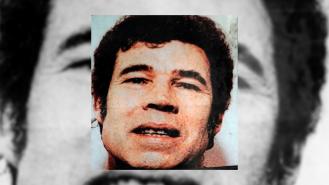
After their arrests, the British media dubbed the property the ‘House of Horrors’. Far from deterring interest, this sparked a frenzy among souvenir hunters, who wanted to steal macabre keepsakes from the murder site.
Consequently, virtually everything from the house was destroyed when it was demolished in 1996. The site was eventually incorporated into a public walkway.
5 College Close
On 4th August 2002, 10-year-olds Holly Wells and Jessica Chapman were murdered by school caretaker Ian Huntley at his home, 5 College Close in Soham. Huntley killed the children before disposing of their bodies in a ditch close to RAF Lakenheath in Suffolk.
In April 2004, the property was demolished out of respect for the girls’ families. The demolition took place overnight to minimise distress to local residents.
Afterwards, Holly and Jessica’s headteacher described a ‘sense of relief’

16 Wardle Brook Avenue
In 1964, Moors murderers Ian Brady and Myra Hindley moved into 16 Wardle Brook Avenue in Hattersley, Greater Manchester. Here, they murdered two of their five victims: 10-year-old Lesley Ann Downey on Boxing Day 1964 and 17-year-old Edward Evans in October 1965.
Despite its horrific history, the house stood for more than two decades until it was demolished in 1987. The plot has remained empty ever since.
Nevertheless, this hasn’t stopped dark tourism from taking hold, much to locals' dismay. One resident complained: ‘People round here are sick to death of this. We even have coaches pulling up outside with people looking to see where the house was.’

18 Victory Road
18 Victory Road was the scene of an arson plot that claimed the lives of six children, aged between five and 13. In May 2012, Mick and Mairead Philpott deliberately set fire to the property as part of a plan to frame Mick’s former mistress and gain an advantage in a custody battle.
The fire spread faster than the Philpotts had anticipated, and all six children died from smoke inhalation. The Philpotts were convicted of manslaughter in April 2013.
The property remained standing until September 2013, when it was finally demolished. The contractors donated their fees to a local children’s charity and later built social housing on the site.

Chandos Crescent
Chandos Crescent became the centre of one of Britain’s most horrifying recent crimes. In September 2021, Damien Bendall murdered his pregnant partner, 35-year-old Terri Harris, her children, 13-year-old John Paul Bennett and 11-year-old Lacey Bennett and Lacey’s 11-year-old friend Connie Gent at the property in Killamarsh, Derbyshire.
On 21st December 2022, Bendall was sentenced to a whole-life prison term after pleading guilty to the four murders and rape of Lacey.
After consulting with the victims’ families and local residents, the house and its neighbouring property were demolished in July 2023. The plot was then grassed over and turned into a memorial site.
Demolition rarely erases a crime from public memory, but for the families and communities left behind, it can offer something more important: a way to stop a house of horror becoming a tourist attraction, and a chance to reclaim a street from its worst day. From Rillington Place to Chandos Crescent, the decision to tear a building down is rarely about the past. It's about giving the people still living with it a future.
For more on the crimes that shaped modern Britain, sign up to the Crime+Investigation newsletter. Every week, you'll receive the latest articles, episodes and more from C+I delivered straight to your inbox.