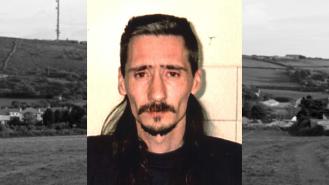
The killer millionaire: Who was Christopher Foster?
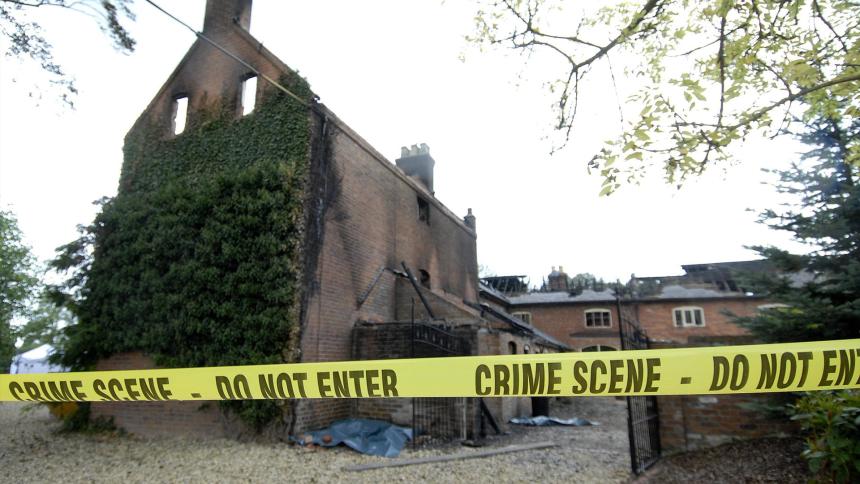
Why would a millionaire businessman, who appeared to have everything, kill his family, and himself? That’s what the nation pondered in 2008 when Christopher Foster shot his wife and teenage daughter, before setting their mansion on fire and committing suicide.
The story shocked not just the local community, but the entire country, raising uncomfortable questions about wealth, stress and desperation. Join us at Crime+Investigation as we explore the full story of a millionaire who murdered his family in a small Shropshire village.
From success to struggle
For years, Christopher Foster was seen as a classic example of rural success. He ran an oil rig insulation business that had once brought him considerable wealth, and he lived with his family in Osbaston House, a sprawling mansion set on acres of land near Maesbrook.

Foster owned horses, dogs and luxury cars, and he seemed to enjoy the trappings of upper-middle-class life. He and his wife Jill, along with their daughter Kirstie, appeared on the surface to have a comfortable, stable family life away from the hustle.
One of Foster’s neighbours told news outlets: 'The company went great guns,' He continued. 'Chris started dressing very smartly. He wanted to present himself well. He liked good holidays, a decent car...'
The real reality
But behind that facade, the reality was much darker. Foster’s company had got into trouble months before the tragedy. His business had struggled, and mounting debts left the businessman in severe financial difficulty.
At the time of his death, his assets were reportedly far outweighed by his liabilities, with three mortgages on the family home and creditors demanding for money.

People who knew him later told investigators that Foster was deeply worried about losing status, possessions and the lifestyle his family had become accustomed to.
Friends recalled him saying he would rather die than face the humiliation of financial ruin or allow his family to endure a lower standard of living.
One associate quoted him saying that bailiffs would have to 'carry [him] out of the house in a box' before they would take his belongings.
That fateful night
The night of 25th August 2008, began like any other, with the family enjoying a barbecue with neighbours. By all accounts, neither Jill nor Kirstie showed any sign of fear or distress.
Friends described Foster as relaxed and engaged in normal conversation. They had no idea that the following morning would mark the end of three lives.
Friends of the family said: 'Chris and Jill were fine, just no different to normal. They were a very normal couple.'
CCTV footage from around the property captured Foster carrying buckets and coils of piping near the stables of the mansion. Shortly afterward, firefighters were alerted to a blaze that would engulf the mansion. Police and emergency crews were unable to enter for days because of the intensity of the fire and the danger of falling debris.
Once investigators eventually gained access the found 49-year-old Jill Foster and their daughter Kirstie, aged 15, dead inside the house.
The coroner concluded that each had likely been killed while asleep in their bedrooms. A rifle recovered from the ruins was identified as belonging to Christopher Foster.
Outside the house, the remains of family pets were also found. It appeared that Foster had killed nearly every living thing on his property before setting it on fire. Christopher Foster’s own body was later found within the burnt house, lying beside his wife’s.
What drove him to do it?
When the inquest concluded, authorities painted a picture of a man under immense personal and financial strain. Foster’s business had collapsed, leaving him with debts of more than £4 million, and he had confided to friends and his doctor that he was struggling to cope.

Medical testimony revealed that he had sought counselling and medication for insomnia and suicidal feelings in the months prior to the killings.
Coroner John Ellery described Jill and Kirstie as having 'everything to live for', especially Kirstie, who was only 15 and had her whole life ahead of her. The senselessness of their deaths hit home for many, even as police acknowledged the role of Foster’s deteriorating mental state and fear of financial humiliation in driving him to commit the murders.
Love true crime? Stay in the know with the Crime+Investigation newsletter! Get exclusive access to new articles, episodes, clips, competitions and more, delivered weekly and completely free. Don't miss out, sign up today!