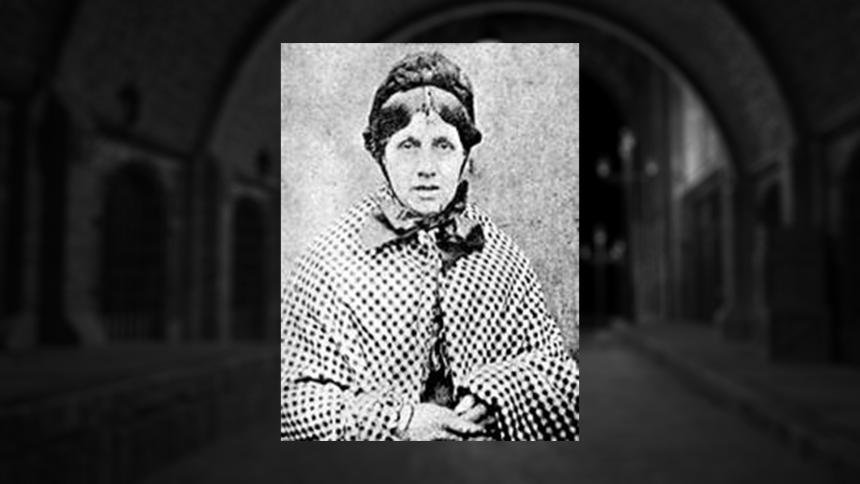
Britain’s black widow: Who was Mary Ann Cotton?
Imagine a Victorian mother who buries all her children, outlives multiple husbands and collects life insurance each time someone close to her dies. It might sound like a gothic novel. But for Mary Ann Cotton, who is believed to be Britain’s deadliest female serial killer, this was a true story.
Although Cotton’s story is over 150 years old, her life and crimes still send a chilling sensation down the spine. She was executed for poisoning her seven-year-old stepson, but investigators later believed she killed up to 21 people, including her own children, several husbands, stepchildren and her mother.
Join us at Crime+Investigation as we explore her methods, motives, arrest and legacy as one of Britain’s earliest suspected serial killers.
Who was Mary Ann Cotton?
Mary Ann was born Mary Ann Robson around October 1832 in Low Moorsley, County Durham, in the north of England. Her early life wasn’t glamorous. Her father was a miner who tragically died in a shaft accident, leaving Mary Ann’s family impoverished.
She left home as a teenager to work as a nurse, then later became a dressmaker. But Cotton’s path would shift again, and in a way that would haunt British criminal history forever.
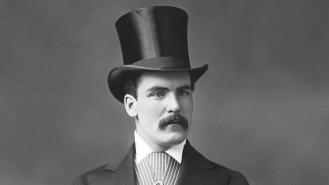
Mary Ann Cotton married her first of four husbands, William Mowbary, in 1852, and is thought to have had between four and nine children. Although the records are unclear, it has been reported that several of their children died young, leaving only three survivors. Their deaths were, unremarkably for the time, attributed to gastric fever.
But this is where the story starts to get a bit more sinister.
A deadly pattern
What makes Mary Ann’s story, so chilling isn’t just one murder, it’s the pattern. One by one, the people closest to her fell ill with what doctors conveniently labelled 'gastric fever', a vague Victorian diagnosis that covered everything from stomach bugs to, as it turned out, arsenic poisoning.
Her first husband, William Mowbray, died suddenly after a brief illness. Several of their young children followed, each succumbing to the same mysterious stomach ailment.
No one questioned it; sadly, infant mortality was heartbreakingly common, and Mary Ann always appeared dutiful and grief-stricken.
But the losses didn’t stop there.
When she married again, her second husband, George Ward, also became desperately ill. His decline was so swift and strange that even his doctor made a note of it, yet still signed the death certificate. Mary Ann moved on…
A tragic trajectory
Her third marriage, to James Robinson, followed a similar path. Children died, relatives died, and even Robinson’s own offspring died under Mary Ann’s care. And again, each death was chalked up to that same convenient culprit: gastric fever.
By the time she wed her final husband, Frederick Cotton, the pattern was impossible to deny, though Victorian England hadn’t caught up yet. Frederick died. Their children died. Her stepson died. And every time, Mary Ann walked away with either a life insurance payout or one less mouth to feed.
In total, historians believe she lost 11 of her 13 children, plus multiple husbands and relatives, an almost impossible chain of tragedies for one woman to endure. And yet Mary Ann endured them all with uncanny financial benefit and zero suspicion from the authorities.
Arrest and trial
Cotton’s luck began to run out around July 1872, when her stepson Charles died under strange circumstances. Parish officials were suspicious. When she couldn’t get Charles sent to a workhouse, she registered his death. That prompted a deeper look by authorities.

An exhumation revealed arsenic in his body. Foreshadowing how far investigations would go, multiple other deaths in her life were reassessed, bodies exhumed, tests run.
During her trial, her defence bizarrely claimed that Charles had inhaled arsenic from green wallpaper dye, which was not entirely implausible, since arsenic was used in dyes at that time. But the court wasn’t convinced. The tide of evidence built a damning case.
On 5th March 1873, the jury found Mary Ann guilty. The sentence was death. She was hanged at Durham Gaol on 24 March. Reports say her execution was botched: the trapdoor was too short, so she suffocated rather than dying instantly, a slow and grim end.
Love true crime? Stay in the know with the Crime+Investigation Newsletter! Get exclusive access to new articles, episodes, clips, competitions, and more – delivered weekly and completely free. Don't miss out – sign up today!