Bristol’s most notorious serial killers
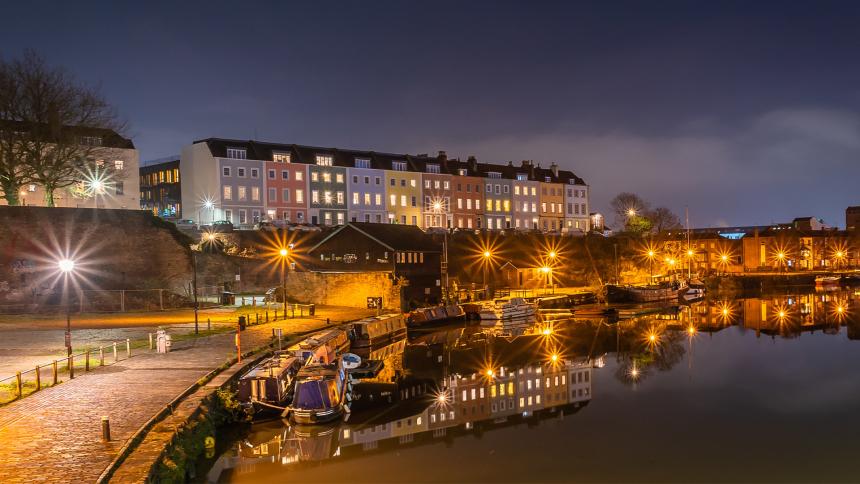
The Bodies on the BridgeBristol likes to sell itself as bright, creative and slightly smug about its coffee. Fair. But every city has a shadow-history too and Bristol is no exception. We’re not just talking about the high-profile murder of Joanna Yeates. Bristol has its fair share of serial killers with a presence that stretches well beyond the harbourside, into Somerset and Gloucestershire.
A quick note before we get stuck into the latest Crime+Investigation roundup: some of the people below are “serial killers” in the strict sense that they’ve committed multiple murders. Others are serial offenders whose crimes include murder, and whose cases left a lasting scar on the Bristol area.
1. Amelia Dyer: the Victorian “baby farmer”
If you’re looking for sheer scale, Amelia Dyer sits in a grim category of her own. Born in Bristol, she became infamous in the late 19th century as a “baby farmer” who would adopt infants for money, then murder them. Dyer was executed in 1896 for her infantcide crimes. While she was only convicted on one count, multiple other infant deaths were linked to her. Some estimate the number is well into the 400s. It’s no wonder she’s known as the Ogress of Reading.
Yes, Amelia operated in Reading but Bristol was her starting point. Overall, her story is a bleak window into how poverty, stigma and weak regulation created perfect conditions for predation in Victorian Britain.
2. Fred and Rose West: Britain’s “house of horrors”
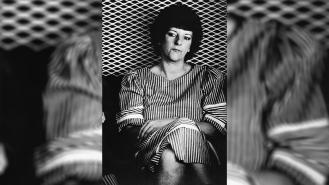
It’s impossible to talk about the West Country’s darkest crimes without mentioning the Wests. Operating in Gloucester, they murdered at least 12 young women and girls between the late 1960s and late 1980s, with their Cromwell Street home becoming synonymous with the case. Gloucester is a quick jaunt up the M5 and feels all too close for Bristol locals.
3. John Cannan: a convicted murderer, serial rapist, and suspected serial killer
John Cannan was convicted for the abduction and murder of Shirley Banks, who disappeared in Bristol in October 1987. He was also convicted of multiple serious sexual offences and became the prime suspect (though never charged) in the disappearance of estate agent Suzy Lamplugh.
Cannan isn’t officially a serial killer but his case is a reminder of how patterns of violence can escalate, and how “suspected” can still haunt investigations for decades.
4. Ron Evans: the “Clifton rapist”
Ron Evans was jailed for the sexually motivated murder of 21-year-old shop worker Kathleen Heathcote in Nottinghamshire in 1963. He was behind bars for just 11 years before being released and moving to Bristol. Here, he went on to commit a series of sex attacks throughout the seventies. The leafy, well-to-do neighbourhood of Clifton was his favourite stomping ground.
In January 1979, Avon and Somerset Police decided it was time to get proactive. They launched an undercover operation using "honeytraps", aka plain-clothed officers (including young women) used as decoys to tempt the attacker into showing himself. Evans took the bait and was jailed for almost 40 years.
5. John Straffen: the triple child killer
John Straffen murdered three young girls in the early 1950s in the counties of Somerset and Berkshire. Not Bristol proper but another one that’s close to home.
His case is an interesting one as he showed traits of antisocial behaviour from a young age. In his teens he was diagnosed by a psychiatrist as a "mental defective" and in 1947, when he was just 16, he committed his first serious crime. Straffen sexually assaulted a 13-year-old girl and a few weeks later, strangled six of her father’s chickens. Historically, it shows how the region’s post-war institutions struggled to manage offenders with mental health issues.
6. George Joseph Smith: the “Brides in the Bath” murderer
George Joseph Smith is best known for murdering multiple wives in the early 20th century. Bristol enters the story via his bigamy trail. He married Edith Peglar in Bristol in 1908 but she wasn’t his only spouse. He had a grand total of eight. Despite marrying a killer, many would consider Edith lucky as she wasn’t one of the three wives drowned in the bath by her husband.
The catchy “Brides in the Bath” headline used by newspapers wasn’t the only thing that made this case historic. It has a big role to play in terms of the history of forensic pathology and detection in the UK. It was also one of the first cases where British police used uncanny similarities between connected crimes to prove guilt.
George Joseph Smith was tried at the Old Bailey and it took the jury about 20 minutes to find him guilty. He was hung for his crimes on 13th August 1915.
Want more roundups like this? Subscribe to the Crime+Investigation newsletter and access the latest articles, stories, shows and more, on demand.