Justin Plummer: The man whose murder conviction was overturned...twice
Convictions Gone Bad with Will MellorThe case of Justin Plummer is one of the most incredible miscarriages of justice cases in recent British legal history. Convicted of the murder of Janice Cartwright-Gilbert in 1998, Plummer spent decades behind bars while maintaining his innocence.
His conviction was eventually overturned, only for him to face a retrial and be convicted again. Years later, that second conviction was also overturned.
Read on as here at Crime+Investigation we explore the case of Justin Plummer and the long fight to clear his name.

The murder of Janice Cartwright-Gilbert
The case began in February 1997 when 38-year-old Janice Cartwright-Gilbert was found dead inside a mobile home near Wilden, Bedfordshire. She had suffered multiple stab wounds and the mobile home had been deliberately set on fire in an attempt to destroy evidence.
The murder shocked the local community and prompted a major police investigation.
Attention soon turned to Justin Plummer, who was 24 years old at the time. Plummer had a lengthy history of burglary offences and had committed a series of break-ins in the area around the time of the murder. Prosecutors argued that he had entered the property intending to steal and had attacked Cartwright-Gilbert when she disturbed him.
The evidence against Plummer
One of the most important pieces of evidence presented at trial involved marks found on the victim's face.
Prosecution experts claimed that the marks were consistent with the sole of a trainer linked to Plummer. This footwear evidence became a key part of the case and helped persuade the jury that he was responsible.
But there was no DNA evidence linking Plummer to the crime scene, no eyewitness testimony and no clear forensic evidence directly connecting him to the murder.
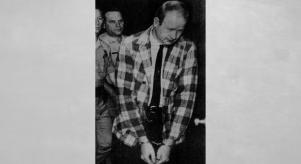
Despite this, a jury convicted him of murder in December 1998. He was sentenced to life imprisonment with a minimum term of 16 years.

Maintaining his innocence
Unlike many convicted prisoners who eventually accept responsibility for their crimes, Plummer consistently denied he was involved in the killing.
Over the years, he appealed and tried to challenge the evidence used against him. But his first application to the Criminal Cases Review Commission (CCRC) was unsuccessful. For many years, his conviction remained in place.
As forensic science developed and standards for expert evidence became more rigorous, the testimony that helped convict him was queried.

The first conviction is overturned
A major breakthrough came when new expert analysis examined the footwear evidence used at the original trial.
They concluded that the evidence was fundamentally flawed. The CCRC found that the prosecution's experts might have used unreliable footwear evidence and gone beyond their area of expertise.
As a result, the case was referred back to the Court of Appeal.
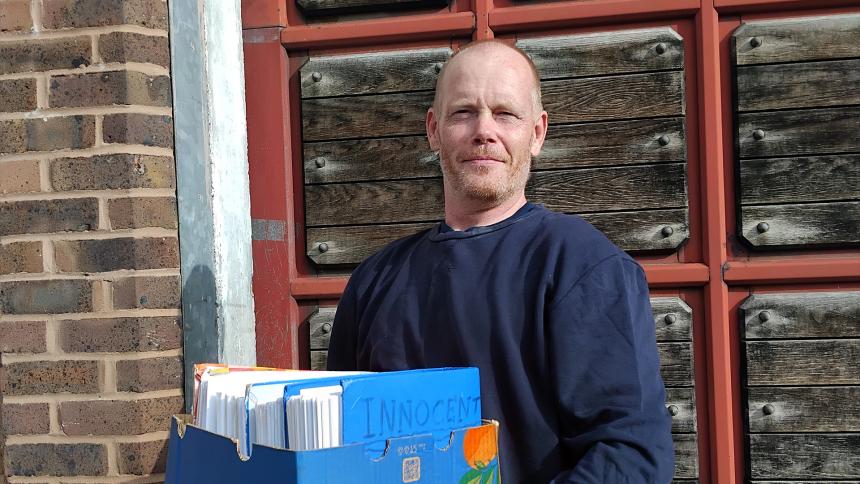
In 2021, Plummer's conviction was overturned after judges concluded that the original jury had been misled by unreliable expert evidence. After more than two decades in prison, Plummer’s fight for justice had finally succeeded.
A second trial
But the story didn’t end there. After the successful appeal, prosecutors decided to retry the case. Plummer once again faced a jury accused of the same murder.
At the retrial, the prosecution relied on different evidence, including claims that Plummer had made incriminating comments to another prisoner. This testimony became a significant part of the new case against him.
The retrial resulted in a second conviction and Plummer was once again sentenced to life imprisonment.

Conviction overturned again
Plummer appealed for a second time.
In 2025, the Court of Appeal overturned his conviction once again. Judges found serious concerns with evidence presented during the retrial. The evidence couldn’t be properly challenged in court, especially as the prison informant was dead.
For the second time, a murder conviction against Justin Plummer had been set aside.
Why the case matters
Justin Plummer's case highlights important questions about expert evidence, forensic science and the difficulty of overturning a conviction.
He spent decades fighting to clear his name, with two convictions and two successful appeals along the way. His story is a reminder that miscarriages of justice can happen and that correcting them is often a long and difficult process.
This case continues to spark debate about how the justice system handles serious criminal investigations and how it responds when mistakes are made.
Love true crime? Get exclusive access with the Crime + Investigation newsletter. Receive new articles, episodes, clips, competitions and more: delivered straight to your inbox each week, completely free.