Squatters: Does 'Squatters' Rights' apply to the UK?
SquattersSquatting is the practice of occupying an empty property without the owner’s consent. Historically, UK law has tended to treat squatting as a tort – a civil wrong outside the reach of the criminal courts. This situation changed dramatically with the passing of the Legal Aid, Sentencing and Punishment of Offenders (LASPO) Act 2012.
Section 144 of LASPO made residential squatting a crime in England and Wales. The then-housing minister Grant Shapps declared: ‘No longer will there be so-called "squatters’ rights".’ In practice, however, this has been far from the case – as squatting in commercial properties is still, in itself, legal.
Though LASPO was an attempt to toughen up squatting laws, they remain something of a complex patchwork. What can you do about squatters in your property? Can tenants claim squatters’ rights to protect themselves from bad landlords? Crime+Investigation thought it was high time to unravel the legal tangles…
The end of ‘squatters’ rights’?
Squatting has been illegal in Scotland since the enactment of the Trespass (Scotland) Act 1865. South of the border, the process of criminalising squatting did not begin until the 1970s.
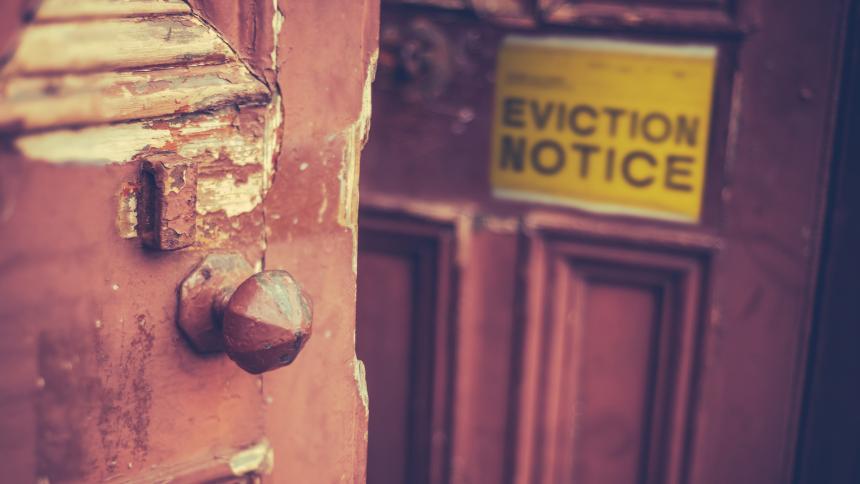
Up until then, homeowners in England and Wales who found their residences occupied by squatters had to resort to a civil remedy. This could be onerous and time-draining. In 2012, the then-justice minister Crispin Blunt implied as much when LASPO swept these old rules away.

He claimed that ‘squatters have had the justice system on the run and have caused homeowners untold misery in eviction, repair and clean-up costs.’ The law changes, he added, would ‘ensure the police and other agencies can take quick and decisive action to deal with the misery of squatting.’
Squatting in residential buildings
Today, anyone squatting in a residential building in England or Wales risks getting arrested. Here, ‘squatting’ is defined as knowingly (at least in theory) entering and living in (or intending to live in) the property without the owner’s permission.
Meanwhile, the definition of ‘residential building’ includes any designed or adapted as a living space – even if no-one actually lives there before the squatter moves in. Houses, flats, mobile homes and caravans all fall into this category.
Under this law, anyone found guilty of residential squatting can be imprisoned, fined or both. However, the legal picture is very different when it comes to commercial properties. This has been illustrated in some high-profile cases, such as when squatters took over a Gordon Ramsay pub in 2024. Here are some warnings to heed…
Squatting in non-residential buildings
Strictly speaking, squatting on a non-residential property in England or Wales is not a crime. With properties like this (legally classed as any building or land not designed to be lived in), the old system still applies. So, if squatters descend upon your non-residential property, you’ll have to initiate civil proceedings to clear the site.

Within 28 days of finding out about the squatters, you can apply for an interim possession order (IPO). Squatters served with an IPO are legally required to leave the property within 24 hours and stay away from the property for 12 months. So, disobeying this court order would be a crime, meaning that the police can take action.
The next step is to make a claim for possession. You must skip straight to this step if more than 28 days have passed since you learned about the squatting of your property. Either way, you can bring the property back into your full possession.
What is ‘adverse possession’?
Believe it or not, in some (really very specific) circumstances, squatters can actually claim legal ownership of the property they have seized. Let’s look at those circumstances in England and Wales…
Firstly, the squatters (or a succession of squatters) need to have occupied the property without interruption for at least 10 years. This threshold rises to 12 years if the property is not registered with HM Land Registry.
Secondly, the squatters (or the squatters there before them) must have acted as the property’s owners for all that time. Thirdly, the squatters (or any of their predecessors) must have taken the property without the genuine owner’s permission.
This third clause underlines why, contrary to myth, a legal tenant who stays in their rented home after the tenancy ends cannot claim ‘squatters’ rights’. This tenant will have moved into the property only after signing a formal agreement with the landlord, and so is not defined as a squatter.
What’s new in the world of crime content? Find out by subscribing to the Crime+Investigation newsletter.