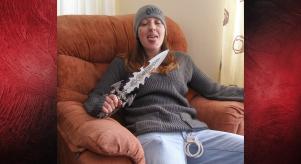
Lewis Briggs: The boxer jailed 20 years for murder
Boxing is a violent sport by definition. You expect athletes to throw punches inside the ropes. What you don’t expect is for them to carry that violence into real life and commit cold-blooded murder.
This is exactly what unfolded in the Lewis Briggs case, an incident that saw a roadside argument in southern Spain escalate with horrifying speed.
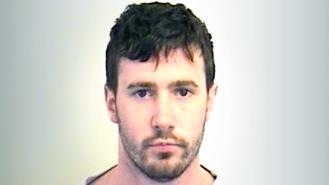
It ended with a teenager named Ulrich Perez being stabbed and killed. A few years later, Briggs (a British amateur boxer and personal trainer) was sentenced to 20 years in prison. Join Crime+Investigation as we explore the shocking case in more detail.
An extreme case of road rage
It’s no secret that tempers can run hot behind the wheel. Most motorists let out steam with hand gestures and the occasional profanity. Like British road rage murderer Kenneth Noye, Lewis Briggs took things much further.
Ulrich Perez was out buying detergent for his mother and was walking home when he encountered Briggs near a zebra crossing. The argument started after Briggs braked sharply near the crossing and Perez challenged him over his driving. At face value, it sounds like the sort of minor flare-up people have every day. Sadly, not the case here.
Briggs makes a calculated decision
Briggs initially drove away, then returned roughly a minute later. He came back, took a knife from the glove compartment, got out of the car, kicked Perez in the chest and stabbed him in the torso. The wound pierced Perez’s heart and proved fatal.
That decision to return was central to how the case was viewed. It pushed the incident far beyond a spontaneous argument that spiralled. Legally and morally, this is huge and ultimately helped the prosecution secure their 'guilty' verdict and harsh sentence.

Briggs admits to the stabbing
Briggs was trialled in Malaga in September 2024. He didn’t deny that he stabbed Perez but he did claim that it had been an accident, and that he’d never intended to kill him. He told the court he hadn’t slept the night before, and had been drinking and taking drugs. He also apologised directly to Perez’s family from the witness box.
You can see the line his defence was trying to take: remorse, intoxication, confusion, no intention to commit murder. But the jury didn’t accept that version of events. And really, once the wider picture was laid out, that was hardly surprising.
CCTV and the aftermath
CCTV footage of the stabbing was shown in court and was an important part of the prosecution case. It’s a theme also explored in Body in the Suitcase: The Murder of Deborah Chong, a docuseries that shows just how often CCTV can do the heavy lifting in a murder investigation.
Plus, there were the damning facts of what happened afterwards. Instead of remaining at the scene, Briggs changed the number plates on his rented Mercedes and fled Spain. He flew to Portugal and eventually made his way back to the UK. He stayed on the run until December 2020, when he was arrested.
The failed defence over drugs and mental health
The court also heard evidence about Briggs’ drug use and mental state at the time. His legal team claimed he was a heavy user of cocaine, alcohol and anxiolytics, and that he suffered from a dissocial personality disorder. They tried to use that in support of a lesser sentence, or at least to reduce his level of responsibility.

Like the jury, the appeal judges weren’t persuaded. The Andalusian High Court rejected requests for a lesser sentence based on mental health and addiction factors. Put bluntly, the judges didn’t buy that his condition or substance use had impaired his judgement to a level that excused the killing.
That is an important distinction in cases like this. Sometimes a mental health argument really does change the outcome. For example, Richard Fielding (The Arsonist Murderer) pleaded guilty to manslaughter on grounds of diminished responsibility due to mental illness, and that plea was accepted. In Briggs’ case, the court simply didn’t believe the evidence came close to clearing that bar.
Briggs handed a severe sentence
Briggs was sentenced to 20 years in prison. That included 18 years for murder and a further two years for a false documentation offence. He launched an appeal in 2025, but it was rejected by the High Court of Justice of Andalucia.
Want more cases like this that get under your skin? Subscribe to the Crime+Investigation newsletter for gripping true crime stories, fresh features, must-watch picks and more, straight to your inbox.