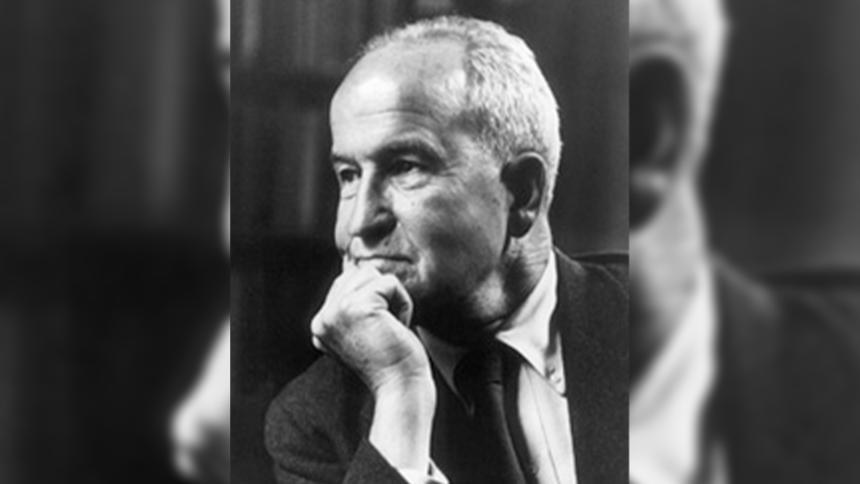
Henry Murray: The psychologist who experimented on the Unabomber
Few figures in 20th-century psychology carry a legacy as complicated as Henry Murray's. Celebrated for helping shape modern personality theory, Murray was also responsible for a series of controversial psychological experiments at Harvard University that later attracted worldwide scrutiny when it emerged that one of his subjects was the Unabomber, Ted Kaczynski.
For decades, Murray was respected as an influential academic. He developed theories about human motivation and helped create the Thematic Apperception Test, a psychological assessment tool still widely discussed today.
Join Crime+Investigation as we deep dive into the troubling legacy of Henry Murray, the variety of experiments he conducted, and the speculation that these acts may have contributed to the murders.
Henry Murray’s work at Harvard
Murray joined Harvard in the 1920s and eventually became director of the Harvard Psychological Clinic. He was fascinated by what motivated people under pressure. Like many psychologists of the Cold War era, he became interested in stress, interrogation and emotional endurance.
These ideas were shaped by the political climate of the time, when American institutions were deeply concerned about propaganda, brainwashing and psychological warfare.

During the late 1950s and early 1960s, Murray supervised a study involving Harvard undergraduates. The experiment recruited young students, many of them intellectually gifted but emotionally inexperienced, and placed them in highly stressful situations. Among those students was Ted Kaczynski, who entered Harvard at just 16.
The experiments
The sessions were harsh by any modern ethical standard. Students were brought into rooms under bright lights, connected to monitoring equipment and confronted by law students or researchers trained to aggressively challenge their beliefs. Murray himself described some of the interrogations as 'vehement' and 'personally abusive'.
The attacks were not random. The interrogators used the students’ own essays as ammunition, targeting deeply personal ideas and insecurities. Researchers then recorded the students’ reactions and forced them to watch the footage afterwards, sometimes repeatedly.
The goal was to measure how individuals responded to humiliation, stress and emotional pressure.
Research or psychological cruelty?
Ted Kaczynski reportedly spent around 200 hours participating in the study over several years. Critics later argued that the experiment blurred the line between research and psychological cruelty, especially because participants were not fully informed about what they would experience.
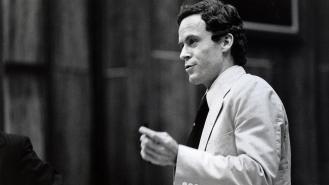
Today, the methods would almost certainly violate ethical standards surrounding consent and participant welfare.
Although Murray supervised the project, there is little evidence that he had a close personal relationship with Kaczynski beyond the experiment itself. However, Murray undeniably held authority over the young student at an important stage of his development.
Connection with the Unabomber
Kaczynski was already unusual before arriving at Harvard. Exceptionally intelligent, socially isolated and much younger than most of his classmates, he struggled to fit into university life. Several writers and historians have suggested that Murray’s experiments may have intensified feelings of alienation and mistrust that were already present.
Still, the connection between the experiments and Kaczynski’s later crimes remains heavily debated. Between 1978 and 1995, Kaczynski carried out a nationwide bombing campaign that killed three people and injured many others. His attacks targeted universities, airlines and individuals connected to modern technology, earning him the name the Unabomber.
Some authors, including journalist Alston Chase, argued that Murray’s study may have contributed to Kaczynski’s psychological deterioration. The theory suggests that prolonged humiliation and emotional manipulation could have reinforced his paranoia, hostility toward institutions and obsession with psychological control.
A lasting impact
Many experts caution against drawing a direct line between the Harvard experiments and the murders. Human behaviour is rarely shaped by a single event. Kaczynski himself denied that the study had a major effect on the course of his life, though he admitted resenting the invasion of privacy and emotional pressure involved.
Today, Henry Murray’s experiments are often discussed as a warning about the dangers of unethical psychological research. They emerged from a period when scientific ambition sometimes outweighed concern for human well-being. The fact that one participant later became one of America’s most notorious domestic terrorists has only intensified public fascination with the story.
Murray’s contributions to psychology remain significant, but his reputation will always be shadowed by the disturbing methods used in those Harvard experiments and the enduring mystery of whether they helped shape the mind of Ted Kaczynski.
Love true crime? Stay in the know with the Crime+Investigation newsletter! Get exclusive access to new articles, episodes, clips, competitions, and more – delivered weekly and completely free. Don't miss out – sign up today!