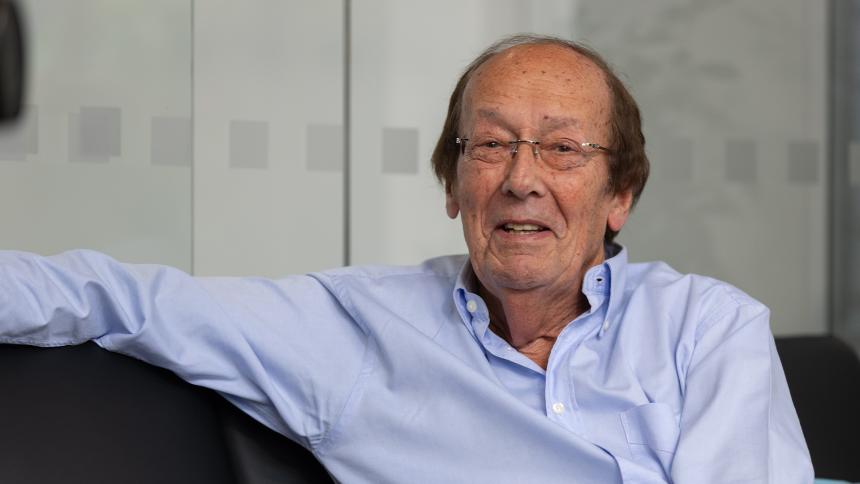
Legendary broadcaster Fred Dinenage reveals his next chapter in true crime
Fred Dinenage has been on our television screens for over six decades, presenting everthing from regional news and crime programming, to children's shows and quizzes. In 2011, he fronted Murder Casebook on Crime+Investigation, a show which offered a fresh perspective on some of the most infamous murders from British history. Now, in this guest article, Fred reveals the plans behind his latest venture and how he's investigating these horrific cases once more.
From television screens to podcast microphones, I’ve spent more than 60 years working in broadcasting… a career built on trust, truth, and a belief that stories, especially the difficult ones, deserve to be handled with care. When you’ve spent decades talking to viewers through their television screens, sometimes about light-hearted things, sometimes about matters far more serious, you begin to realise what a privilege that connection really is.
I began my career in television in 1964, joining regional TV at a time when broadcasting was learned very much on the job. My first ever series was a children’s show called Three Go Round. There were no grand plans, no clearly mapped-out destinations… just a curiosity about people, about how the world works, and a desire to tell stories properly. Like many of my generation, I was fortunate enough to grow with the medium as it evolved.
I’ve been very grateful for my ever-evolving working life. That’s something I’ve never taken lightly, and certainly not something I say without reflection. Over the years, I spent a long time leading regional news coverage, reporting on stories that mattered deeply to local communities and earning the trust of viewers who relied on us to get things right. Alongside that, I had the privilege of fronting national programmes such as How, Tiswas and World of Sport, experiences that taught me just how wide-ranging and demanding this job can be.
That same sense of responsibility stayed with me as my work increasingly moved into crime journalism. I became the official biographer of the Kray twins, a role that reinforced for me the importance of context, accuracy and restraint when dealing with criminal history. These were not just notorious names, but stories with lasting consequences for victims, families and communities.
That philosophy is what eventually led me into crime journalism, and more specifically to Fred Dinenage’s Murder Casebook. When the series first aired on Crime+Investigation in 2011, I don’t think any of us anticipated the impact it would have, or the longevity it would enjoy. We were careful from the outset. These weren’t just stories, they were real lives, real victims, real consequences. Many of the families involved were still living with the effects of events that had taken place decades earlier.
The programme struck a chord, perhaps because it didn’t try to dress these cases up. There was no need to. The facts were powerful enough. Over time, Murder Casebook developed something of a cult following, which still humbles me to this day. People stop me in the street to talk about episodes they remember, questions they still have, or details that stayed with them long after the credits rolled.
What’s extraordinary is that in 2026 the series will mark its 15th anniversary. That milestone gave me pause for thought. Crime reporting, like society itself, doesn’t stand still. Our understanding of forensic science, policing, psychology, and even media responsibility has changed significantly since those programmes were first made. That’s what planted the seed for revisiting these cases in a new way.
Which brings me to the next chapter.
I’m delighted to say that I’m returning to some of those same cases in a brand-new podcast series, Fred Dinenage’s Murder Casebook Reopened, launching on Underworld Uncut. It’s a five-part series, available on YouTube and across all major podcast platforms, and it’s allowed us to do something rather special.
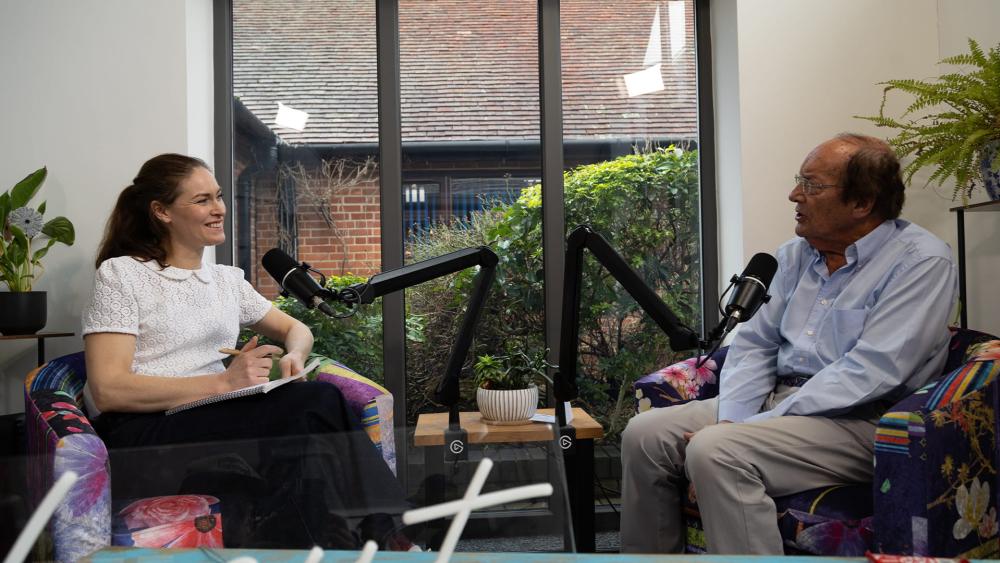
Podcasting offers a freedom that television often doesn’t. There’s more space for nuance, more room for conversation, and more opportunity to explore the quieter details, the things that don’t always make it into a one-hour broadcast. In this new series, I’m joined by the excellent Hayley Rhodes, who brings sharp insight and a fresh perspective to every discussion.
Together, we reopen the casebook, not to simply retell familiar stories, but to reassess them. To challenge long-held assumptions. To ask what we might see differently now, with the benefit of hindsight and modern investigative thinking.
The cases themselves remain some of the most haunting in British criminal history.
There’s Ruth Ellis, the last woman to be executed in Britain – a case that continues to raise questions about justice, responsibility, and the social attitudes of the time.
Derek Bentley, whose infamous ‘Let Him Have It’ case still stands as one of the most troubling examples of how language, interpretation, and authority can collide with devastating results. Donald Neilson, known to the press as the Black Panther, whose crimes spread fear across the country.
Then there are cases like John Straffen, and the chilling figure often referred to as The Monster Butler… names that became symbols of horror long before the public truly understood the psychology behind such crimes.
What the podcast allows us to do is slow down. To look again at evidence. To consider context. To reflect on how media coverage itself may have shaped public perception at the time. I also share memories from making the original seen, the practical challenges, the editorial decisions, and the moments that stayed with me long after filming wrapped.
These cases remain a dark part of our national history, and that darkness deserves to be handled with care. But understanding matters. Remembering matters. And sometimes, revisiting the past can help us better understand the present.
Looking back over my career, from news desks to documentaries, from regional television to national audiences, I feel an overwhelming sense of gratitude. Broadcasting has given me a front-row seat to history in the making, and the trust of viewers who’ve invited me into their homes for many years.
If there’s one thing I’ve learned, it’s that audiences are far more perceptive than they’re sometimes given credit for. They don’t just want information, they want honesty, clarity, and respect. Whether you’ve followed my work from the beginning or discovered Murder Casebook more recently, I hope this new podcast feels like a continuation of a conversation we’ve been having for a long time.
So, the casebook is reopened. Not to sensationalise the past, but to examine it with fresh eyes. I hope you’ll join us.
The new video podcast Fred Dinenage Murder Casebook Reopened is available to view now. Find the latest episodes here.