Elizabeth Smart: The case that changed attitudes toward missing children
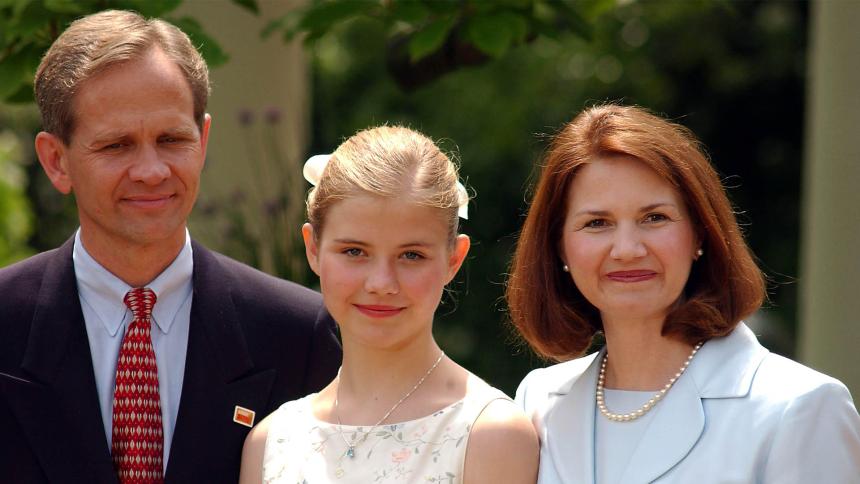
On 5th June 2002, 14-year-old Elizabeth Smart was kidnapped from her bedroom in Salt Lake City, prompting one of the most intense missing child searches in American history. Despite all odds, and defying many of the statistics we’ve come to trust about victim survival, she was found alive nine months later.
Unbelievably, she had been hidden in plain sight, often venturing into public places with her captors, Brian Mitchell and Wanda Barzee.
Elizabeth’s survival challenged assumptions about how abducted children behave and what captivity looks like. As Netflix releases a new documentary covering the case, Kidnapped: Elizabeth Smart, the Crime+Investigation team revisits the case and explores how it changed attitudes towards missing children investigations.
The abduction of Elizabeth Smart
In the early hours of 5th June 2002, Ed and Lois Smart were woken up by their daughter Mary Katherine, reporting that a man had kidnapped her 14-year-old sister, Elizabeth. The sisters shared a bedroom, and Mary later explained that she had pretended to be asleep while Elizabeth was threatened and abducted at knifepoint.
At first, her parents thought she had a nightmare, but when they went to investigate, they discovered that the window screen had been broken and cut with a knife.
Police launched an extensive search within hours, which quickly gained national media attention. Time was of the essence as FBI research shows that in cases where abducted children are later murdered, around 74% are killed within the first three hours and nearly 90% within 24 hours.
Despite the large scale of the investigation, days, weeks and eventually months went by with no sign of the missing teenager. That changed on 12th March 2003, when she was recognised by members of the public walking through Sandy, Utah, with Mitchell and Barzee.

Catching the kidnappers
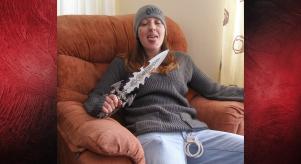
By all accounts, Brian David Mitchell and Wanda Barzee were misfits. Mitchells was a self-proclaimed religious prophet who called himself 'Immanuel David Isaiah'. Barzee was his wife and devoted follower. Mitchell had targeted Elizabeth after briefly working at her family home that summer.
After abducting Elizabeth, Mitchell explained that she was chosen by him as one of his first disciples. He proceeded to 'marry' her in an encampment outside of Salt Lake City. Over the next nine months, Elizabeth was repeatedly raped, disguised and moved through public spaces to avoid detection. Mitchell and Barzee hid her in plain sight, using threats and intimidation to stop her from escaping.
When officers located the group on 12th March 2003, Elizabeth initially said she was Augustine Marshall. However, it soon became clear that she was the missing teen, and Mitchell and Barzee were arrested.
Mitchell was later convicted and sentenced to life in prison without the possibility of parole. Barzee served a custodial sentence and was released in September 2018.
How the case changed attitudes toward missing children
Even when Elizabeth was separated from her captors, she continued to insist her name was Augustine Marshall. According to police accounts, she cried in the car on the way to the station, asking, 'What's going to happen to them? Are they going to be okay?' Investigators suspected Elizabeth had Stockholm syndrome, but this is something she later denied in interviews.
As pieces of the puzzle came together, one thing stumped investigators: If Elizabeth had moved through public places, why didn’t she run? People thought they knew how they’d act in the same situation, but Elizabeth’s case highlighted how coercive control is equally powerful as physical restraints. It was impossible to escape because Mitchell and Barzee were master manipulators who weaponised fear.
The kidnapping changed attitudes toward missing children and challenged beliefs about how victims behave when isolated and abused. Investigators realised that compliance and silence were often indicators that someone was in danger.
Advocacy work and the Elizabeth Smart Foundation
Nowadays, Elizabeth focuses on recovery and advocacy. She’s an American child safety activist, author and news commentator, regularly featuring in Netflix documentaries and podcasts about abuse and victim behaviour.
Despite talking openly about her experiences, she doesn’t like dwelling on her past. Instead, she hopes to make a difference to future survivors with the Elizabeth Smart Foundation. The charity’s goal is to 'empower survivors, educate communities and prevent sexual violence.'
In an interview, Elizabeth spoke more about her vision:
'My personal experiences have made me a more compassionate person in general and given me an insight into things that I wouldn’t otherwise ever comprehend… I’m trying to make it so no child ever has to deal with what I dealt with.'
For more true crime stories like this, sign up for the Crime+Investigation newsletter. We’ll deliver the latest articles, videos, episodes, podcasts and more straight to your inbox, every week.