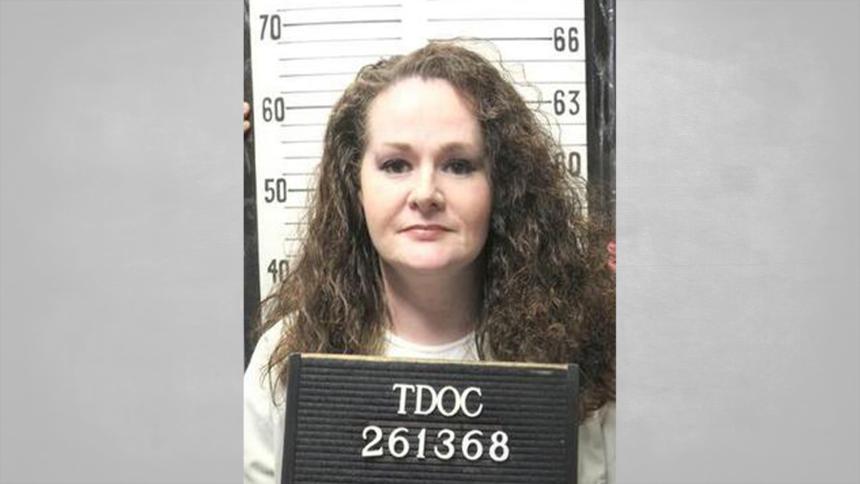
Christa Pike: The killer who survived her own execution
The name Christa Pike is a well-known one amongst crime enthusiasts, and her case has long been debated around the world. In September 2026, Pike became even more of a talking point when Tennessee tried and failed to execute her, which would have made her the first woman executed in the state in more than 200 years. But what exactly did Christa Pike do and why has her case attracted so much attention?
Crime+Investigation looks at the crimes of Christa Pike, the arguments surrounding her case and what happened when Tennessee tried to carry out her sentence.
Who is Christa Pike?
Christa Pike is a woman who was sentenced to death at the age of 20 for the murder of her classmate Colleen Slemmer, a crime she committed with her then-boyfriend when she was 18. Born on 10th March 1976, Pike had what her lawyers have described as a deeply disturbing childhood. According to her legal team, her mother abused alcohol while she was pregnant, leading to brain malformation and damage. Pike experienced seizures when she was an infant because of this.
Pike was abused mentally, physically and sexually as she grew up. By the time she reached the age of 18, her lawyers say she had been physically abused by at least seven family members, including her father and maternal grandmother. She was sexually abused by several different men, including a neighbour.
Pike was temporarily removed from her home following sexual and physical abuse at the hands of her mother’s boyfriend. She was unstable in terms of where she lived too, as she moved between her parents (West Virginia and North Carolina) constantly. She had changed schools 12 times by 1993.

The trauma and abuse Pike suffered led to severe mental health issues. According to her legal team, she suffered from PTSD and bipolar disorder, but did not receive the treatment she needed.
When she was 12, Pike was sent to the North Carolina Juvenile Evaluation Center in Swannanoa following a suicide attempt. It was when she was staying in Swannanoa that she obtained her GED and became a teaching assistant.
When her time at the centre came to an end, Pike had one last chance to turn her life around. She enrolled at the Job Corps in Knoxville, Tennessee, a federal programme that offered troubled youths the chance to learn vocational skills. It was here that she met 17-year-old Tadaryl Shipp.
The murder of Colleen Slemmer
Florida native Colleen Slemmer was 19 years old when she decided to study at the Job Corps. She attended after her grandfather suggested she go due to her proficiency with computers and technology. Colleen was known for her kindness and helpful nature, but her life was cut short on 12th January 1995.
On this day, Pike, Shipp and an 18-year-old friend, Shadolla Peterson, led Colleen to an abandoned steam plant on the campus of the University of Tennessee. Pike and Shipp attacked Colleen while Peterson stood watch, and Colleen died from blows to the head.
The motive behind the murder, according to prosecutors, was jealousy. Pike thought that Colleen was trying to steal her boyfriend, so she formulated a plot to attack her.

The death penalty
Pike was found guilty of first-degree murder and conspiracy to commit murder. She was sentenced to death on 30th March 1996. If the execution had gone ahead, she would have been the first woman executed in Tennessee in more than 200 years. The sentence caused a great deal of controversy.
Pike’s traumatic childhood and her young age when the crime occurred have led to advocacy for her. However, the nature of the crime and the premeditation were points used significantly by the prosecution.
Pike’s lawyers have also pointed out that her punishment was significantly more severe than that of the other two people involved. Shipp was found guilty of the same convictions as Pike, but as he was a minor (17 at the time) he avoided death row and was sentenced to life with the possibility of parole, plus 25 years. Peterson pleaded guilty to being an accessory after the fact. She also testified against Pike and Shipp, leading to a sentence of six years’ probation.

September 2026: A failed execution
This case came back into the spotlight when, on 30th September 2026, Tennessee tried to execute Pike by lethal injection. The state administered two doses of pentobarbital, but the execution was halted after nearly two hours when Pike did not die. She was taken to hospital and put on a ventilator. Pike’s lawyers said they believed problems with the IV lines caused the drug to enter her body instead of her bloodstream, while the state has said it followed its established protocol.
Governor Bill Lee halted all further executions for the rest of 2026 and ordered an independent review, and the head of the state’s prison system later resigned. According to her attorney, Pike has since regained consciousness and was discharged from hospital on 10th October. It is still unclear whether the state will try to execute her again, which has led to even more controversy.
Whether or not Christa Pike should face the death penalty has divided a great deal of people. At the time of writing, the state has not announced what will happen next.
For Colleen Slemmer’s family, the case has returned to the headlines more than 30 years after her death.
For more on the cases behind the headlines, sign up to the Crime+Investigation newsletter. Every week, you’ll receive the latest articles, episodes and more from C+I delivered straight to your inbox.