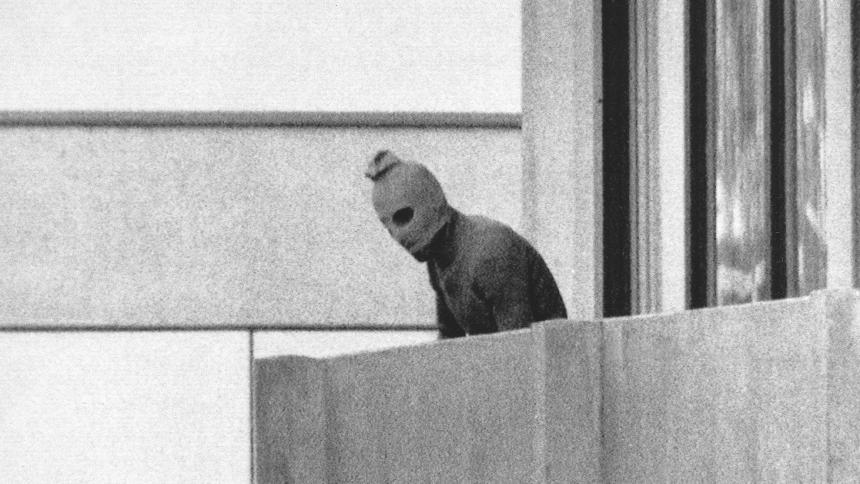
Terror at the 'Cheerful Games': The Munich Massacre of 1972
The 1972 Summer Olympics in Munich were supposed to showcase a peaceful Germany, a far cry from the Nazi regime that hosted the Games in 1936.
However, the so-called 'Cheerful Games' ended in tragedy when eight members of the Palestinian militant group Black September exploited the relaxed security measures to stage a hostage takeover. At the time, West Germany had no specialised counterterrorism unit and was woefully unprepared for what happened next.
Crime+Investigation examines the motive behind the attack and the disastrous rescue operation that followed.
The 'Cheerful Games'
In preparation for the 1972 Olympics, the West German Olympic Organising Committee endeavoured to create an event entirely different from the 1936 Summer Olympics held under Adolf Hitler.
Officials wanted to dismantle the country’s military image and reintroduce Germany as a peaceful and prosperous player on the global stage. They dubbed the event the 'Cheerful Games' and created a light blue emblem to represent 'freshness' and 'generosity'.

This laid-back approach also extended to security. The police presence was deliberately relaxed, and security officers were mostly prepared to handle 'ticket fraud and drunkenness'.
Before the Games had even started, athletes complained about security at their accommodation. Anyone could bypass the official entrances by climbing over the chain-link fence surrounding the Olympic Village.
Black September terror attack
It was this chain-link fence that was breached in the early hours of 5th September 1972, when eight members of Black September entered the Olympic Village.
The Palestinian militant group wanted to use the Games to draw attention to their political cause. The goal was to hold Israeli athletes hostage and demand the release of more than 200 Palestinian prisoners, most of whom were being held in Israel.
By the time the terrorists struck, the Games had been underway for 10 days without a serious incident, and security officials had to let their guard down.
At around 4:10am, terrorists scaled the fence wearing tracksuits and carrying duffel bags loaded with assault rifles, Tokarev pistols and hand grenades. Once inside the Olympic Village, they made their way to the Israeli team’s accommodation and ambushed the athletes as they slept.
During the struggle, wrestling coach Moshe Weinberg and weightlifter Yossef Romano were killed. Nine other members of the Israeli delegation were taken hostage.
The police response
Despite the hostage crisis unfolding live on television, the Games continued as normal for almost seven hours. Meanwhile, West German authorities desperately tried to formulate a plan.
But their efforts were doomed from the beginning. Alongside having little experience dealing with hostage situations, West Germany’s postwar constitution restricted the domestic deployment of its armed forces during peacetime.
With no specialised counterterrorism unit or military intervention, ordinary police officers were left to deal with an extraordinary situation.
The plan they settled on was scrappy at best. Negotiators told Black September they could fly a plane to Cairo with the hostages. Once on board, West German police officers disguised as flight attendants would overpower the terrorists. However, it was simply too dangerous.
Plan B wasn't any better. Police proposed killing the terrorists as they boarded the plane, but soon realised they didn't have any trained snipers or specialist equipment. They didn't even know how many Black September members were in the group.
Ultimately, the rescue operation ended in open fire and bloodshed. During the struggle, the terrorists killed all nine hostages. Five members of Black September and one West German police officer were also killed, while the three surviving terrorists were arrested.

Repercussions throughout Europe
As around 900 million people watched in horror, governments across Europe quickly began reassessing their approach to terrorism. The thinking was simple: If West Germany could be susceptible to such a blatant attack, then so could other major European powers.
The tragedy also changed the Olympics forever. Security became a non-negotiable for future Games, with host cities today facing eye-watering costs to keep athletes and spectators safe. China invested around $6.5 billion on security and surveillance for the 2008 Beijing Olympics.
Nevertheless, history often repeats itself. Despite investment, terrorism struck the Olympics again in 1996, when a bomb exploded in Atlanta's Centennial Olympic Park, killing one person and injuring more than 100 others.
For more on the historical events that changed how the world approached terrorism and security, sign up to the Crime+Investigation newsletter. Every week, you'll receive the latest articles, episodes and more from C+I delivered straight to your inbox.