The real 'Mindhunter': Who is Robert Ressler?
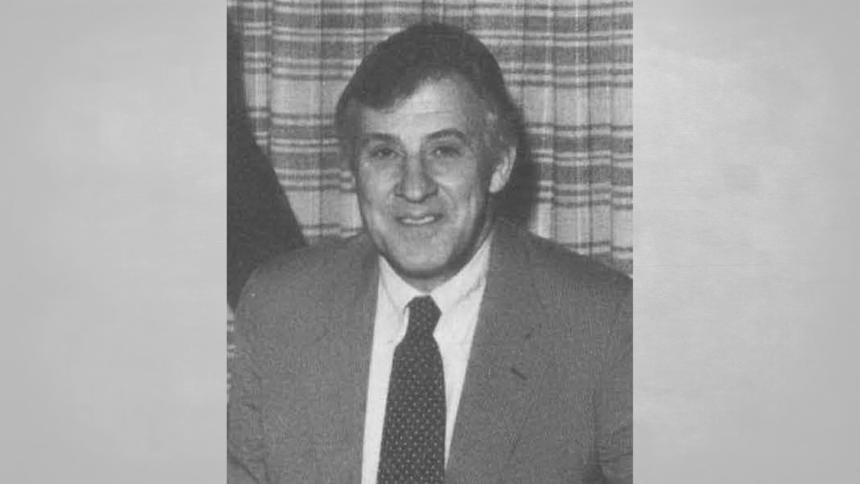
If you’re fascinated by the psychology behind the world’s most violent crimes, the name Robert Ressler will carry real weight. Long before criminal profiling became a staple of documentaries, podcasts and Netflix series, Ressler was sitting across from murderers in prison interview rooms asking the kinds of questions no one else wanted to ask.
In the process, Ressler gave the world a term that still sends a chill down the spine: 'serial killer'. Join Crime+Investigation as we delve into the world of famed FBI agent Robert Ressler and the notable cases he worked on, profiling the most violent offenders.
A fascination with crime
Robert Ressler was born in 1937 in Chicago. His fascination with violent crime began as a young boy when he reportedly witnessed a woman’s body being removed from his neighbourhood after a murder. Ressler later spoke about how that image stayed with him, planting a question that would shape his life: Who commits these crimes, and why?
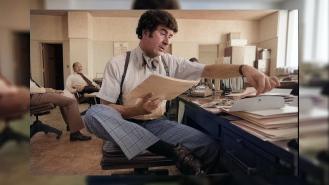
After serving in the US Army, Ressler joined the FBI’s Behavioural Science Unit in 1970, which deals with psychologically profiling violent offenders. At the time, there was little structured study of repeat offenders. Murders were often investigated in isolation, even when the same person might clearly be responsible for multiple crimes.
Ressler began to wonder whether patterns in behaviour could reveal deeper insights into the offenders and why they committed such crimes.
The birth of behavioural profiling
The FBI’s Behavioural Science Unit, a small, then-experimental team based at Quantico, was where criminal profiling as we know it began to take shape.
Robert and his colleagues started travelling to prisons across the United States, interviewing convicted murderers face-to-face. These were not casual conversations. He spent a long time speaking to men who had raped, tortured and killed, asking about their childhoods, their fantasies and their methods.
He also wanted to establish what they felt like before and after committing the crime, so he could really get inside their minds.
It was during this period that Ressler began using the term 'serial killer'. He borrowed it from the idea of serial crimes, noticing how these offenders committed murders in a sequence, with cooling-off periods in between. The phrase stuck and soon entered both law enforcement and the public.
What made Ressler’s work different wasn’t just that he spoke to these men, but that he listened. He was trying to identify psychological patterns that could help police narrow down suspects, predict behaviour and potentially prevent future killings.

Inside the mind of killers
Over his career, Ressler interviewed some of the most infamous names in American criminal history. He sat across from Ted Bundy, spoke to John Wayne Gacy, who buried young men beneath his home, and even interviewed Edmund Kemper, who murdered his grandparents, multiple young women and his own mother.
Holding these conversations was no easy feat. Ressler was often exposed to harrowing details, which later took a toll on him emotionally. He spent so much time immersed in such brutality that it was hard not to be affected mentally.
Yet he believed these interviews were essential. Through these conversation, he helped develop ideas about organised and disorganised offenders, crime scene behaviours, and how an unknown suspect’s personality might be inferred from the way they killed.

The inspiration behind 'Mindhunter'
If you’re a true crime fan, then you would’ve heard about the Netflix TV show Mindhunter. This is where Ressler’s legacy reached a new generation and audience. The character Bill Tench is heavily inspired by him, drawing on his experiences, interviews and emotional conflicts. Like Ressler, Tench is shown struggling to balance groundbreaking work with his own mental health.
The show also captures something true about Ressler’s career. Profiling was not glamorous. It involved long drives to distant prisons, hours in bleak interview rooms, and the slow, often frustrating task of turning human horror into data that might save lives.
For many viewers, Mindhunter became a gateway into the real history behind the FBI’s profiling unit. At the heart of that history is Ressler, whose curiosity as a child grew into a career that reshaped modern crime investigation.
Love true crime? Stay in the know with the Crime+Investigation newsletter! Get exclusive access to new articles, episodes, clips, competitions and more, delivered weekly and completely free. Don't miss out, sign up today!