The violent life and death of Lobster Boy
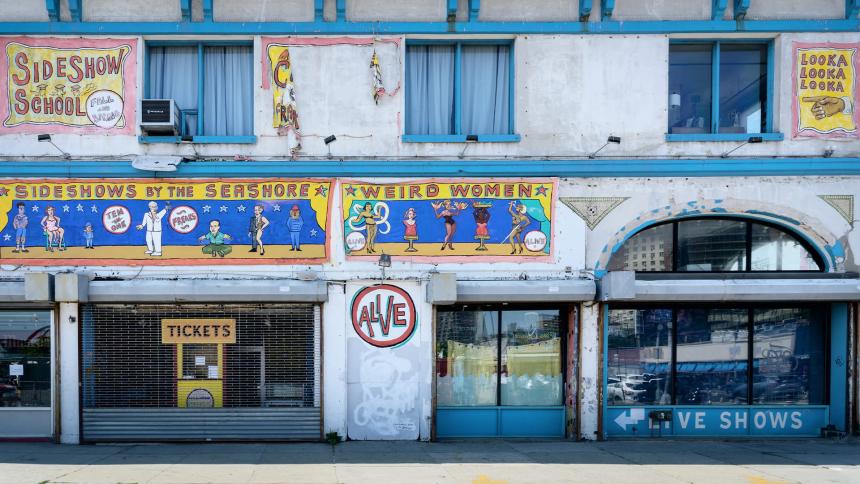
Old school American sideshows had a particular kind of vibe. Colourful posters, lots of popcorn, a barker promising you’re about to see something you’ll never forget… Grady Stiles Jr. did a pretty brisk trade in that promise.
Billed as 'Lobster Boy', Stiles was born with a rare genetic condition called ectrodactyly. It affected his hands and feet, splitting them into claw-like shapes. From a young age, the condition made him a prime 'freak show' attraction. And yes, as far as we’re concerned here at Crime+Investigation that term says as much about the audience as it does about the show.
Grady Stiles Jr. suffered, yes. But he’s not just a victim. Stiles was convicted of murder, and later became the target of murder himself. It’s a fate not dissimilar from that of Jeffrey Dahmer, the notorious American serial killer murdered by a fellow inmate.
A life in the spotlight
Stiles came from a carnival family where ectrodactyly had appeared (and was monetised) for generations. By the age of seven he was performing alongside his father. As an adult, he even brought his own children into the act. They performed as The Lobster Family and quickly became a staple at 20th-century carnivals.
It’s true that Stiles was exploited from a young age. That doesn’t change the fact that he did the same to his own children. And, according to people who knew him, he was no picnic. Multiple accounts describe him as a heavy drinker and abusive towards his family.
The night before the wedding
Stiles and his family continued to perform shows until a night in September 1978. Stiles’ teenage daughter Donna wanted to marry her boyfriend, and Stiles was furious from the moment the engagement was announced. The tension escalated into threats and on 28th September, the night before the wedding, Stiles shot the boyfriend dead in cold blood.
How he avoided prison
Stiles was convicted of third-degree murder and this is where the case takes its strangest procedural turn. The judge and court wrestled with how to sentence him because state prison officials said they couldn’t accommodate his medical needs. The final decision? House arrest and 15 years probation.

It’s an interesting sentence. Disability isn’t a 'get out of jail free' card, but this case does expose how badly institutions can fail at basic care, even for people convicted of serious crimes.
The hit that ended it
After the trial, Stiles appeared to repent. He stopped drinking and remarried his first wife, Mary Teresa Stiles. Sadly, family members later described the same cycle of drinking, threats and violence returning.
On 29th November 1992, Stiles was shot and killed in his trailer while watching television. Investigators eventually alleged it was a murder-for-hire kill. The person calling the shots? Mary Teresa Stiles and her son, Harry Glenn Newman, from a previous marriage. They paid $1,500 to have Stiles killed by teenage sideshow performer, Christopher Wyant.
The trio didn’t get off lightly. Newman was convicted of first-degree murder. Mary Teresa Stiles was convicted of the lesser charge of manslaughter and Wyant was convicted of second-degree murder.

Lessons from a sad life
It’s tempting to reduce the whole thing to a single headline like 'freak show killer' but the life of Lobster Boy isn’t that simple. There’s a sad truth here that’s easy to miss from the outside: for many disabled performers in the 19th and early 20th centuries, sideshows could be one of the few routes to work and independence.
The Lobster Boy legacy
Even after his death, Stiles didn’t stay put in the archives. Pop culture keeps dragging him back into the light, usually as a kind of shorthand for the whole uneasy 'freak show' world. The most famous example is probably Silverchair’s 1997 album, which uses a likeness of Grady Stiles on the cover. And then there’s the Marvel detour where a 'Lobster Boy' figure turns up in a Deadpool story as Ed McGrady, the mayor of 'Freaksville'. Side note: there’s also a 'Deadpool Killer' who shares his name with the comic book character, Wade Wilson.
It’s also worth comparing Stiles’ story up against something like The Greatest Showman. The movie is glossy, rousing and determined to make the sideshow feel like a big, inclusive singalong. It’s entertaining, sure. But it smooths over a harder truth that for many performers, those tents could be both a livelihood and a business built on exploitation.
Want more profiles like this that look at both the headline and the stories behind it? Sign up to the Crime+Investigation newsletter for the latest articles, episodes, clips and more. Get it all delivered weekly and completely free.