Crime Files
Aileen Wuornos

Introduction
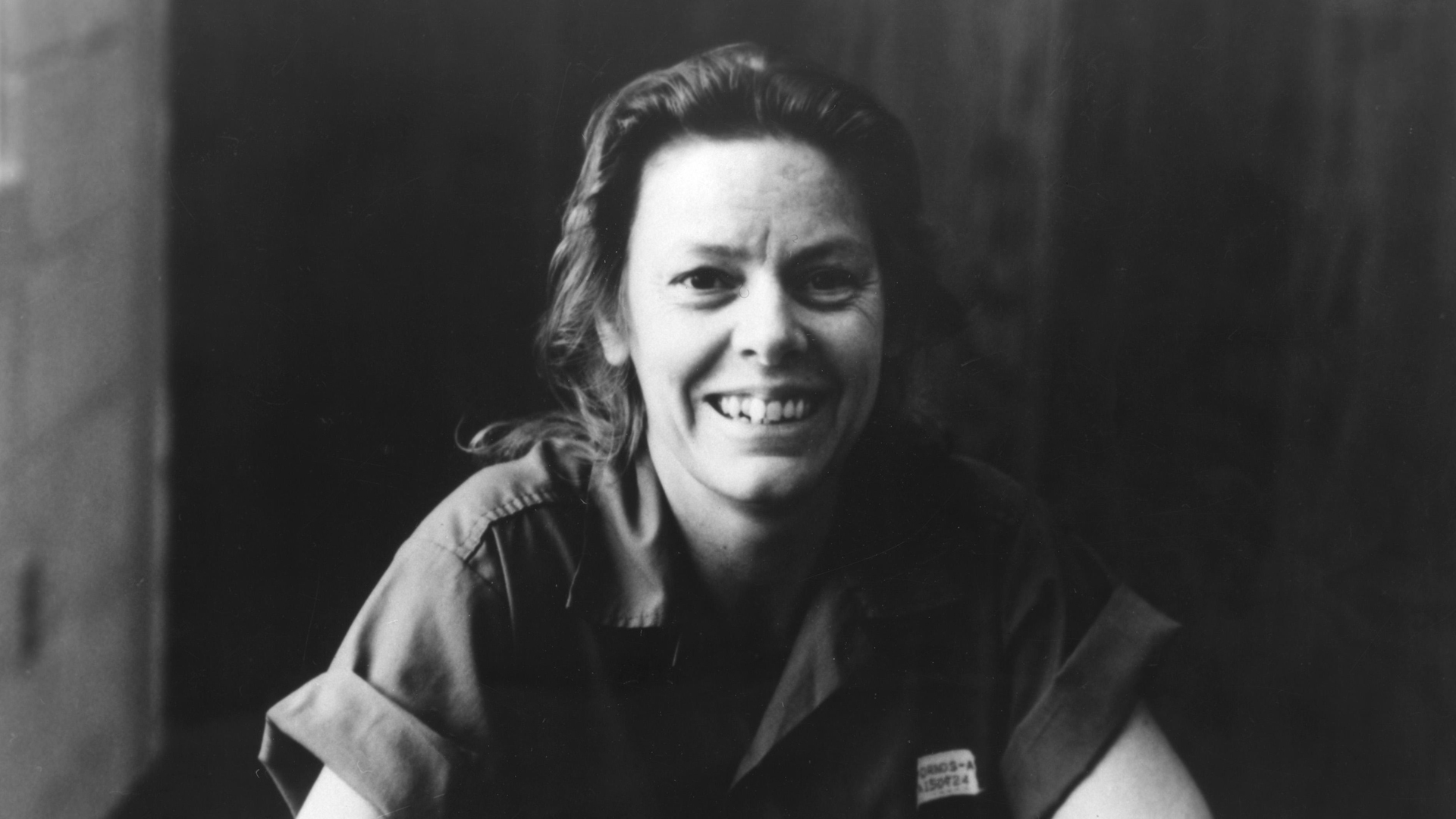
Aileen Wuornos killed seven men in Florida between 1989 and 1990, picking up clients while working as a prostitute along the state's highways. She claimed each killing was an act of self-defence against violent or abusive men. The courts found otherwise.
In January 1992 she was convicted of her first murder and sentenced to death. A decade later, having dropped her appeals and requested the state proceed with her execution, she became one of the few women ever put to death in the United States.
Her case has never been straightforward. A childhood marked by abandonment, abuse and exploitation shaped a person the justice system struggled to process cleanly. Was she a cold-blooded serial killer or a survivor who went too far? The debate continues.

Childhood
The traumatic childhood of a killer
Aileen Carol Pittman was born in Rochester, Michigan on 29th February 1956. She was the product of a troubled marriage between Leo Dale Pittman, a psychopathic child molester, and Diane Wuornos, a feckless teen mother quite incapable of the responsibilities of motherhood. Diane abandoned Wuornos and her elder brother, Keith, to the care of her parents, Lauri and Britta Wuornos, before she was four years old. They adopted the pair and raised them as their own.
Having been saved from one appalling domestic situation, the Wuornos children found themselves in another one that was less than ideal. If Wuornos' accounts of her childhood are to be believed: her adoptive parents kept their true status a secret and Lauri Wuornos was an abusive parent, both physically and sexually, while Britta was an abusive alcoholic. The children only discovered their true identities when Wuornos was about 12, which served only to worsen an already unstable domestic situation.
Wuornos fell pregnant, as a teenager and was sent to a home for unwed mothers. It’s not known for sure who the father was, but she claimed that she was raped by a friend of her grandfather. On 23rd March 1971 she gave birth to a baby boy, who was given up for immediate adoption.
Within months of Wuornos returning to the family home, her grandmother died of liver failure, a result of heavy drinking (although years later Wuornos' biological mother claimed that Wuornos had killed her). Lauri insisted that Wuornos and Keith be removed from his house and they were made wards of the court for a short time, before Wuornos ran away and began a life of hitchhiking, prostitution and crime that supported her over the next four years.
In May 1974 she was jailed in Jefferson County for disorderly conduct, drunk driving and firing a weapon from a vehicle. Two years later, in Michigan, she was arrested for assault and disturbing the peace, after attacking a bartender.
Hitchhiking across America, Wuornos arrived in Florida and was presented with a potentially life-changing piece of luck: she met wealthy yacht club president, 69-year-old Lewis Fell, who fell in love with her and they were married in 1976. However, Wuornos soon began fighting in bars and was sent to jail for assault as a result. Fell had the marriage annulled after a few months.
Wuornos' life resumed its steady downward spiral: her brother Keith died of throat cancer in the same year as her divorce and she blew his $10,000 life insurance cheque that she wrecked shortly after.
Over the next 10 years, she drifted aimlessly, still working as a prostitute and committing various crimes that ranged from forgery and theft to armed robbery and assault. In 1986, Aileen met 24-year-old Tyria Moore at a Daytona gay bar. The couple began a volatile and intense relationship that lasted four years.
Read more:
Crimes
Between November 1989 and November 1990, Wuornos shot and killed seven men while working as a prostitute along Florida's highways. She used a .22 calibre pistol in each case. Six bodies were recovered. One victim, Peter Siems, was never found.
- Richard Mallory, 51 – Body found 13th December 1989, Volusia County. Electronics shop owner from Clearwater.
- David Spears, 43 – Body found 1st June 1990, Citrus County. Heavy machinery operator from Sarasota.
- Charles Carskaddon, 40 – Body found 6th June 1990, Pasco County. Rodeo worker.
- Peter Siems, 65 – Missing since 7th June 1990. Retired merchant seaman. Body never recovered.
- Troy Burress, 50 – Body found 4th August 1990, Ocala National Forest. Delivery driver.
- Dick Humphreys, 56 – Body found 12th September 1990, Marion County. Retired police chief.
- Walter Antonio, 60 – Body found 19th November 1990, Dixie County. Truck driver.
Richard Mallory
Wuornos' first known victim was 51-year-old Richard Mallory an electronics shop owner from Clearwater, Florida, who picked up Wuornos on 30th November 1989. She claims that he tried to rape her and that she killed him in self-defence (he was later discovered to have a criminal record for rape, although it was not raised at her trial).
She shot him three times with a .22 pistol, dumped his body in a wood beside Interstate 95 in Volusia County, Florida and stole his Cadillac. His car was discovered abandoned outside Daytona a few days later and two young men discovered his naked body on 13th December 1989.
During the investigation of Richard’s life and death, police discovered a pattern of alcohol and sex binges extending back over a number of years and made little headway in the search for his killer.
David Spears
It was six months before the next victim was discovered: 43-year-old David Spears, a heavy machinery operator from Sarasota. His naked body was found on 1st June 1990 in Citrus County, 40 miles north of Tampa, Florida and he had been shot six times with a .22 pistol. It took police another week to effect identification via dental records and they discovered that he had been missing since 19th May and that his truck had been found some days later, abandoned on Interstate 75.
Charles Carskaddon
By the time Spears had been identified, another naked victim had been found, this time 30 miles south of Pasco County, near Interstate 75, on 6th June 1990. The body was so badly decomposed that police were unable to identify it immediately, but the fact that the corpse was naked and riddled with nine .22 calibre bullets, led to it being tentatively linked to the two previous victims. The victim was later identified as 40-year-old rodeo worker Charles Carskaddon.
Peter Siems
The police received their first real break on 4th July 1990, when Wuornos and Moore crashed their car near Orange Springs, Florida, whilst in the midst of a heated argument. They left the crash scene, but were described to the police by a witness later, when the vehicle was found to belong to a missing 65-year-old retired merchant seaman called Peter Siems.
He had last been seen on 7th June 1990 and the interior of the vehicle, when examined, exhibited signs of a struggle and yielded a number of finger and palm prints. The description of the two women and the crime MO was circulated throughout Florida and nationwide.
Troy Burress
Wuornos' next victim was 50-year-old delivery driver Troy Burress, whose employer raised the alarm when he failed to complete his delivery route on 30th July 1990. His delivery truck was found abandoned the next day and a picnicking family discovered his body on 4th August 1990 in the Ocala National Forest. He had been shot twice with a .22 calibre pistol.
Dick Humphreys
A month later, 56-year-old Dick Humphreys, a former police chief and Department of Health employee from Sumterville, was reported missing by his wife on 11th September 1990. His body was found the next evening in Marion County. He had been shot seven times with a .22 pistol.
Walter Antonio
Another two months passed before the discovery of Wuornos' seventh victim: 60-year-old truck driver Walter Antonio from Merritt Island, whose naked body was discovered in Dixie County on 19th November 1990. He had been dead less than 24 hours, shot three times in the back and once in the head, also with a .22 firearm.
Read more:
Investigation
Recognising the similarities in all the cases, the police released photofit identities of the women involved in the car accident to the media, which received statewide coverage throughout Florida. By mid-December 1990 the police had a number of useful leads, which led to the identification of Tyria Moore, as well as three other names: Lee Blahovec, Lori Grody and Cammie Marsh Green, which all matched the description of the second photofit.
When Wuornos used the Cammie Marsh Greene identity to pawn a camera belonging to Richard Mallory, she was required to provide fingerprint identification in accordance with Florida law. She also used the Greene ID to pawn a set of tools that matched a description of those missing from David Spears' truck. An analysis of these fingerprints linked Greene to Grody and also matched the prints lifted from Peter’s' stolen car. The information was passed to the National Crime Information Center and the three aliases were linked to Aileen Wuornos. By 5th January 1991 the police finally had a focus for their investigative efforts.
Read more:
Arrest
A major manhunt was initiated, and Wuornos was tracked down to Port Orange, Florida, where local forces had to be called off from arresting her immediately, so that the task force could track her movements and see whether she made contact with Moore, their other suspect.
On 9th January 1991, Wuornos was arrested at the Last Resort bar, where she was advised that she was wanted in relation to minor outstanding charges against Lori Grody. The press was not informed of the arrest and no mention was made of the murder charges at that stage. The following day Tyria Moore was traced to her sister's home in Pittston, Pennsylvania, where she revealed to the police that Wuornos had admitted the murder of Richard to her on the day it had happened, but Moore had deliberately avoided discussing any other suspicious incidents with her, fearing for her own safety.
Moore made a deal to help the police build a case against Wuornos and the two conducted a series of recorded telephone conversations over the next few days, during which Moore pleaded with Wuornos to confess, to spare Moore from prosecution as an accomplice. Wuornos was initially cautious on the phone but faced with the prospect that Moore would also be prosecuted, she confessed to six of the murders on 16th January 1991, claiming that they had all been acts of self-defence and that Moore had had no involvement in any of them.
Given the media attention surrounding the case and the relative rarity of female serial killers, Wuornos was a national celebrity overnight. Within two weeks of her arrest, Wuornos had sold the film rights to her life story and expected to become rich, not realising that Florida law specifically forbade profiting from criminal enterprise in this way. Even investigators and lawyers involved in the case, not forbidden by this restriction, were hiring their own media lawyers to negotiate their own book and film deals.
Trial
Wuornos' defence team were keen for her to plead guilty on six of the murder charges (all but Peter Siems, whose body was never recovered and whose murder she continued to deny, despite evidence which conclusively linked her with his stolen car) in exchange for six consecutive life sentences, but the prosecution were keen to seek the death penalty and decided to try Wuornos initially for the murder of Richard Mallory, as they felt the case against her was strongest.
Wuornos' trial for the murder of Richard Mallory opened before Judge Uriel Blount on 14th January 1992. By virtue of the Williams Rule in Florida law, which enables the prosecution to introduce evidence from other cases if they demonstrate a criminal pattern, jurors were made aware of the other murders in which Wuornos was suspected. They were not convinced by the self-defence motive she claimed and Wuornos did herself no favours when she testified in her own defence, against the advice of her legal counsel, when she was forced to take the Fifth Amendment repeatedly.
On 27th January 1992 the jury took less than two hours to find her guilty of first-degree murder and they unanimously recommended the death penalty, in spite of defence claims that she was mentally ill and a victim of her tragic upbringing. On 31st January 1992 Judge Blount sentenced Aileen Wuornos to death by electrocution.
Two months later, on 31st March 1992, Wuornos pleaded guilty to the murders of Troy Burress, Dick Humphreys and David Spears and received three further death sentences on 15th May 1992.
In June 1992, Wuornos also pleaded guilty to the murder of Charles Carskaddon and added another death sentence to her total in November 1992.
In February 1993 she admitted the murder of Walter Antonio and received her sixth and final death sentence. She was never tried for the murder of Peter Siems.
Read more:
Girlfriend
Tyria Moore was the most significant relationship in Wuornos' adult life and, ultimately, the person whose cooperation with police sealed her fate.
The two women met at a Daytona Beach gay bar in 1986. Moore was 24 years old. Wuornos was 30. Their relationship lasted four years and was volatile and intense, with Moore drawn into Wuornos' cycle of erratic behaviour, petty crime and violence. Moore was aware of Wuornos' work as a prostitute and, as the killings began, became aware of those too.
When the police investigation closed in on Wuornos in late 1990, Moore was traced to her sister's home in Pittston, Pennsylvania. She reached an agreement with investigators: in exchange for immunity from prosecution, she would help build a case against Wuornos. Over several days, Moore and Wuornos spoke in a series of recorded telephone conversations, with Moore pleading with Wuornos to confess in order to protect her from being charged as an accomplice.
Wuornos, unwilling to see Moore prosecuted, confessed to six of the seven murders on 16th January 1991. She insisted throughout that Moore had no involvement in the killings and Moore was never charged. The two women did not see each other again after Wuornos' arrest.
Adoption
In January 1991, shortly after Wuornos' arrest, a 44-year-old born-again Christian named Arlene Pralle wrote to her in jail. Pralle told Wuornos that God had instructed her to make contact and included her home telephone number. Wuornos called and an unlikely friendship was formed.
For much of 1991, Pralle became one of Wuornos' most vocal public defenders, giving a series of media interviews in support of her self-defence claim. On 22nd November 1991 she legally adopted Wuornos as her daughter, something she also attributed to divine instruction.
Pralle's relationship with Wuornos attracted intense scrutiny. Her motives were questioned publicly, particularly after it emerged that she and her husband had entered into a deal covering film rights to Wuornos' story. Wuornos grew increasingly disillusioned with Pralle in the years that followed and the relationship had deteriorated significantly by the time of her execution.
The character of Dawn Selby in the 2003 film Monster, played by Christina Ricci, is based on Tyria Moore rather than Arlene Pralle.
Read more:
Children
Wuornos had one child: a son, born on 23rd March 1971. She claimed that she became pregnant after a she was raped by a friend of her grandfather, although that allegation has never been corroborated. She had become pregnant while living with her adoptive parents and was sent to a home for unwed mothers in Michigan for the final months of her pregnancy. The baby was given up for adoption immediately after birth and Wuornos had no further contact with him.
Wuornos did not have a daughter. It's a common question, but the confusion likely stems from changes made to her backstory in dramatised accounts of her life.
Death
Wuornos was sentenced to death six times over, once for each of the five murders to which she pleaded guilty and the one for which she was convicted at trial. She was never prosecuted for the murder of Peter Siems, whose body was never recovered.
She spent more than a decade on death row, from her first death sentence in January 1992 until her execution in October 2002.
From an early stage, Wuornos made clear that she preferred execution over life in prison. In April 2001, the Florida Supreme Court granted her permission to dismiss her appeal lawyers, a necessary legal step toward allowing the execution to proceed. In her supporting correspondence to the court, she stated that she hated human life and would kill again if released. Psychiatrists who examined her accepted these statements as a genuine reflection of her wishes, rather than evidence of mental incompetence.
When it was discovered that her first victim, Richard Mallory, had served a 10-year prison sentence for sexual violence, there was speculation that Wuornos might be offered a retrial, on the basis that the jury might have viewed her self-defence motive more sympathetically had this been known at the time. No new trial was ever forthcoming.
Her original death sentence, handed down by Judge Blount, specified electrocution. She was subsequently offered a choice of method and elected lethal injection over the electric chair.
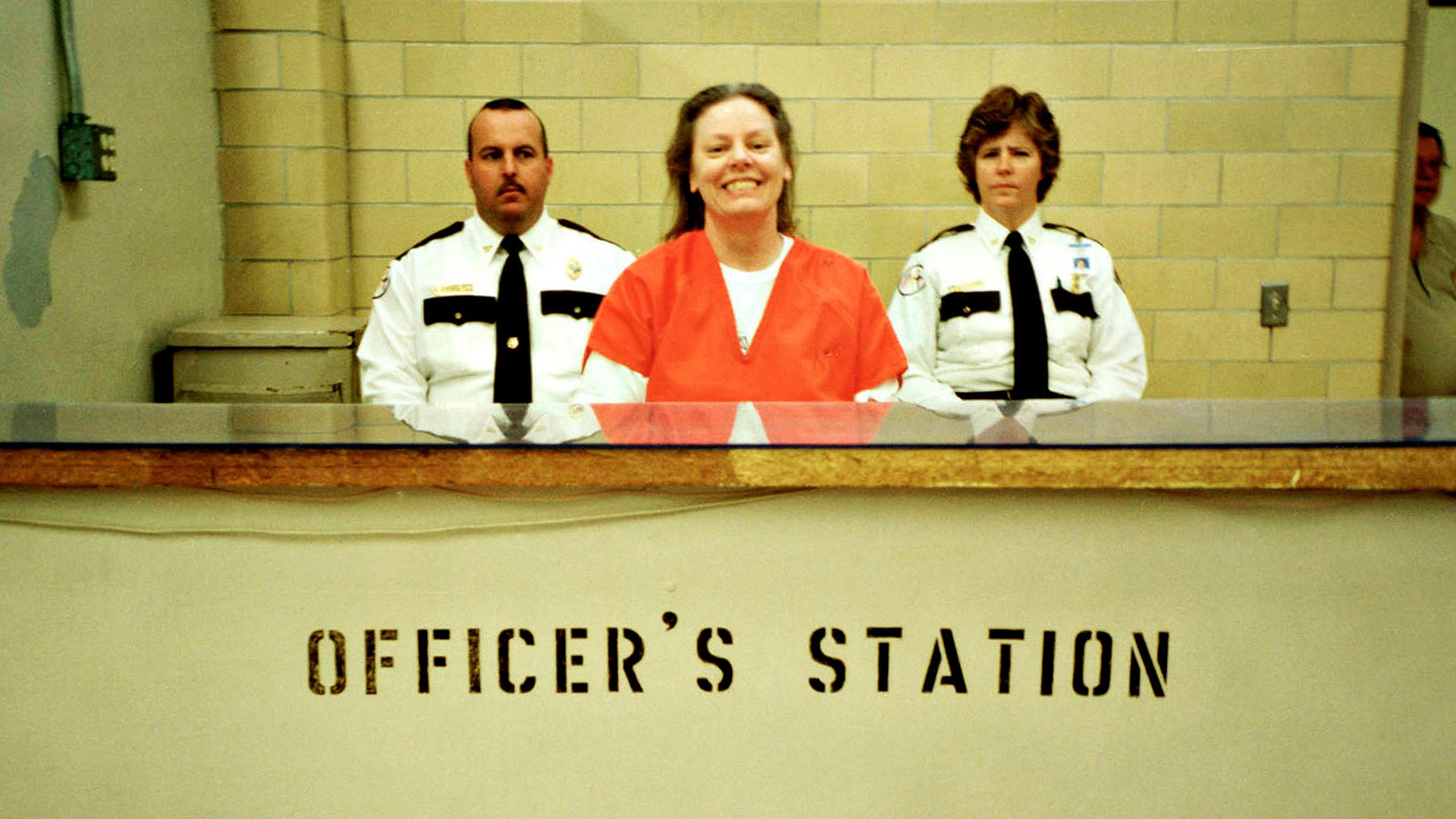
On 9th October 2002, Wuornos declined her right to a final meal. She was executed by lethal injection at 9:47 a.m. at Florida State Prison in Starke, Florida and was pronounced dead shortly after. She was 46 years old. She became only the 10th woman to be executed in the United States since capital punishment was reinstated in 1976.
Her body was cremated and her ashes returned to Michigan, where they were buried in her hometown of Rochester.
Read more:
Last Words
Wuornos' final statement, delivered before her execution on 9th October 2002, became one of the most debated last words in American death row history. She told the prison staff: ‘I'd just like to say I'm sailing with the Rock and I'll be back like Independence Day with Jesus, June 6, like the movie, big mother-ship and all. I'll be back.’
The statement prompted immediate debate about her mental state at the time of her execution. Nick Broomfield, the British documentary filmmaker who had followed her case closely and interviewed her just days before the execution, stated publicly that he believed she had lost her mind entirely.
Others maintained that her willingness to be executed had always been grounded in rational, if deeply disturbing, reasoning and that her final words reflected a sincere religious conviction rather than mental collapse.
Read more:
On screen
Monster (2003)
The most significant dramatisation of Wuornos' life is Patty Jenkins' 2003 film Monster, in which Charlize Theron played Wuornos opposite Christina Ricci as Selby Wall, a character based on Tyria Moore.
Theron's portrayal required an extensive physical transformation: she gained significant weight for the role and wore prosthetic dental pieces designed to alter the appearance of her teeth. The prosthetics were created specifically for the film and bore no close resemblance to Wuornos' actual appearance, becoming one of the most widely discussed elements of the production.
Theron won the Academy Award for Best Actress for her performance, as well as the Golden Globe and Screen Actors Guild Award. The film was widely praised for its refusal to reduce Wuornos to a simple villain, while also attracting criticism from those who felt it risked generating sympathy for a convicted serial killer. It remains the definitive cinematic account of her life and the primary way in which most people first encounter her story.
Documentaries
British filmmaker Nick Broomfield made two documentaries about Wuornos.
Aileen Wuornos: The Selling of a Serial Killer (1992) was filmed in the immediate aftermath of her arrest and trial and examined the way in which investigators, lawyers and others around Wuornos sought to profit from her notoriety.
Aileen: Life and Death of a Serial Killer (2003) followed a decade later and included Broomfield's final interview with Wuornos, conducted days before her execution. It was during this interview that he formed his view that she was no longer of sound mind.
The Netflix documentary series Aileen Wuornos: American Boogeywoman (2022) took a different approach, focusing on Wuornos' early life, including her marriage to Lewis Fell and drawing heavily on her own accounts of her childhood and the events that preceded her killings.
Key Figures

Aileen Wuornos
Serial killer. Also known by the aliases Lee Blahovec, Lori Grody and Cammie Marsh Green.
Tyria Moore
Wuornos' partner and closest relationship. Cooperated with police and gave evidence that led to Wuornos' confession. Absolved of any involvement by Wuornos.
Lewis Fell
Wuornos' first husband. Wealthy yacht club president. Had the marriage annulled after a few months.
Arlene Pralle
Born-again Christian who became Wuornos' public defender and legally adopted her in November 1991.
Richard Mallory
Electronics shop owner from Clearwater, Florida. Wuornos' first victim. Had a criminal record for rape.
David Spears
Heavy machinery operator from Sarasota. Victim.
Charles Carskaddo
Rodeo worker. Victim.
Peter Siems
Retired merchant seaman. Victim. His body was never recovered.
Troy Burress
Delivery driver. Victim.
Dick Humphreys
Retired police chief. Victim.
Walter Antonio
Truck driver. Victim.Frequently Asked Questions
How long was Aileen Wuornos on death row?
More than a decade. She received her first death sentence in January 1992 and was executed in October 2002.
Why did Aileen Wuornos kill her victims?
She claimed she killed the men in self-defence, saying they had attacked or tried to rape her while she worked as a prostitute. Prosecutors argued the killings were robberies and the jury rejected her self-defence claim.
How old was Aileen Wuornos when she died?
She was 46. She was born on 29th February 1956 and executed on 9th October 2002.
Did Aileen Wuornos have any children?
She had one son, born in 1971 when she was 14 years old. He was given up for adoption at birth. She did not have a daughter.
Where is Aileen Wuornos buried?
She was cremated after her execution and her ashes were buried in her hometown of Rochester, Michigan.
What was Aileen Wuornos’ real name?
She was born Aileen Carol Pittman and took the surname Wuornos from the grandparents who raised her. She also used the aliases Lee Blahovec, Lori Grody and Cammie Marsh Green.
How many people did Aileen Wuornos kill?
Seven men, all shot with a .22 calibre pistol, between November 1989 and November 1990.
Who played Aileen Wuornos in the film Monster?
Charlize Theron, who won the Academy Award for Best Actress in 2003 for the role.
Related Articles
Subscribe
Looking for more killer content? Subscribe to the Crime+Investigation newsletter for exclusive access to our latest crime stories, videos and investigations into the darkest corners of human nature.